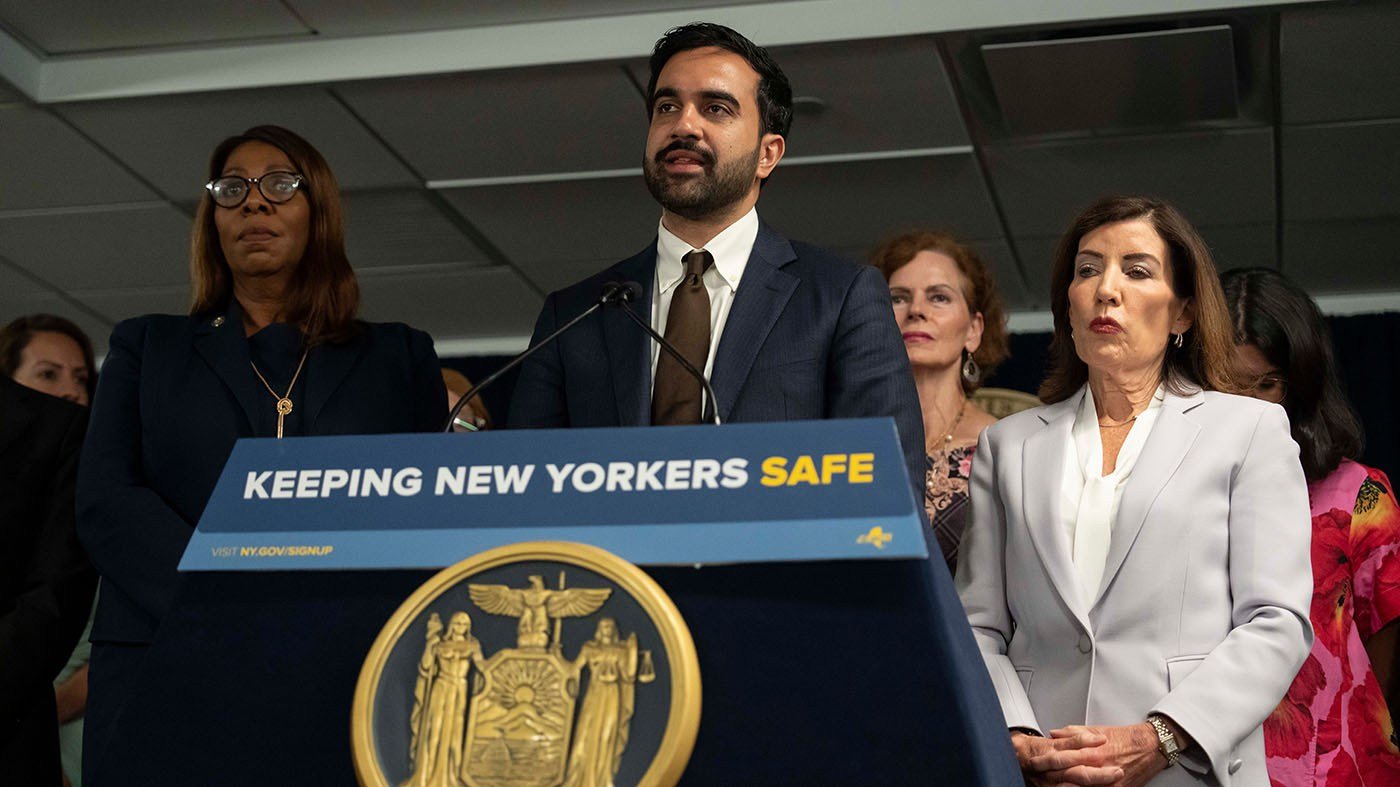
New York City Mayor Zohran Mamdani (D) has imposed a one-year ban on generative artificial intelligence in public school classrooms from pre-K through eighth grade, a move that pushes back against the tech industry's push to integrate AI into early education. The announcement came just days before the city's public schools reopen on September 10.
The moratorium, unveiled Wednesday, covers all classrooms serving children as young as two years old up to the final year of middle school. Under the policy, AI chatbots are prohibited across all grade levels, but high school students will be required to take two AI critical thinking courses during the 2026-27 school year.
In a limited pilot, up to five classes per high school will be allowed to use AI platforms under direct teacher supervision, with usage capped at 45 minutes per week. Mayor Mamdani framed the decision as a defense of the fundamental role of teachers and human interaction in education.
"Children need their teachers and human connection in order to learn and in order to grow," Mamdani said at a press conference. "They need to develop skills alongside their peers, build relationships with their teachers and wrestle with tough problems on their own."
He directly challenged the tech sector's narrative, stating: "The tech industry wants us to believe that AI in early education is not only inevitable, but that it is necessary. We do not see it that way."
The decision comes amid growing concerns about the readiness of schools to handle AI's rapid proliferation. A study released Wednesday by IBM found that AI use in K-12 classrooms is outpacing institutional preparedness. The survey reported that 45% of elementary school teachers, 76% of middle school teachers, and 73% of high school teachers use AI at least weekly. Yet only 20% of K-12 educators reported receiving extensive AI literacy training, and just 20% of parents said they clearly understood the AI guidance their children receive.
Mamdani acknowledged that AI is now pervasive in society, making it essential to prepare older students. "We cannot pretend that that world does not exist," he said. "It would be irresponsible to not prepare our children for the fast-evolving technological future that lies ahead."
He stressed that AI will never replace student-teacher interaction, which he called "the foundation of our students' educational experience." New York Governor Kathy Hochul (D) praised the moratorium, saying in a statement that Mamdani is "pushing our shared commitment to supporting New York's kids forward."
The policy has drawn attention as schools across the country grapple with how to respond to AI tools, especially amid a persistent chronic absenteeism crisis that has made reengaging students a top priority. While some districts have embraced AI as a potential solution, Mamdani's approach reflects a more cautious stance favored by educators who worry about the impact on child development and privacy.
The moratorium will last for one academic year, ending in June 2026, after which the city will evaluate its effects.