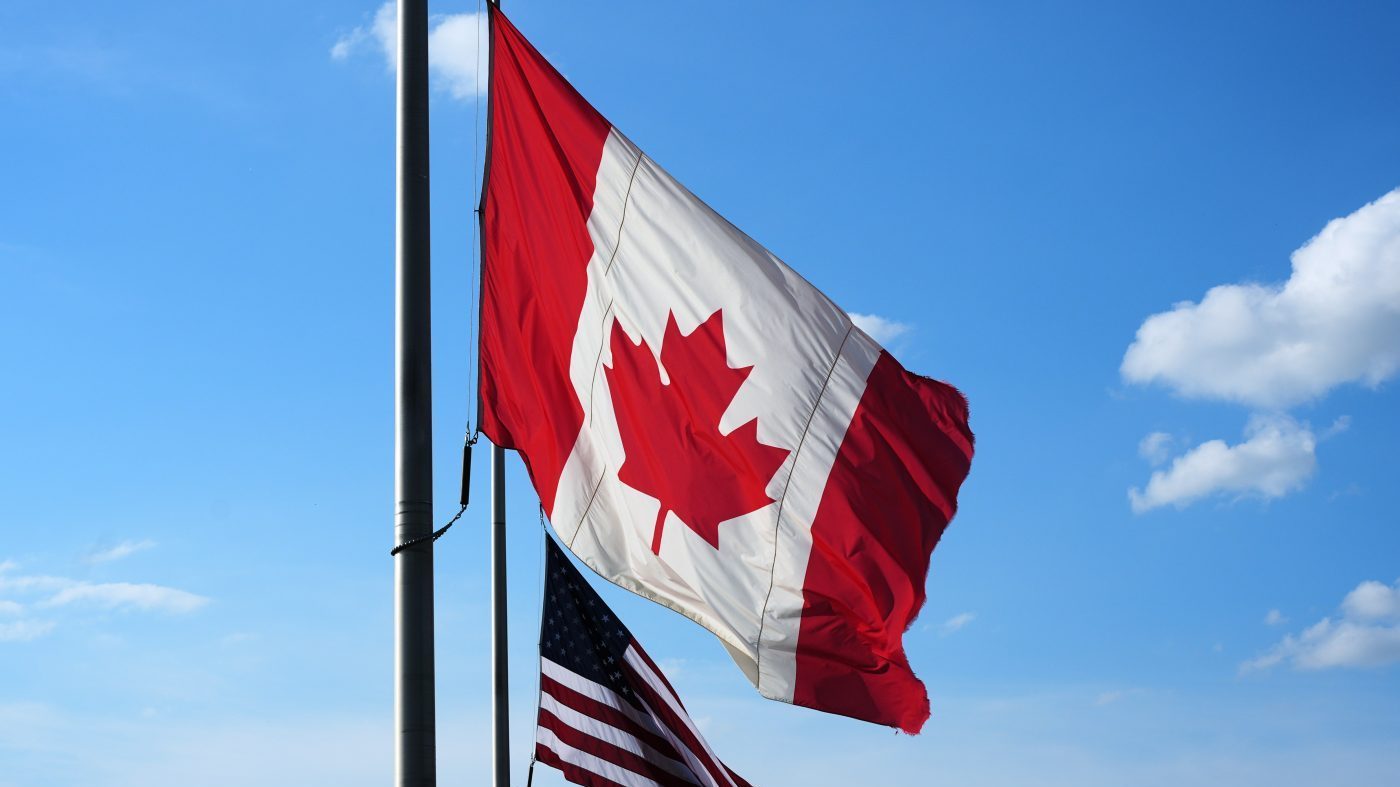
President Trump's sweeping ban on nearly $1 billion worth of Canadian imports took effect Tuesday, escalating the trade war between the United States and its northern neighbor. The restrictions, which cover Canadian dairy products, motor vehicles, and a wide range of alcoholic beverages, represent the latest aggressive move by the administration to pressure Ottawa over what it calls discriminatory trade practices.
Trump signed executive orders authorizing the bans, citing Canadian "discrimination" against American goods. The action is grounded in Section 338 of the Tariff Act of 1930, a rarely used provision that allows the president to block imports from countries deemed to be treating U.S. commerce unfairly. The White House has framed the move as a necessary response to longstanding barriers faced by American farmers and manufacturers in the Canadian market.

According to Jacob Jensen, director of trade policy at the center-right American Action Forum, the new limits cover approximately $967 million in Canadian imports, based on 2025 trade data. That figure underscores the targeted but significant nature of the ban, which comes on top of earlier tariffs. Last month, Trump imposed 50 percent duties on $27.6 billion worth of Canadian products, a move that Canadian Prime Minister Mark Carney's government matched "dollar for dollar."
The escalating measures have strained the historically close economic relationship between the two countries. U.S. businesses imported roughly $382 billion in goods from Canada last year, according to U.S. Census Bureau data, making Canada one of America's largest trading partners. The new restrictions are expected to disrupt supply chains, particularly in the automotive and dairy sectors, and could raise costs for consumers on both sides of the border.
Trump has repeatedly attacked Carney and his government amid the trade tensions. On Monday, he told reporters in the Oval Office that Canadian officials have "treated the U.S. very unfairly" and that Canada has "been one of the worst countries in the entire world" in terms of trade practices. He added that Canadian leaders "feel entitled," signaling no immediate willingness to de-escalate.
Carney, for his part, has used the dispute to pivot Canada's diplomatic and economic focus toward Europe. In an address to the European Parliament earlier this month, the prime minister said Canada and Europe are "stronger together," and that "we can ally by function, if we are bold and deliberate." His comments came a day after European Commission President Ursula von der Leyen endorsed the idea of making Canada the European Union's first associate member, a move that would deepen transatlantic ties as Ottawa seeks alternatives to U.S. trade reliance.
The trade war has also drawn legal challenges from American businesses. Small companies have renewed their fight against the administration's tariff strategy, with several lawsuits pending in federal courts. These challenges argue that the president's use of emergency powers and trade statutes exceeds his authority, a legal battle that could shape the future of U.S. trade policy. For more on this, see small businesses' renewed legal fight.
As the dispute grinds on, the political fallout is mounting. Republicans on Capitol Hill are watching closely, with some expressing concern about the economic impact of the tariffs and the administration's hardline posture. The situation is testing GOP patience just weeks before the midterm elections, as Trump's trade policies become a central campaign issue. For a deeper look at the political dynamics, see how Trump's firestorms are testing GOP patience.
Analysts say the ban could have ripple effects beyond the immediate trade volumes, potentially affecting diplomatic relations, cross-border investment, and even security cooperation. With both sides digging in, the prospect of a swift resolution appears unlikely, and businesses are bracing for a prolonged period of uncertainty.