President Donald Trump's latest tariff regime faces a fresh legal challenge this week, as small businesses and Democratic-led states argue that his shift to a different legal authority is little more than a rebranding of the emergency powers the Supreme Court already rejected.
The U.S. Court of International Trade in New York is set to hear arguments Wednesday in a case that could determine the fate of sweeping tariffs imposed under Section 301 of the Trade Act of 1974. The administration turned to that law after the Supreme Court ruled 6-3 in February that Trump could not use the International Emergency Economic Powers Act (IEEPA) to justify his global trade war.
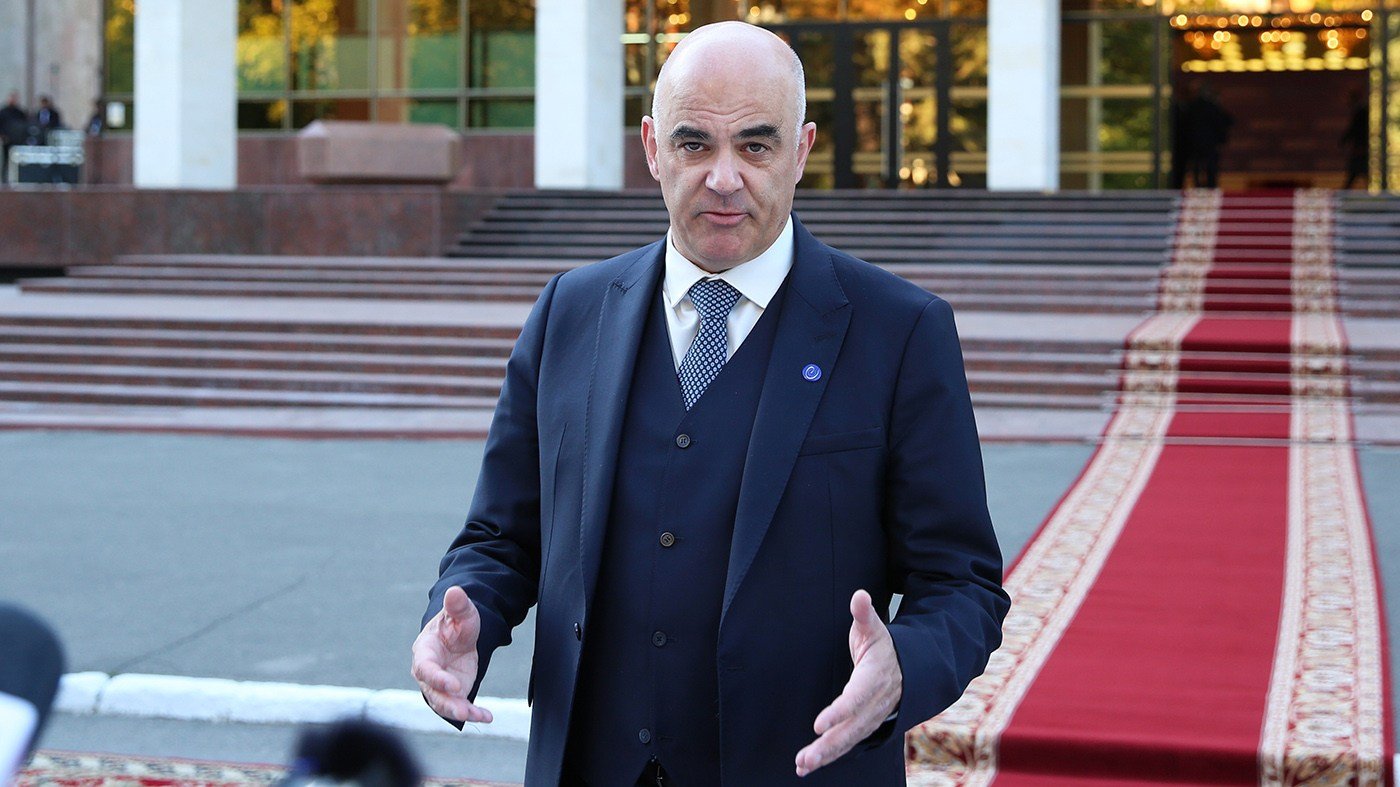
Rick Woldenberg, CEO of Learning Resources, a family-owned toy company and a lead plaintiff, said the legal fight is a matter of "rinse and repeat." His company is among those now challenging the Section 301 tariffs, which add a 10 to 12.5 percent surcharge on goods from 60 economies that account for the vast majority of U.S. imports.
The plaintiffs argue that Section 301, while granting the president some tariff authority, was designed for country-specific, bilateral trade disputes—not a broad, sweeping tariff program. They contend that Trump's invocation of Section 301 is a transparent attempt to circumvent the Supreme Court's ruling.
"If it looks like an IEEPA tariff and it smells like an IEEPA tariff, it maybe is an IEEPA tariff," said Sara Albrecht, CEO of the Liberty Justice Center, the libertarian public-interest firm that successfully challenged the earlier tariffs and is involved again.
The Justice Department, however, maintains that the Section 301 tariffs are legally distinct and that the administration has broad discretion under the law. "The relative proximity of the imposition of Section 301 tariffs with the expiration of Section 122 tariffs shows, at most, that the Trump Administration continues to maintain that tariffs are beneficial to the American economy," the department argued in court filings.
Alan Wm. Wolff, who helped draft Section 301 as a Treasury official in the Nixon administration, said the law was never intended to be used as a blanket tariff authority. "Our problems were bilateral, and no one in the whole drafting of the Trade Act of 1974 ever mentioned—I was in all of the meetings—and no one ever mentioned it being a broad tariff authority," Wolff said. "It was how do you get the Japanese to open their market? How do you get the Europeans to allow in some of our agricultural products?"
The administration points to U.S. Trade Representative investigations into unfair trade practices, including forced labor, as justification for the tariffs, arguing that USTR has wide discretion. "But these are discretionary calls for USTR—not plaintiffs, and not this Court—to make," the Justice Department wrote.
Notably, large corporations have again declined to join the lawsuits, a pattern that Albrecht said is frustrating. "Corporate America, where are you?" she said. "I always ask corporate America for help, support, amicus, anything—and not one larger company has stepped forward."
Woldenberg, a former lawyer, said he doesn't know why big businesses are sitting out, but he worries that public attention is waning. "Now that it's the third time around, this seems to be garnering less attention," he said. "And the only reason that that concerns me is the issues are no less important."
The case comes amid broader political tensions over trade policy, as Trump continues to push tariffs despite legal setbacks and political divisions over the issue. The outcome could have significant implications for other challenges to administration policies and for the president's ability to reshape trade policy unilaterally.