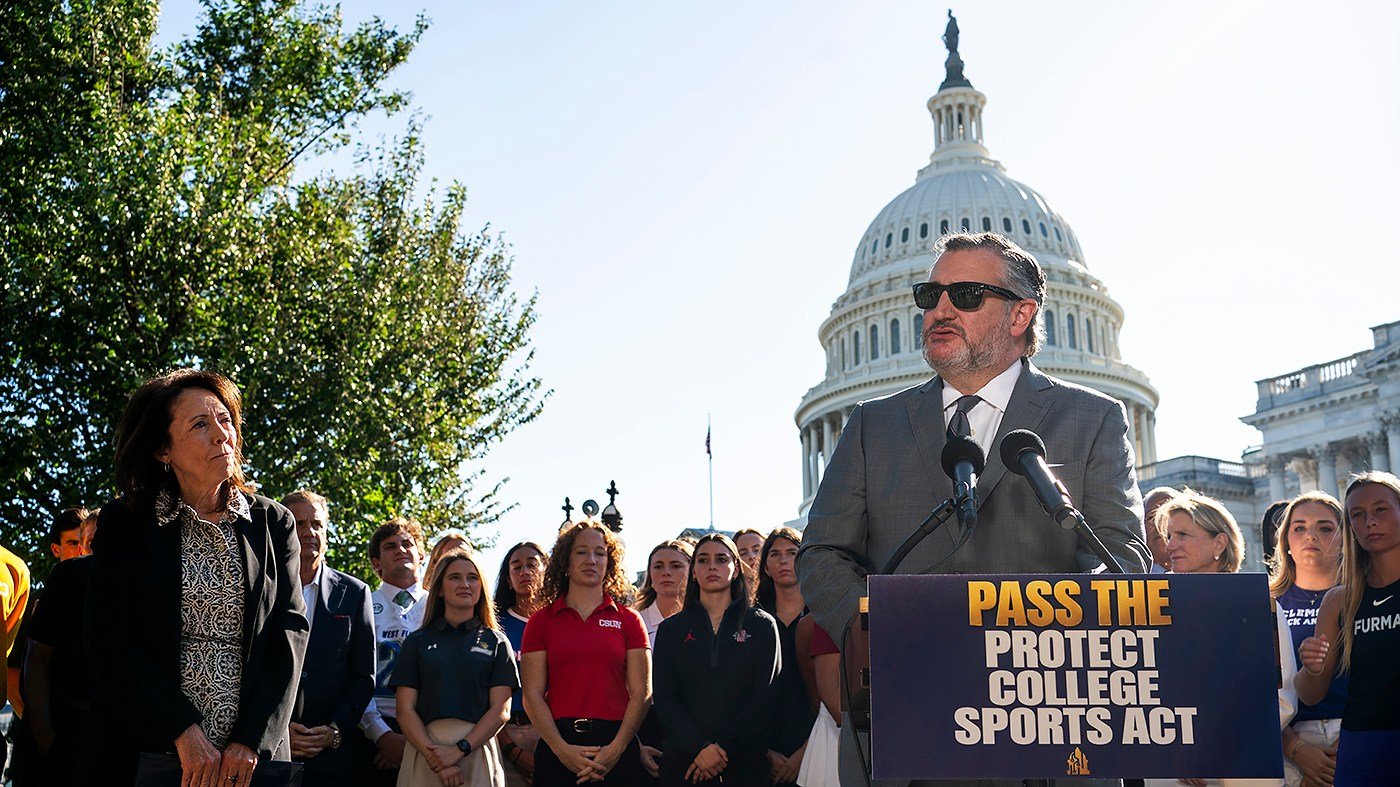
The Senate on Monday passed a sweeping overhaul of college athletics, handing the NCAA broad antitrust protection and imposing new limits on athlete compensation, in a vote that reflected deep partisan and ideological divisions over the future of the multibillion-dollar enterprise.
The Protect College Sports Act, sponsored by Sens. Ted Cruz (R-Texas) and Maria Cantwell (D-Wash.), cleared the chamber 77-22 after months of tense negotiations. The bill now heads to the House, where it faces an uncertain future given opposition from the Congressional Black Caucus, the NAACP, and labor groups.

The legislation shields the NCAA from lawsuits challenging its enforcement of rules, caps athlete pay for name, image, and likeness at a level set by the NCAA, and limits agent fees to 5%. It also caps school spending on athletes at $50 million annually, guarantees scholarships for 10 years after eligibility, and allows athletes to transfer once without sitting out a year.
Supporters argue the bill is necessary to stabilize a system they say is spiraling under the weight of litigation and financial pressures. "It would be nice if college sports could somehow magically fix itself, but this is a matter of law, federal law, and only Congress can fix it," Cruz said on the floor. He dismissed arguments that the system is healthy, saying popularity "simply proves that the system is worth saving."
But critics, including Sen. Cory Booker (D-N.J.), a former Stanford football player, condemned the measure as a gift to wealthy institutions. "This is a bill not about student athletes, it's about wealthy coaches and wealthy institutions and an NCAA who has enjoyed unbridled power for decades," Booker said. "Finally the athletes were getting some power ... and this body rushes in to say we're protecting college athletes. Well that is not true."
The vote came after lawmakers rejected amendments, including a proposal by Sen. John Kennedy (R-La.) to cap ticket price increases and a measure by Booker to limit coach salaries. The NCAA, which has spent millions lobbying Congress, praised the bill's passage. President Trump, who has set up a task force on college sports, called it "great news" on Truth Social, saying it would prevent "bankruptcies and disaster for many Colleges."
The bill's path through the House remains fraught. Opposition from civil rights groups and the CBC, who argue the measure disproportionately harms minority athletes, could stall progress. The bill also faces scrutiny from conservatives over state laws on transgender athletes and from Florida lawmakers over conference realignment standards.
As the debate moves to the House, the future of college sports hangs in the balance. The Senate's action marks a pivotal moment, but the fight over the bill is far from over.