With just five weeks until Election Day, President Trump's talent for generating controversy remains as potent as ever—and it's grating on members of his own party. Public polling consistently shows Trump's approval ratings underwater, with voters preoccupied by the cost of living, the economy, and the ongoing war with Iran.
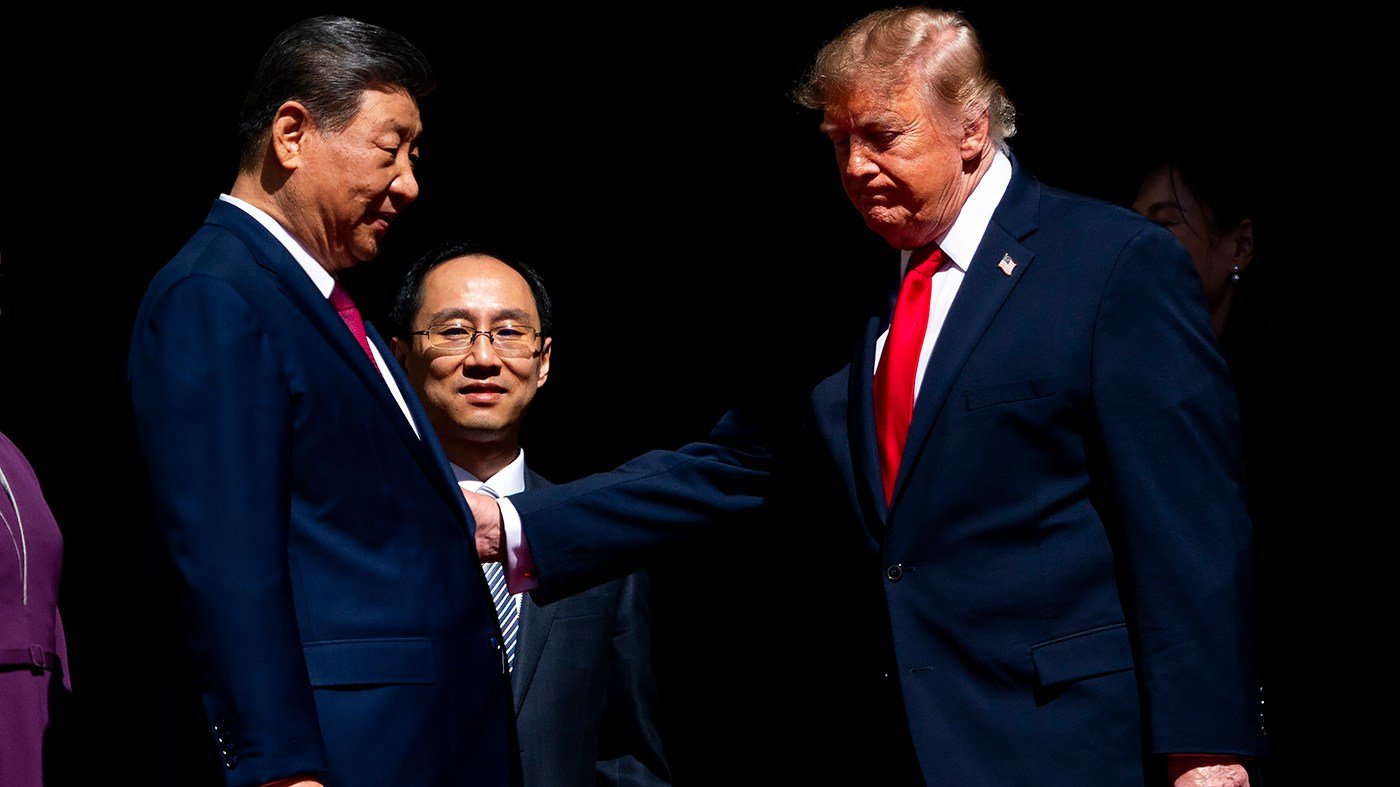
But the recent spate of Trump-related uproars has veered into unexpected territory. Over the weekend, U.S. Ambassador to China David Perdue told Fox News Sunday that Trump had asked Chinese President Xi Jinping during a recent visit whether Beijing would like to purchase American weaponry. The claim raised eyebrows given China's status as the United States' most formidable strategic competitor. Trump later denied making the remark, telling reporters in the Oval Office, "I never heard of that one," but added, "They'd probably like to buy it because we do make better equipment than them. So maybe it's a good idea. But we didn't discuss it." The episode has fueled Democratic criticism, with former South Carolina Democratic Party chair Dick Harpootlian asking, "Who in this country doesn't believe that China is our No. 1 foreign adversary—and we are going to sell them, to make a quick buck, the means to destroy us?"
Meanwhile, a Trump campaign ad from early 2024 is back on the airwaves, this time funded by the U.S. government. It marks at least the second pro-Trump commercial to use taxpayer money, prompting bipartisan backlash. The White House defends the ads as "public service announcements" and dismisses attacks on them as "highly dishonest," arguing they don't constitute campaign ads because Trump isn't on the ballot—even though he has urged supporters to vote as if he were. Senator John Kennedy (R-La.) broke with the administration on CBS's Face the Nation, saying, "I don't think any public official, including President Trump … should spend public money on private ads for themselves. Now, the White House sees it differently."
The president's feud with the media also continues, despite a federal judge's temporary restraining order blocking his proposed ban of CNN, MS NOW, and Politico from the White House. Other recent flashpoints include upheaval at the Kennedy Center and Trump's suggestion that a triumphal arch he wants near the National Mall should also "have and hold large quantities of sniper ammunition in storage." On Monday, Trump managed to call Canada "one of the worst countries in the entire world" during an Oval Office exchange with reporters—seemingly a jab over trade policy.
Republicans are hardly shocked that Trump keeps stoking controversy, often impulsively. But many are frustrated that he can't restrain himself at a pivotal moment for the party. "Those self-created outrages du jour distract the media's attention and ultimately don't help any Republican who is on the ballot," said Doug Heye, a former communications director for the Republican National Committee. He pointed to GOP Senate candidates in competitive races like Ashley Hinson in Iowa and Michael Whatley in North Carolina: "If you are Ashley Hinson or Michael Whatley, you want to be talking all day, every day, about what matters to your campaign. This makes it harder to do that." Hinson was in the Oval Office on Monday as Trump announced a $15 billion steel mill project in Iowa, a move that Iowa Republicans are embracing as they face tough polls.
Democrats, for their part, see an opportunity. Harpootlian argued that his party's most effective strategy isn't to threaten impeachment or investigations if they win back Congress, but to present themselves as a stabilizing alternative. "When Democrats win, their first priority ought not to be creating a sideshow of impeachments or corruption investigations," he said. "We need to get this country back on an even keel—financially, economically and morally."
Of course, many of these controversies may fade quickly, as is typical in the Trump era. A Saturday post by White House deputy chief of staff Dan Scavino—an AI-generated video of himself, Eric Trump, and their spouses partying with the president—drew criticism for tone-deafness but soon blew over. Even some GOP strategists doubt the larger furors will sway voters. "With most of these things, if it happened under any other administration, it would be the story of the month. But with Trump, most of these things are micro-controversies," said Republican strategist Dan Judy. "They are baked into most voters' calculations."
Yet the sheer volume of distractions—from the China arms offer to taxpayer-funded ads—underscores the challenge for Republicans hoping to keep the midterms focused on kitchen-table issues. As the clock ticks down, Trump's penchant for provocation may prove to be either a footnote or a decisive factor. For now, it's a headache for a party already navigating a difficult political landscape.