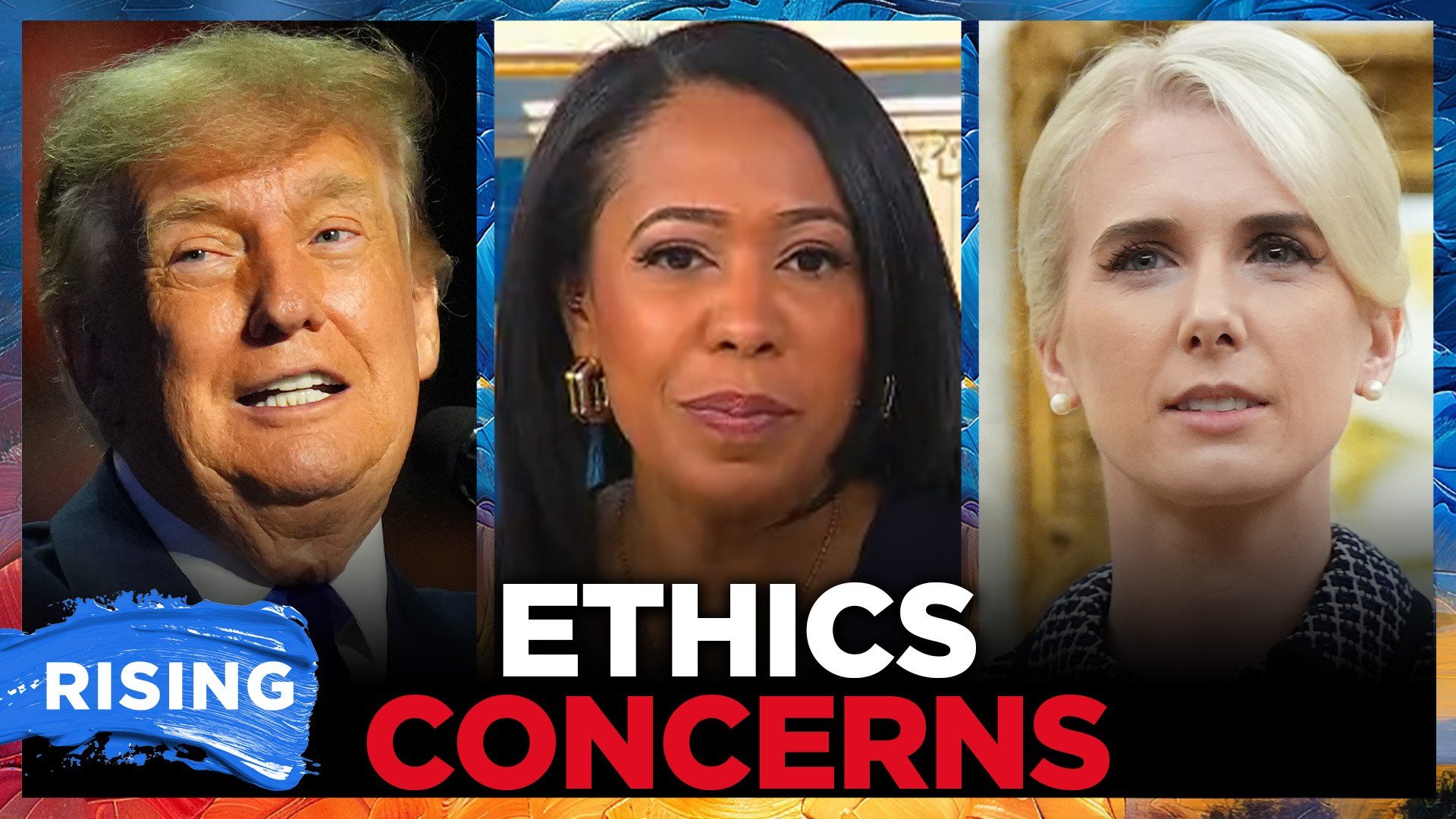
President Trump distributed $155,000 in cash holiday gifts to four White House aides last year, according to newly released financial disclosures, a move that has drawn scrutiny from ethics watchdogs and legal experts.
The payments went to Natalie Harp, Margo Martin, and Chamberlain Harris, each receiving $45,000, while Walt Nauta received $20,000. Harp, Martin, and Harris each earn $150,000 annually, meaning the gift represented 30% of their yearly government salary—roughly three and a half months of pay—delivered directly from the president's pocket.
The White House defended the payments as part of Trump's long-standing tradition of giving Christmas gifts to those close to him, insisting they were unrelated to official duties and therefore permissible. But federal law generally prohibits government employees from accepting extra compensation from private individuals for performing their official duties, a rule designed to ensure that loyalty and financial dependence rest with the government, not with any outside party.
Richard Painter, who served as chief White House ethics lawyer under President George W. Bush, told The New York Times that the payments appear to raise exactly that concern. "This is precisely the kind of outside influence that the law seeks to prevent," he said.
The recipients are all deeply embedded in Trump's inner circle. Harp, known as the "human printer," carries a portable printer to provide Trump with favorable media coverage and social media posts. She was also among the aides with Trump when he abruptly left Air Force One during a security threat in Turkey. Martin has worked with Trump since his first term, followed him to Palm Beach after the 2020 election, and returned to the White House after his 2024 victory. Harris serves as deputy director of Oval Office operations and sits on the U.S. Commission of Fine Arts, which has overseen the White House ballroom renovation. Nauta, the current director of Oval Office operations, was previously charged alongside Trump in the classified documents case, though those charges were dismissed in 2024.
For most Americans, $45,000 is far from trivial—it could eliminate credit card debt, cover months of rent, pay for child care, build an emergency fund, or serve as a down payment on a home. Yet these aides received that sum as a personal gift from the president, a figure that dwarfs the annual bonuses most federal employees might see.
The optics are particularly stark given the economic pressures facing ordinary families. While Trump has touted policies like $5,000 dividend checks as a way to share national wealth, his own aides are receiving far more substantial sums directly from him. Meanwhile, many Americans are struggling with rising costs and stagnant wages, a contrast that critics say underscores a broader pattern of the president prioritizing his inner circle.
This is not the first time Trump's financial dealings have raised eyebrows. His personal businesses continue to profit from his presidency, and his administration has repeatedly blurred the lines between official action and personal gain. The cash gifts, however, represent a more direct form of patronage—one that legal scholars say could violate the spirit, if not the letter, of federal ethics rules.
As the disclosures circulate, the question is whether the payments will prompt any formal inquiry. For now, the White House maintains that everything was above board. But for those who watch ethics closely, the episode is another reminder of how Trump operates: rewarding loyalty with money, and leaving everyone else to foot the bill.