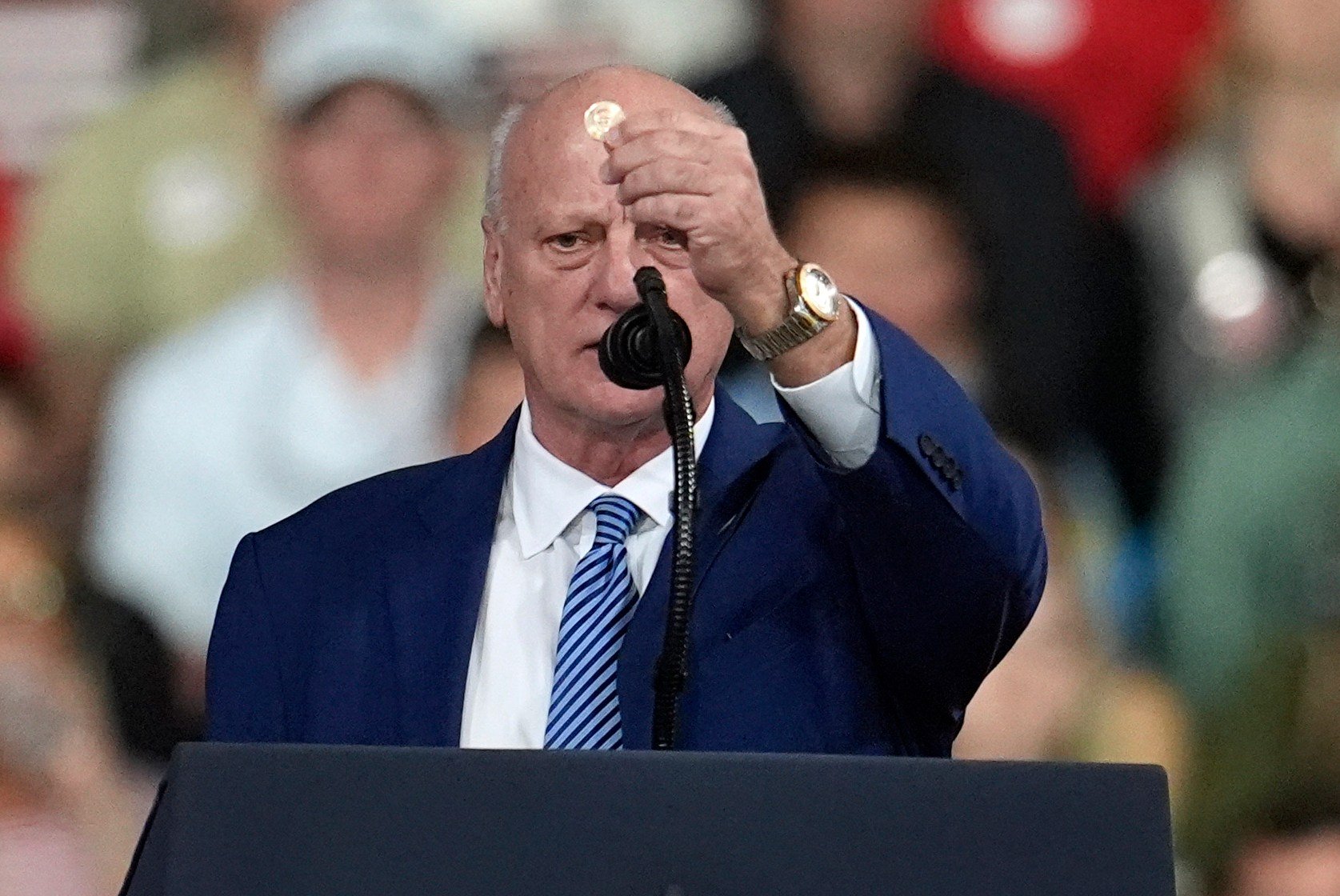
The U.S. Treasury has minted a $1 coin featuring President Trump, a move that breaks with a long-standing tradition of not putting living leaders on American currency. While it may seem like a harmless commemorative item, critics argue it sets a dangerous precedent, turning the U.S. Mint into a tool for personal political branding.
The $1 coin has never been popular in the U.S. Despite repeated efforts by the government to promote its use, Americans have consistently preferred paper dollars. The Native American One Dollar Coinage Act of 2009 ramped up production, but by 2011, around 1.4 billion such coins sat unused in Federal Reserve vaults. The cost-effectiveness of replacing $1 bills with coins has been debunked, and these coins remain largely unwanted.
Other countries have successfully adopted $1 coins—Canada replaced its $1 bill with the "loonie" in 1989, and the U.K. and the European Union have higher minimum banknote denominations. However, these nations either have constitutional monarchies or, in the case of the E.U., a multi-national system. The U.S., as a constitutional republic, has historically avoided placing living figures on its currency to ensure that money represents the state, not a temporary ruler.
The Trump coin was issued under the Circulating Collectible Coin Redesign Act of 2020, which commemorates the nation's 250th anniversary. This legal loophole bypasses the usual requirement that any person depicted on a coin must be deceased for at least two years. The Treasury cites the 1926 Sesquicentennial half-dollar featuring President Calvin Coolidge as a precedent, but the symbolism is starkly different.
Countries that feature living leaders on their currency are often dictatorships or monarchies. North Korea's Kim Jong Il appears on the 5,000 won note, and Saddam Hussein was on Iraq's currency during his rule. In contrast, France and South Korea deliberately reject this practice to emphasize that the state outlasts any individual leader.
The move is part of a broader pattern of executive overreach. The administration also pushed to build a 250-foot triumphal arch, using a 1925 law to justify the project without congressional approval. A federal judge has temporarily blocked that plan. These actions signal a troubling trend of using public institutions for personal aggrandizement.
The coin has no practical economic purpose. The Mint sells these coins primarily to collectors, and they rarely enter circulation. In 2024, the Mint sold $469 million in numismatic products and over $2.3 billion in bullion coins, but these are investments, not everyday currency.
This lack of utility underscores the political nature of the coin. It is a symbol of executive power, not a functional piece of money. Congress should act to prevent this from becoming a norm. A permanent ban on minting living politicians would protect the integrity of U.S. currency and the principle that no individual is above the state.
As the new Congress convenes, it must consider the broader implications of this decision. The erosion of checks and balances begins with small steps, and this coin is a significant one. Lawmakers from both parties should recognize that allowing a sitting president to be immortalized on currency is a step toward authoritarianism, not a harmless tribute.