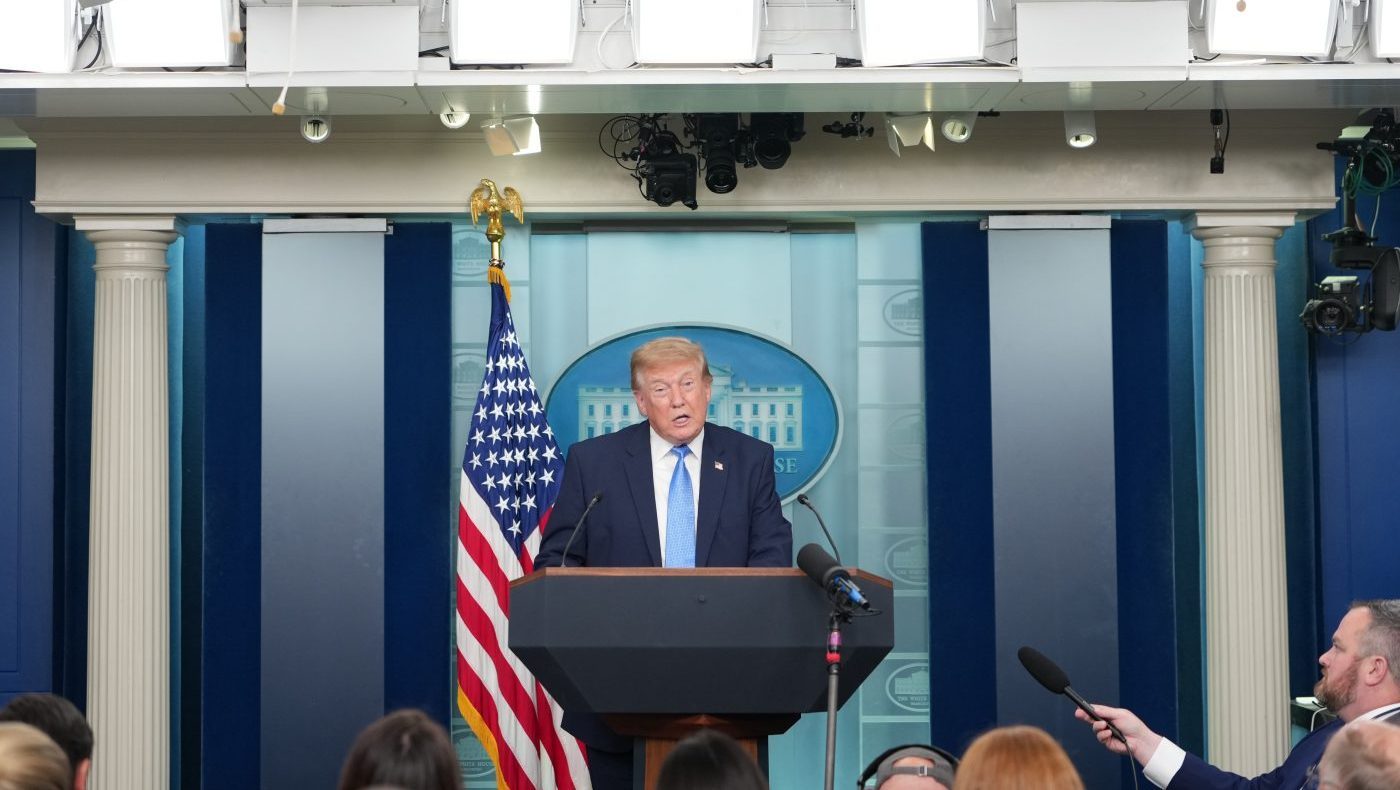
President Trump on Monday downplayed the prospect of further military strikes against Iran, indicating that the United States would maintain its current wartime posture in the Middle East to shield allied Arab and Gulf nations. Speaking from the White House after a meeting with Qatar’s Prime Minister Sheikh Mohammed bin Abdulrahman Al Thani, Trump framed the ongoing blockade as a stabilizing measure favored by U.S. partners.
“We have the greatest military blockade ever. We have the new Iron Gate,” Trump said, referring to the combined naval and land cordon. “Iron Gate is land, so by land and by sea, and we will take care of business.” The president’s remarks, also posted on his Truth Social platform, suggested that the status quo is acceptable to American allies in the region.

The United States has conducted limited strikes on Iran in recent weeks, including on the southern island of Queshm, which the administration describes as defensive. Trump did not rule out future actions but stressed that the primary goal is protecting partners from Iranian aggression. “We have some great allies there and we have to make sure they are not hurt,” he told reporters in the briefing room, adding, “It’s ending quickly, but we want to take care of people that have been very good to us over the years.”
The president’s comments come amid heightened tensions and diplomatic maneuvering. He claimed that Iranian officials have been “very polite” and are reaching out for negotiations. However, Secretary of State Marco Rubio on Sunday dismissed Tehran’s conditions for ending the conflict as “outrageous and ridiculous and really not realistic.”
Iranian leaders have demanded that the U.S. lift its blockade and sanctions before any talks resume. The administration has not indicated any willingness to ease those measures, and Trump’s remarks suggest that the military and economic pressure campaign will continue for now.
The meeting with Qatar’s prime minister underscores Doha’s role as a key intermediary between Washington and Tehran. Qatar has historically facilitated communication between the two foes, and Monday’s talks likely centered on de-escalation and the humanitarian situation. The Qatari leader’s visit comes as the administration faces scrutiny over its Middle East policy, with some lawmakers questioning the legality and effectiveness of the strikes.
Trump’s stance reflects a delicate balance: projecting strength while avoiding a broader conflict. His reference to “taking care of business” hints at a willingness to act if necessary, but the emphasis on allied preferences suggests a desire to avoid escalation. The president’s language also appears aimed at reassuring Gulf states that their security remains a priority, even as the U.S. seeks to wind down its military involvement.
Analysts note that the blockade, while effective in restricting Iranian trade, has drawn international criticism for its humanitarian impact. The administration has defended the measures as necessary to counter Iranian threats, but pressure is mounting for a diplomatic solution. The coming weeks will test whether Trump’s strategy of maximum pressure can force Tehran back to the negotiating table, or whether it will lead to further instability in the region.
For now, the president’s message is clear: the U.S. will not initiate new strikes, but it will not ease its posture either. As the situation evolves, all eyes will remain on the Gulf and on the fragile channels of communication that Qatar continues to provide.