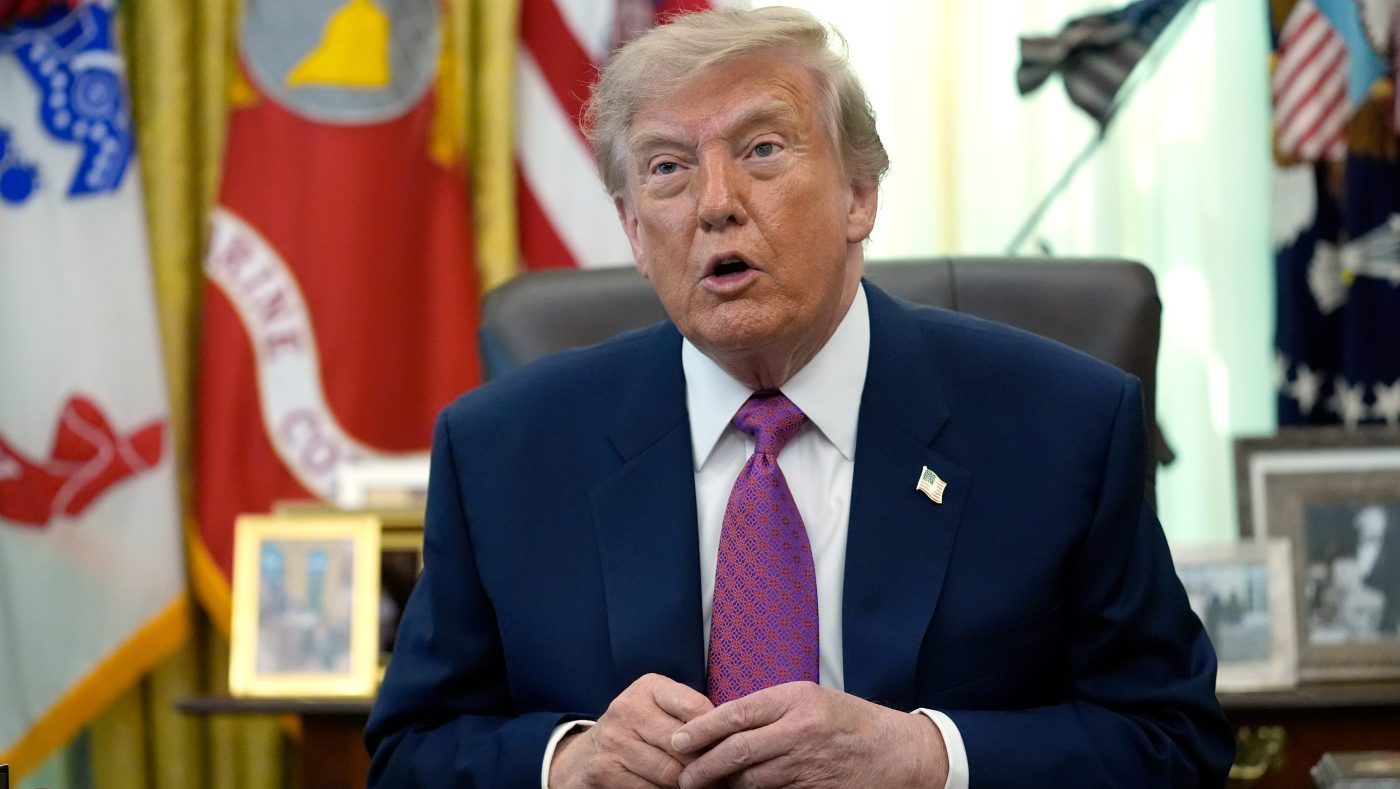
President Trump on Thursday signed an executive order officially renaming Lake Ontario to Lake America, a symbolic but provocative move that adds another layer to the escalating trade war with Canada. The announcement was made in the Oval Office, where placards of the Great Lakes were displayed, with the new name prominently featured over the easternmost lake.
"We're going to be changing the name of Lake Ontario effective immediately to Lake America," Trump told reporters before signing the order. "We filed all of the necessary papers, documents, [and] everything else. We've notified all of the various people you have to notify."

The executive order follows Trump's earlier remarks this week, when he first floated the idea as trade tensions with Ottawa were intensifying. The president said he had been considering the name change for "a long time."
The move drew a quick response from Ontario Premier Doug Ford, who earlier dismissed the idea as "a lot of rhetoric." Ford's comments came as the trade dispute between the two nations escalated dramatically over the weekend, after Canadian Prime Minister Mark Carney pulled negotiators from trade talks with the U.S. just before a new round of American tariffs was set to take effect.
Carney subsequently announced that Canada would impose retaliatory tariffs, matching Washington's new 50 percent tariffs dollar for dollar starting Sept. 8. "We will match Washington's new tariffs dollar for dollar in order to protect Canadian workers, farmers, families and businesses," Carney said during a press conference.
This is not the first time Trump has renamed a body of water that borders another country. Last year, he signed an executive order renaming the Gulf of Mexico to the Gulf of America. The president joked on Thursday about the pattern, saying, "If you think about it, we have a gulf, now we have a lake, now all we need is an ocean. Maybe we'll have to change the name of the Atlantic and/or the Pacific. Maybe we'll change them both."
The renaming of Lake Ontario is widely seen as a pressure tactic in the ongoing trade confrontation, which has disrupted cross-border commerce and strained diplomatic relations. The move also comes as Trump continues to use executive actions to assert American sovereignty and nationalist themes, a strategy that has resonated with his political base.
While the name change is largely symbolic, it underscores the depth of the rift between the two allies. The trade war has already led to significant economic disruptions, and the naming dispute adds a personal and symbolic dimension to the conflict.
As the trade war continues, Trump has also been focusing on domestic political battles, including urging GOP voters to treat the midterms as a referendum on his agenda. The administration's trade policies, including tariffs on Canadian goods, are likely to be a key issue in the upcoming elections.
The renaming of Lake Ontario is expected to be challenged by Canada, but it is unlikely to have any legal impact. The move is more about political symbolism and signaling to both domestic and international audiences that the Trump administration is willing to take bold actions in the face of trade disputes.
As the situation develops, the administration is also preparing for a signing ceremony that will address trade and Iran sanctions, indicating that the president's focus remains on a broad range of foreign policy and economic issues.