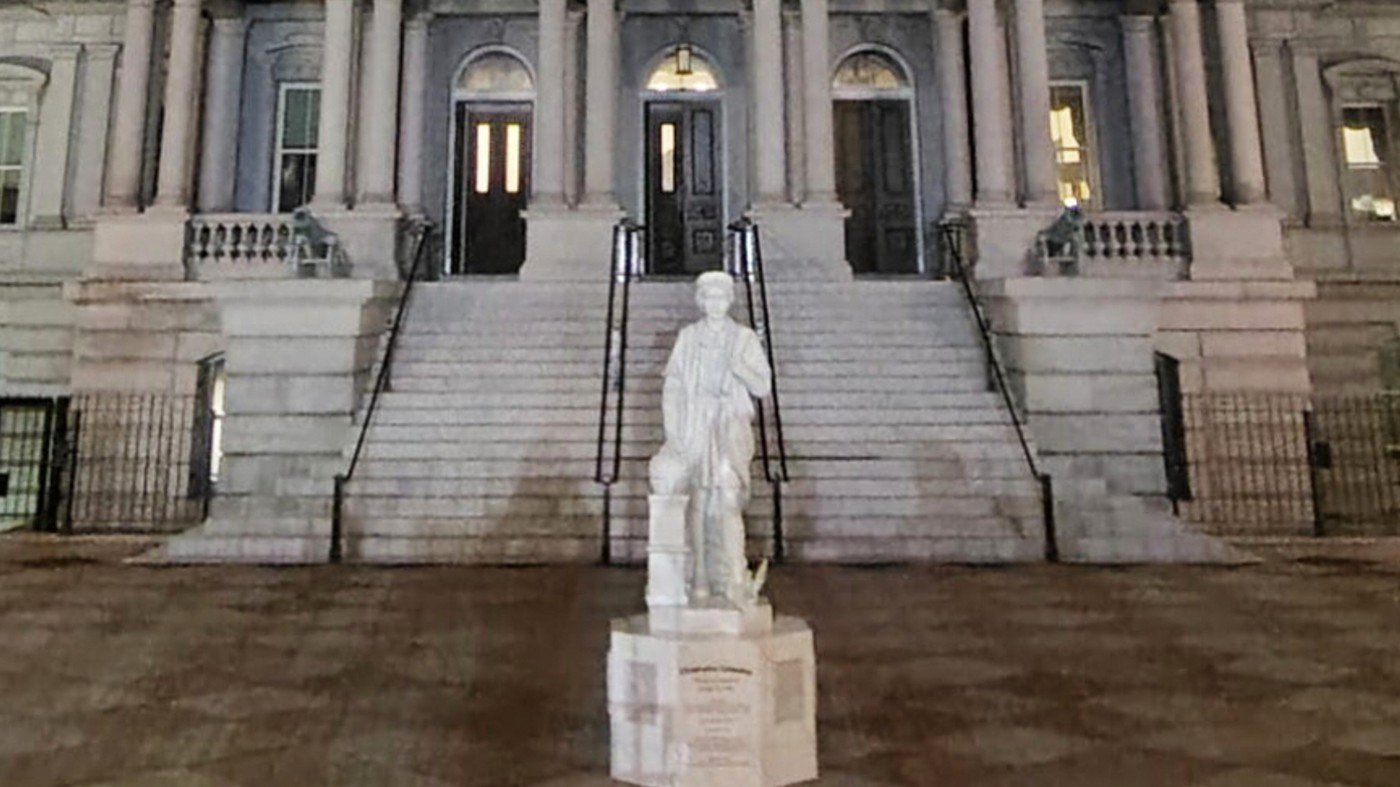
The Trump administration has installed a statue of Christopher Columbus on the White House grounds, positioning the monument as a celebration of Italian American heritage while directly engaging in the nation's ongoing cultural debates. The replica statue, which replaces one torn down by protesters in Baltimore in 2020, now stands on the north side of the Eisenhower Executive Office Building.
A Symbolic Restoration
In a statement, White House spokesperson Davis Ingle framed the installation as a corrective action, stating the administration is "proud to honor Christopher Columbus's legendary life and legacy with a well-deserved statue." The move was coordinated with the Conference of Presidents of Major Italian American Organizations (COPOMIAO), which hailed the statue's placement as a recognition of Italian American history. This action follows a pattern by the Trump administration of using symbolic gestures to counter progressive cultural shifts, a strategy also evident in its approach to legislative priorities like voter ID laws.
Contested Legacy
The installation occurs against a backdrop of intense historical reevaluation. While many in the Italian American community view Columbus as an icon, scholars and Indigenous groups have long criticized his role in initiating centuries of European colonialism and violence against Native populations. The Baltimore statue's destruction in 2020 highlighted the depth of this controversy. The White House statement deliberately contrasted this view, quoting President Trump's description of Columbus as "the original American hero, a giant of Western civilization."
In a social media post last April, Trump explicitly linked the statue's restoration to his broader political narrative, complaining, "They tore down his Statues, and put up nothing but 'WOKE,' or even worse, nothing at all!" He promised then that "Christopher is going to make a major comeback." This rhetoric aligns with the administration's focus on cultural restoration, a theme that extends to its foreign policy, where it has pursued diplomatic maneuvers with Iran framed as reversing previous administration policies.
Policy and Proclamation
The statue's placement is not an isolated act but part of a series of administrative actions. Last year, Trump signed a proclamation officially reinstating the federal observance of Columbus Day. This move reversed the precedent set by the Biden administration, which was the first to issue an official presidential proclamation acknowledging Indigenous Peoples' Day. A letter from President Trump included in the COPOMIAO press release confirmed the statue's specific location on the White House campus.
This cultural push happens alongside other high-stakes administration initiatives. For instance, while focusing on domestic symbolic politics, the administration has also been managing complex international crises, including navigating tensions in the Strait of Hormuz. The parallel underscores a governing approach that blends tangible policy with potent symbolism.
Broader Political Context
The statue installation serves as a flashpoint in the nation's ongoing debate over historical memory and national identity. Supporters view it as re-establishing a traditional narrative, while critics see it as an endorsement of a contested historical figure. The administration's commitment is clear from Ingle's statement: "In this White House, Christopher Columbus is a hero, and President Trump will ensure he's honored as such for generations to come."
This action reflects a consistent pattern of using executive authority to shape cultural discourse, a method also seen in disputes over alleged censorship at Voice of America. By placing the statue on the White House grounds, the administration has permanently inscribed this debate into the nation's most symbolic federal landscape, ensuring it remains a visible part of Trump's political legacy.