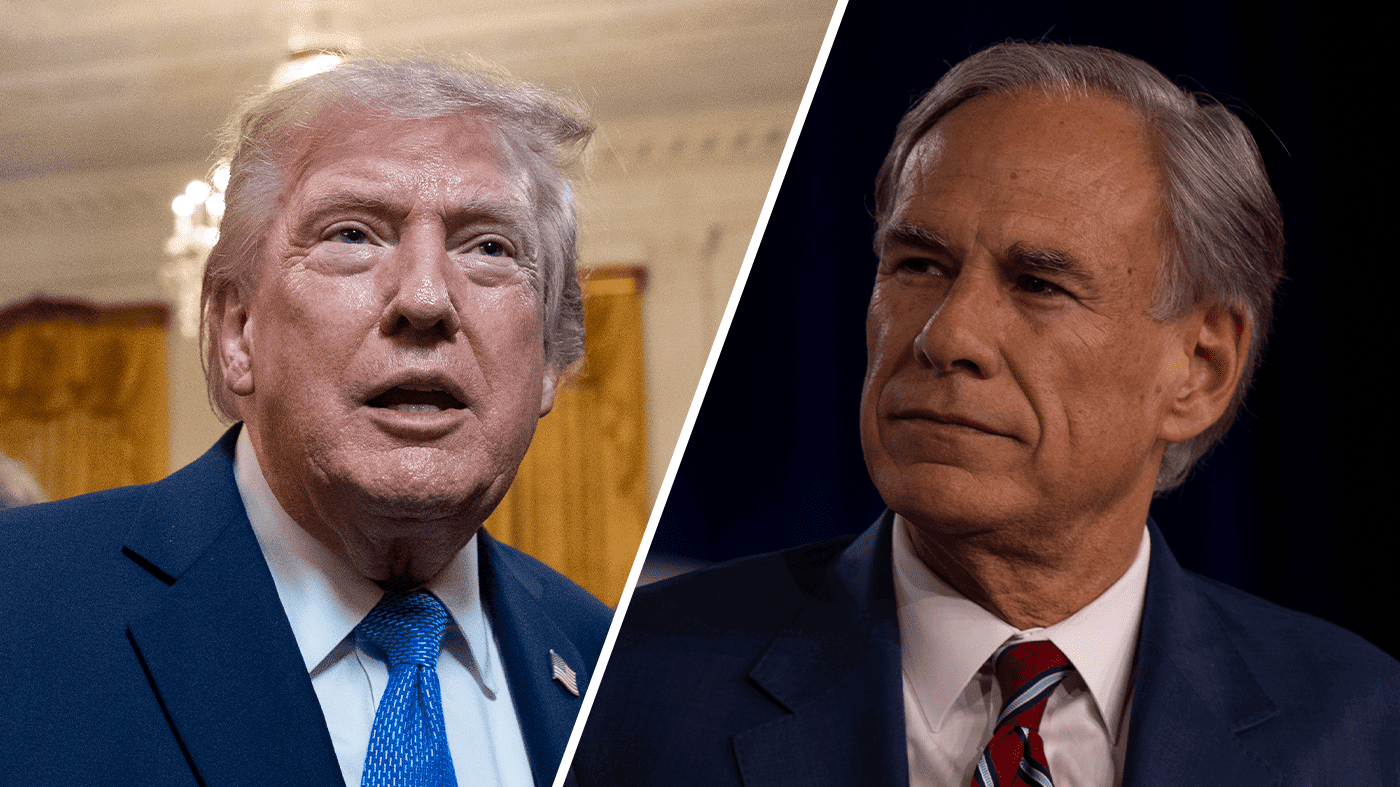
President Trump is walking a careful line on data centers, signaling to Republican candidates that they are free to oppose the facilities as local opposition intensifies ahead of the midterm elections. While the president has repeatedly championed data centers as economic engines, he acknowledged last week that "some people feel differently" on the issue, giving GOP hopefuls room to distance themselves from the industry where necessary.
Speaking to reporters, Trump said he would not object if Republican candidates take a stand against data centers in their districts. "If Republicans are against a data center, that's OK with me," he said. "I'm only saying that if I ran a community ... if I was a mayor or if I was a governor in the state, I would want to have the data centers because they bring tremendous income."

The comments come as a growing number of Republicans, including Texas Gov. Greg Abbott and Trump-endorsed Senate candidates like Texas Attorney General Ken Paxton and former Rep. Mike Rogers of Michigan, have called for stricter restrictions on data centers. Their shift reflects mounting voter anxiety over the environmental impact, energy demands, and potential risks associated with artificial intelligence infrastructure.
One Republican strategist told The Hill that Trump's position has been "fairly consistent," but "what's been more malleable is everybody else's opinion." The strategist suggested that the president's flexibility is a pragmatic response to political realities, especially with the midterms just months away and Trump's own approval ratings under pressure.
Mark Weaver, an Ohio-based crisis communications adviser, observed that Trump appears to be attuned to voter concerns. "That's why I think his language has been somewhat muted compared to other things he talks about," Weaver said. Still, he predicted Trump would "continue to present a balanced approach of supporting them to ensure that the technology race is not won by China."
The White House has tied data center expansion to national competitiveness, arguing that the U.S. must outpace Beijing in AI development. But that argument is colliding with local opposition over water usage, electricity consumption, and noise, prompting some GOP figures to reconsider their stance.
Trump's latest remarks also align with his broader midterm strategy, as he has urged GOP voters to treat the elections as a referendum on his leadership. His decision to let candidates take their own positions on data centers may be an attempt to avoid a one-size-fits-all approach that could alienate key constituencies, particularly in areas where the facilities have sparked controversy.
Meanwhile, the debate extends beyond politics. NASA Administrator Jared Isaacman suggested this week that data centers could be placed in orbit, taking advantage of solar energy to power the AI boom. "Let's take our data centers, put them in Earth orbit, take advantage of that free fusion reactor that's out there for us," Isaacman said, framing the idea as a way to win the "AI race" while sidestepping terrestrial conflicts.
For now, Trump's willingness to let GOP candidates chart their own course on data centers may provide political cover, but it also underscores the growing complexity of an issue that once seemed like a bipartisan priority. As the midterms approach, the president's balancing act will be tested further, especially if more Republicans follow Abbott's lead and embrace restrictions.
Read more about how Trump's approval slump is deepening GOP fears for the midterms, and how the president is urging voters to treat the elections as a personal test of his mandate.