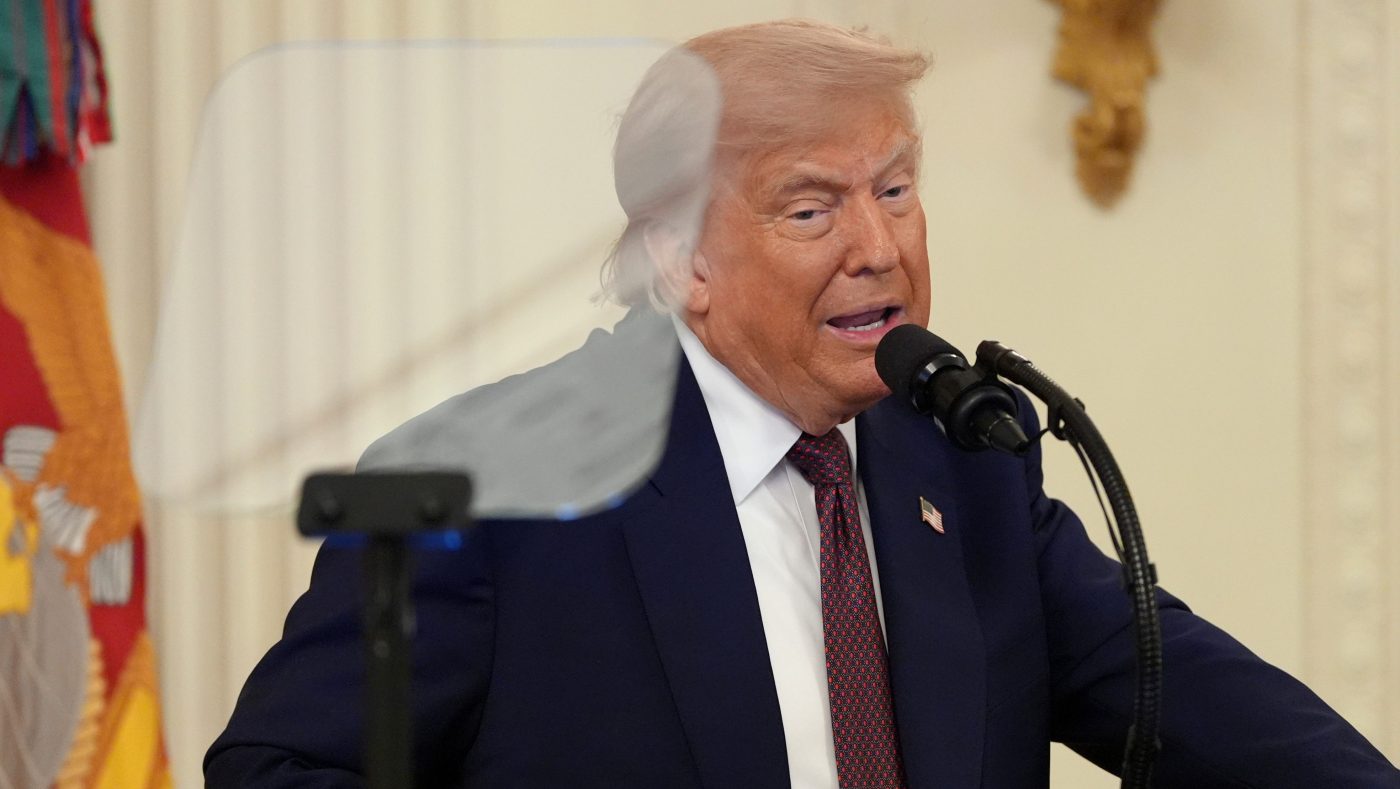
President Donald Trump asserted in a recent interview that there are no constraints on his authority, pushing back against suggestions that the Iran conflict taught him otherwise. Speaking with Axios's Marc Caputo, Trump was asked if the Middle East war had revealed any boundaries to his power. 'I haven't learned that lesson yet,' Trump replied. 'I know there are, but there are no limits. We defeated them totally militarily.'
The president's comments came as he defended the memorandum of understanding (MOU) signed Wednesday with Iran, which he described as effectively an 'unconditional surrender' by Tehran. Caputo pressed him on his earlier promise of such a surrender, and Trump doubled down, saying, 'Well, it really probably is unconditional surrender.'
The 14-point MOU includes lifting sanctions on Iran and providing a $300 billion reconstruction fund in exchange for concessions on Tehran's nuclear program and nuclear material stockpile. However, key details were deferred to future talks. The immediate effect: Iran reopens the Strait of Hormuz, and the U.S. lifts oil sanctions and ends its blockade of the waterway.
The deal has drawn sharp criticism from GOP lawmakers. Sen. Bill Cassidy (R-La.) called it 'the worst foreign policy blunder in decades,' reflecting broader unease within the party. The MOU triggers a 60-day clock for technical negotiations aimed at a final peace deal, as reported in our analysis of the MOU's timeline and scope.
Vice President Vance's planned trip to Switzerland this weekend for the next round of talks was delayed Thursday evening amid ongoing Israeli strikes against Hezbollah, the Iran-backed Lebanese militant group. Vance told reporters Thursday afternoon he still intends to participate but doesn't know 'exactly when' the talks will occur. 'We think these technical negotiations start sometime this weekend,' he said during a White House briefing. 'That's still the plan. But that could change.'
Switzerland's Department of Foreign Affairs confirmed the postponement Friday, noting that the talks were to include delegations from the U.S., Iran, and mediating countries Qatar and Pakistan. 'Switzerland remains ready to facilitate these talks,' the department said in a statement. 'The relevant preparatory work at Bürgenstock is continuing. No further information can be provided at present.'
Trump's assertion of unlimited power has reignited debate over executive authority, especially as his administration navigates a volatile region. The delay in negotiations underscores the fragility of the process, with Iran hard-liners already pushing back against the MOU, as covered in our report on regime splits. Meanwhile, GOP senators remain dismayed by what they see as a costly concession, detailed in their concerns over the $300 billion fund.
The coming weeks will test whether Trump's confidence translates into a stable deal or further entrenches regional tensions. For now, his message is clear: no limits.