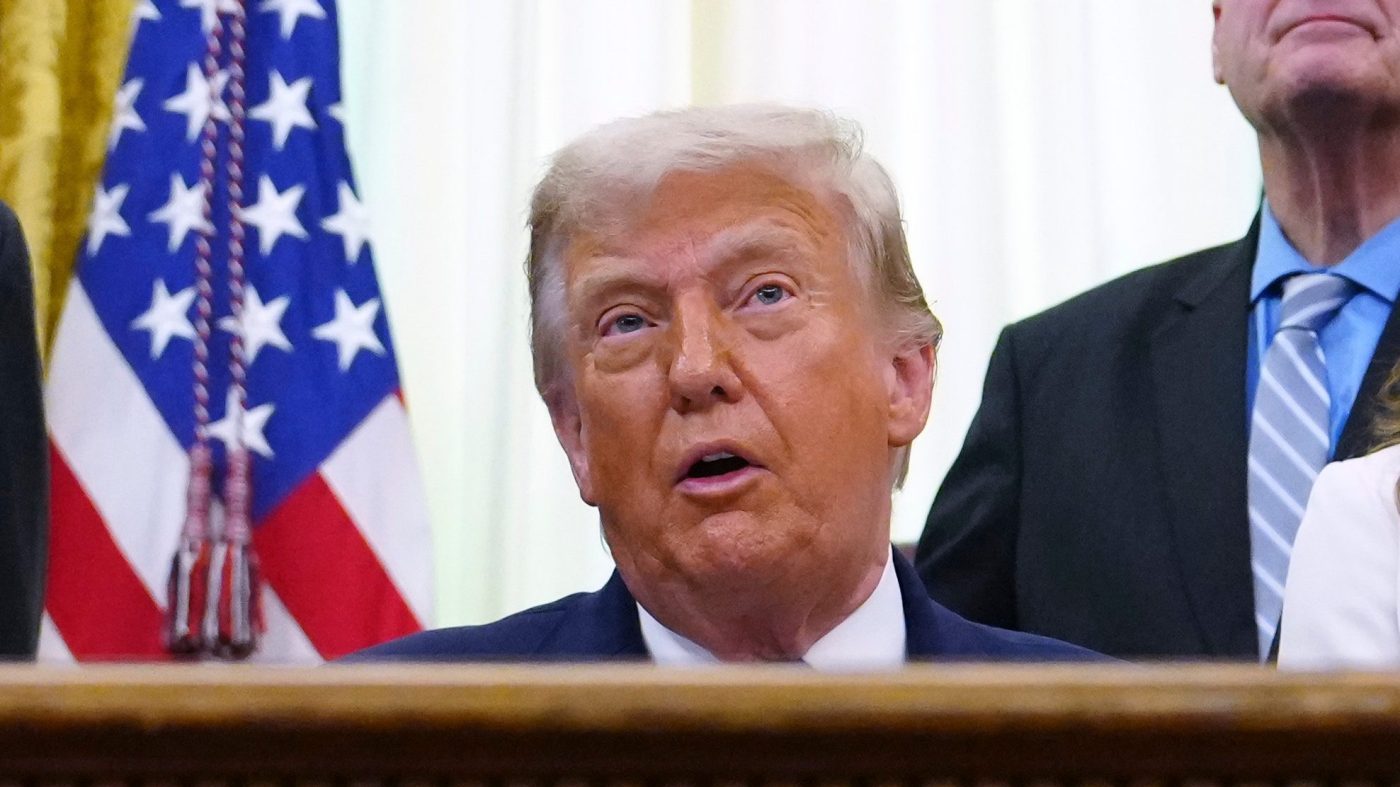
President Donald Trump told reporters Wednesday that he welcomed the latest inflation data, calling the May price increases 'great' and declaring, 'I love the inflation.' The remarks came after the Labor Department reported the consumer price index rose 4.2% over the past 12 months, with a 0.5% jump in May alone.
When asked if he was concerned about the rising costs for American households, Trump doubled down, linking the surge directly to his administration's military actions in Iran. 'That's why oil is $85 a barrel,' he said, pointing to the seizure of millions of barrels of oil and 22 ships from the Islamic Republic.
The president framed the economic pain as a necessary trade-off for national security. 'We had the best economy we've ever hit prior to the Iran war,' he said from the Oval Office. 'Everything was going well, and I said I hate to do this to you guys but Iran's going to have a nuclear weapon very soon. We have to go and attack.'
Energy prices have been a key driver of inflation, spiking 3.9% in May following a 3.8% rise in April and a 10.9% surge in March. The administration has argued that both inflation and oil prices will drop sharply once the conflict ends, but a fragile ceasefire continues to be punctuated by strikes, with no clear resolution in sight.
Critics, including Democratic lawmakers and political opponents, have seized on Trump's comments. They accuse him of disregarding the financial strain on ordinary Americans while prioritizing military objectives. The president's earlier admission that he isn't 'thinking about Americans' financial situations' during Iran negotiations has further fueled the backlash.
The economic landscape has also drawn scrutiny from Capitol Hill. Energy Secretary Wright recently faced a House grilling on budget matters as Iran tensions continue to drive oil prices higher. Meanwhile, the administration is battling a lawsuit over a White House UFC event, and pushing for new rules on prediction markets.
Trump's political allies have largely defended his stance, arguing that long-term stability in the Middle East will ultimately benefit the U.S. economy. But with no end to the conflict in sight, the immediate outlook for consumers remains uncertain. The president's embrace of inflation marks a sharp departure from traditional political messaging, where rising prices are typically seen as a liability.
As the 2024 campaign heats up, Trump's economic record—both pre-war and during the conflict—is likely to be a central issue. His opponents are already using his own words to paint him as out of touch, while his supporters point to the broader strategic goals. For now, the White House is betting that a post-war economic rebound will vindicate its approach.