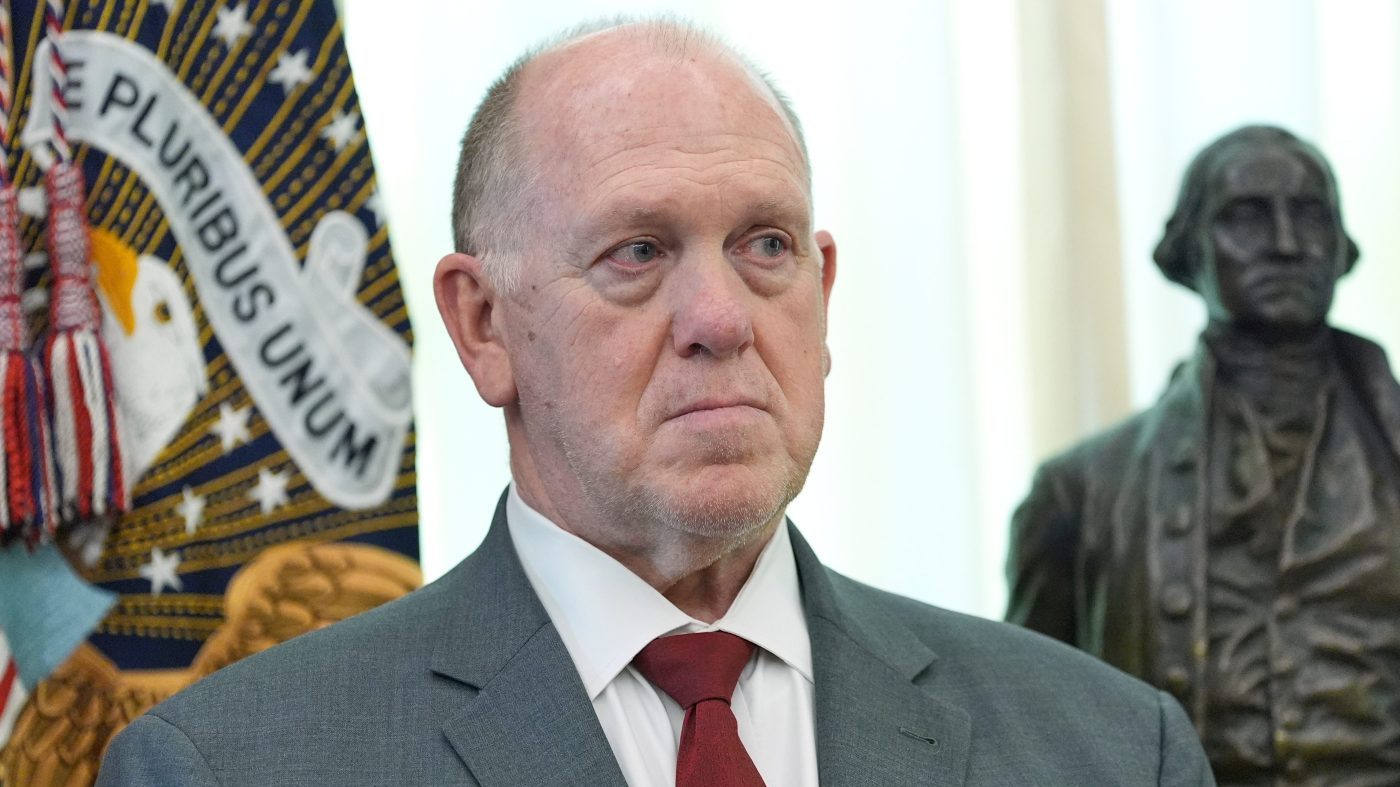
Senior White House immigration advisor Tom Homan on Tuesday outlined the Trump administration's renewed offensive against sanctuary cities, directly connecting the policy to violent crime in the wake of a Chicago student's murder. Homan argued that eliminating sanctuary jurisdictions would prevent "thousands" of future deaths.
Linking Policy to Tragedy
The administration's focus sharpened following last week's fatal shooting of Loyola University Chicago student Sheridan Gorman. The suspect is a Venezuelan national. Homan, in an interview, stated the President is committed to "taking on" the hundreds of cities and counties that limit cooperation with federal immigration enforcement. "We have to end sanctuary city policies, because doing so will save thousands, thousands of lives," Homan said.
Illinois Governor J.B. Pritzker swiftly condemned the White House's rhetoric, accusing it of exploiting the tragedy for political gain. In a statement, Pritzker urged the administration to focus on "real solutions" like restoring federal violence prevention funding instead of "politicizing heinous tragedies." This clash reflects the deep national divide over immigration enforcement, a debate that has repeatedly stalled Department of Homeland Security funding and broader government spending bills.
Legal and Operational Battlegrounds
The administration's primary leverage against sanctuary cities—withholding federal funds—has been stalled in the courts since President Trump announced the policy in January. Despite this legal blockade, immigration officials have pursued aggressive operational tactics. Earlier this year, Homeland Security conducted its largest-ever enforcement operation targeting the sanctuary city of Minneapolis.
Homan claimed that operation, dubbed Metro Surge, forced Minneapolis to become "less of a sanctuary city" by granting federal agents greater access to local jails. He contrasted this with Chicago, expressing frustration that the city does not follow what he called a safer model for arresting individuals. "We can arrest a bad guy in the safety and security of a jail, rather than putting our officers at risk on the street," Homan stated.
The Sanctuary City Defense
Leaders of sanctuary municipalities defend their policies as essential for public safety, not immigration. Minneapolis Mayor Jacob Frey, during the January crackdown, described his city's stance as a "safety strategy" designed to build trust. "We want people who are undocumented to have the confidence to call 911 without the fear that they'll get deported," Frey argued. This philosophy is shared by over 200 jurisdictions across 13 states that adopt some form of non-cooperation with Immigration and Customs Enforcement (ICE).
The administration's hardline stance continues to face significant opposition beyond city halls. A former senior Border Patrol commander recently launched a scathing critique of the administration's immigration leadership, highlighting internal dissent. Furthermore, the legal foundation for many enforcement actions remains under scrutiny, as the Supreme Court examines core asylum policies that define who can be detained and removed.
The debate over sanctuary cities is now inextricably tied to specific incidents of crime, ensuring it will remain a potent and emotionally charged issue through the election cycle. The administration's ability to implement its vision remains constrained by the judiciary, even as officials like Homan promise an unrelenting campaign against jurisdictions they view as obstructing federal law.