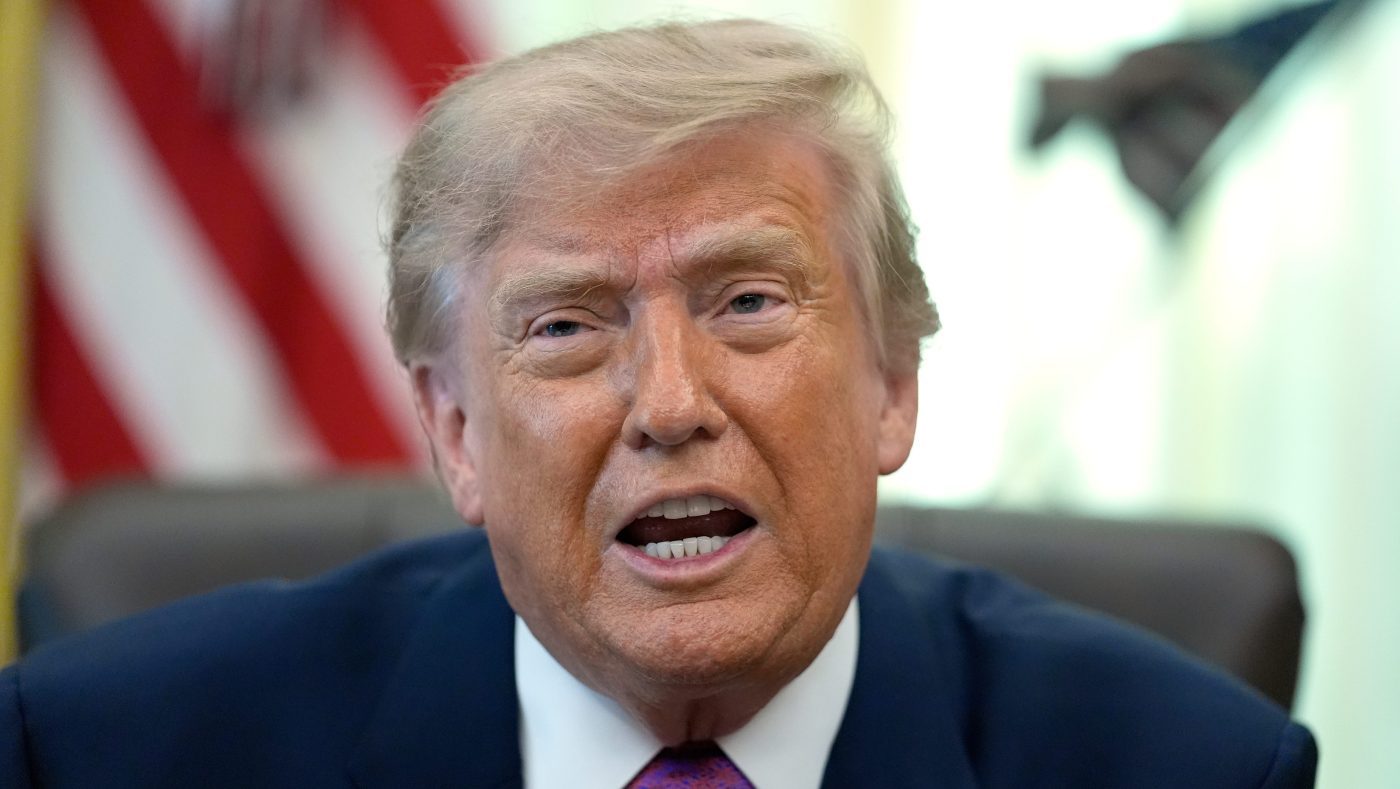
President Trump on Tuesday launched a blistering attack on the Supreme Court after it upheld a lower court's block on his administration's mail-in voting plan, accusing the conservative justices who joined the majority of betraying their originalist principles and bowing to Democratic pressure.
In a lengthy post on Truth Social, Trump called the ruling "a bad decision" and praised Justices Samuel Alito and Clarence Thomas as "legends" for their dissents. But he reserved sharp criticism for the three other conservative justices — Brett Kavanaugh, Neil Gorsuch, and Amy Coney Barrett — who sided with the court's liberal bloc in the 6-3 decision.

"These are not the people I interviewed to serve on the United States Supreme Court, they are merely a shell of their original selves, a Court that is costing the United States Trillions of Dollars with shockingly bad rulings that are of such magnitude that it won't be easily possible for our Country to recover or heal," Trump wrote.
The president predicted the high court would be remembered for "rendering some of the most destructive, hurtful, and damaging decisions in our Country's history."
The ruling was the third time the administration's emergency request was rejected by the Court. The plan would have required states to upload voter lists before sending out mail-in ballots and imposed new design requirements on ballots that the Postal Service would deliver. Trump has repeatedly claimed, without evidence, that mail-in voting is "corrupt" and a "disaster," a stance that has drawn criticism from election officials and voting rights advocates.
While Kavanaugh voted with the majority, he wrote separately to suggest the administration's plan might be legal in principle. "But applying the rule in the 2026 elections would be arbitrary and capricious in violation of the Administrative Procedure Act because state and local election officials do not have sufficient time to reasonably implement the rule before the elections," he wrote.
The decision came as Trump's administration continues to face legal setbacks over its election-related policies. The president's attack on the judiciary is likely to intensify scrutiny of his relationship with the federal courts, particularly as he has vowed to reshape the judiciary in his second term. His comments also echo his past criticism of judges who have ruled against his administration, including during his first term.
The fight over mail-in voting is part of a broader political battle over election integrity, with Republicans pushing for stricter rules and Democrats defending expanded access. Trump's rhetoric has alarmed voting rights groups, who say his efforts could undermine confidence in the 2026 midterm elections. Meanwhile, his administration's approach to election policy remains a flashpoint in Congress, with some GOP figures facing political fallout over their alignment with the president's claims.
The Supreme Court's decision does not end the legal fight, as the administration could pursue other avenues, but the rebuke is a significant setback. Trump's reaction suggests he is unlikely to accept the ruling quietly, and his attacks on the judiciary may intensify as the election cycle heats up.