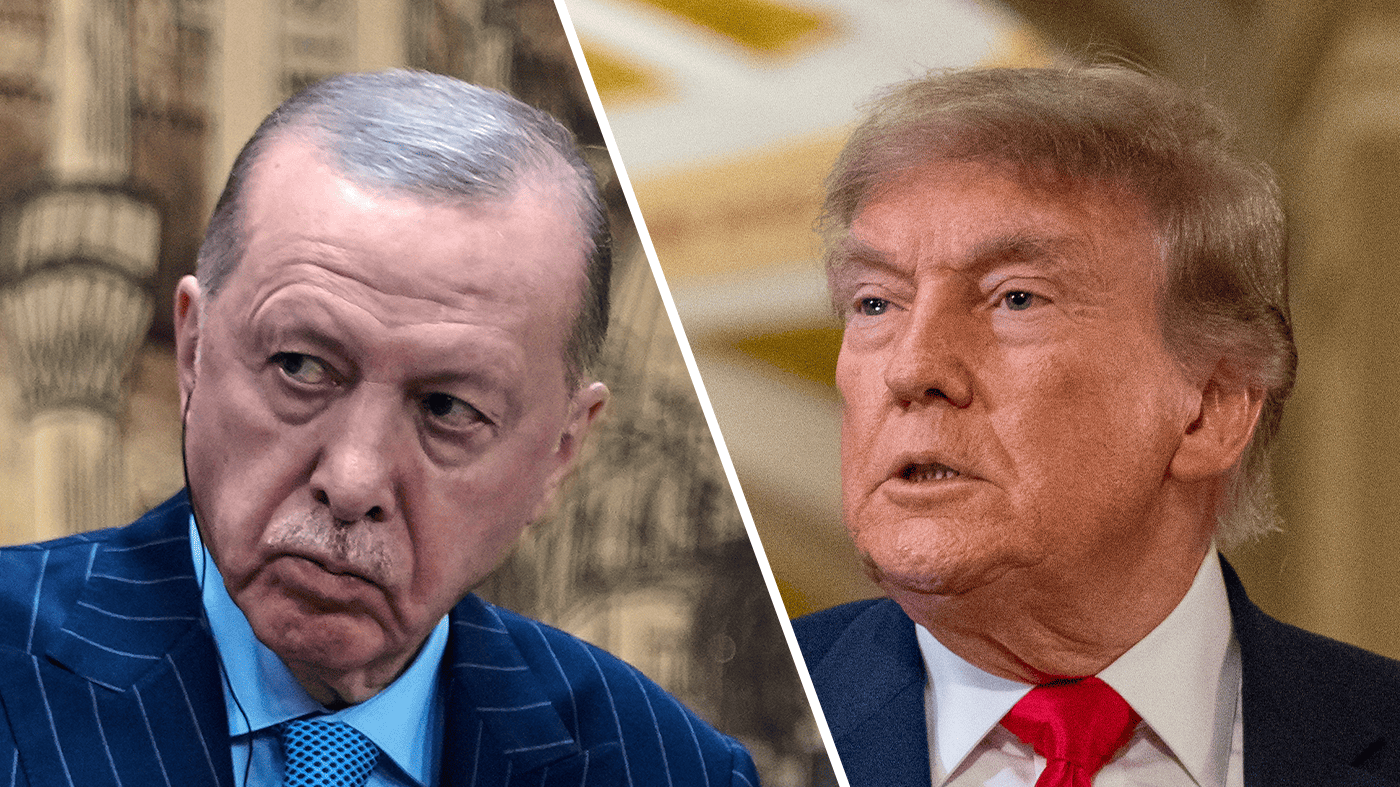
President Donald Trump has authorized a military sales package worth over $700 million to Turkey, marking a significant win for Turkish President Recep Tayyip Erdogan as he prepares to host a high-stakes NATO summit in Ankara next month. The deal, which includes advanced jet engines for Turkey's domestic fighter jet program, comes despite objections from some U.S. lawmakers and conservative commentators.
Trump defended the sale during a press conference Wednesday, commending Erdogan for refraining from entering the U.S.-led war against Iran. "He was a prime candidate to go into the war with Iran, maybe on the Iran side because he's not a big fan of Israel as you know. And I asked him to stay out. He stayed out," Trump said. The president added, "Erdogan's a great leader, very strong person, great military ... everything I've ever asked him for he's done."
The praise drew immediate rebuke from Fox News host Mark Levin, a staunch Trump supporter who criticized the administration's outreach to Turkey. "Stop giving our best technology away to Islamist nut job Erdogan! Turkey became a NATO member long before Erdogan seized power," Levin posted on social media platform X. Representative Nicole Malliotakis (R-N.Y.) also voiced opposition, stating that Turkey under Erdogan should not receive advanced U.S. military equipment given its alignment with Iran and Russia.
Turkey remains a strategically vital NATO member, controlling key maritime routes and hosting millions of refugees. However, Erdogan's authoritarian governance—including the jailing of political opponents, journalists, and activists—has strained relations with European allies and human rights groups. His government has also deepened ties with Russia, China, Iran, and Hamas, while threatening neighboring Greece and Cyprus.
Erdogan's personal rapport with Trump has provided him with international legitimacy, shielding him from isolation within NATO. Trump indicated he would attend the July NATO summit only because Erdogan is hosting. Meanwhile, NATO has blocked dozens of Turkish journalists from covering the summit at Ankara's request, a move that has drawn criticism from press freedom advocates.
Gönül Tol, a senior fellow at the Middle East Institute, noted that Erdogan values U.S. presidential approval and has cultivated a loyal relationship with Trump. "Loyalty is a priority for Trump, and Erdogan has seemingly played a good soldier—rarely, if ever, criticizing Trump despite rabid anti-American sentiment in Turkey," Tol said. A recent Pew survey found only 6% of Turkish respondents had confidence in Trump, and only 13% viewed the U.S. favorably.
Beyond the jet engine sale, Trump said he intends to reintegrate Turkey into the F-35 fighter jet program, despite U.S. sanctions imposed under the Countering America's Adversaries through Sanctions Act for Turkey's purchase of the Russian S-400 air defense system. "I'm going to probably do something that's going to make him very happy," Trump said. Congress has explored options for Turkey to dispose of or secure the S-400 systems, but Ankara has not followed through.
Tol argued that Turkey's growing defense production capacity makes it a valuable partner for the U.S., especially as American stockpiles are depleted due to the Iran war. "Turkey comes in handy there. It already has these defense partnerships, and it's only going to strengthen those partnerships," she said. The administration's decisions reflect a pragmatic approach to maintaining a key NATO ally, even as Erdogan's domestic and foreign policies remain deeply controversial.