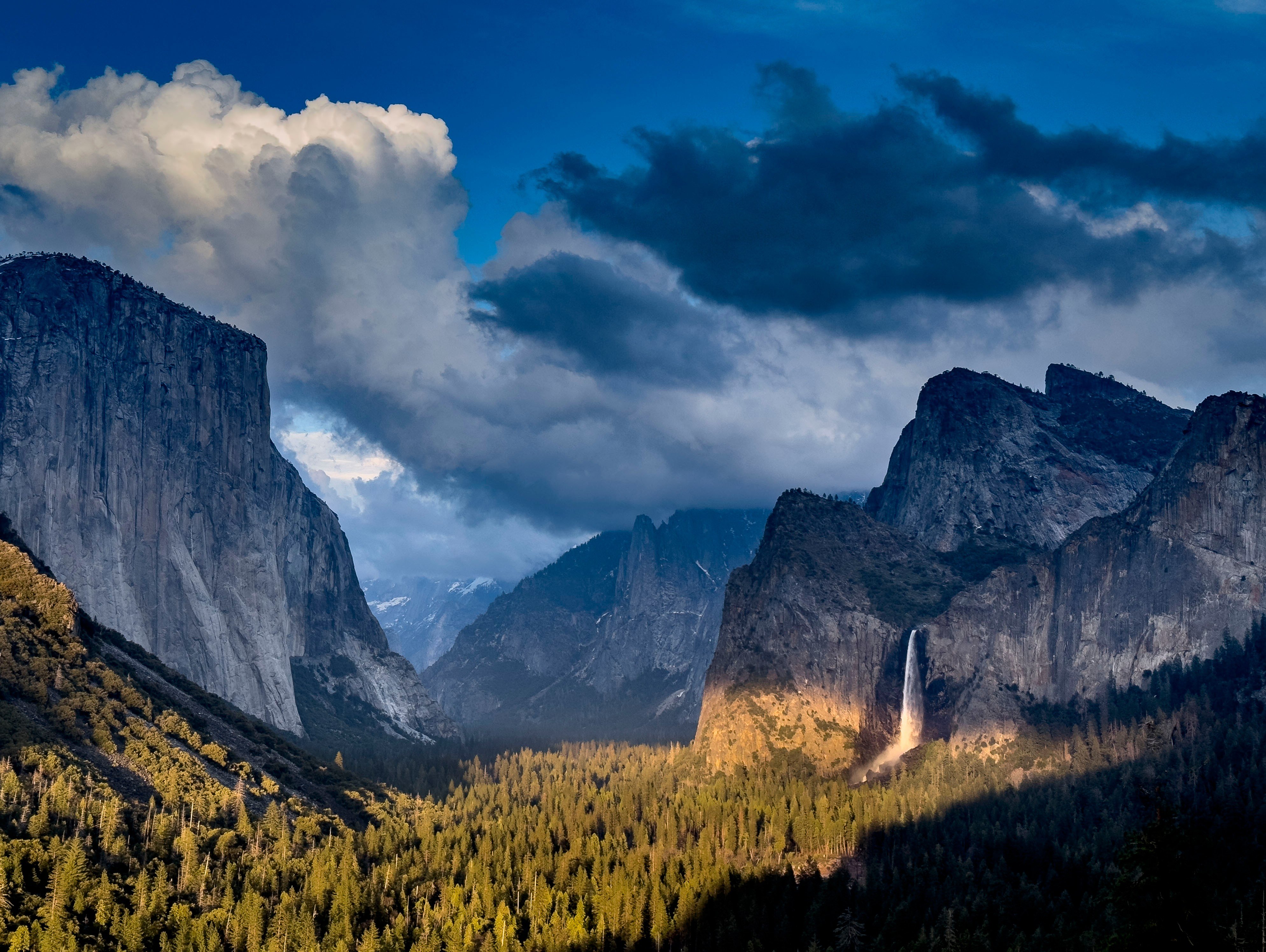
The Trump administration is weighing a land exchange that would transfer a portion of Yosemite National Park to a private company, according to a document submitted to Congress and obtained by The Hill. The proposal, which has not been finalized, would allow a landowner to connect their property to a park service road to facilitate commercial development.
The National Park Service (NPS) acknowledged in the document that it is “working with the landowner on a land exchange that will … enable NPS to convey an interest in land.” The agency noted that the deal would require the landowner to purchase property inside the park or within other NPS units in California. Separately, responses provided by the Interior Department to a Senate office and shared with The Hill list the land swap as a “priority.”
The Interior Department, which oversees the NPS, told The Hill that no final decision has been made. “If a proposal advances, the Department will follow established procedures to ensure appropriate coordination, transparency and public involvement consistent with federal law,” the department said in a statement. It also pushed back against allegations of backroom dealing, asserting that “there has been no political pressure to reach a predetermined outcome, and claims suggesting the Department is secretly working to hand over National Park Service land to a private developer are false.”
The proposed swap was first reported by NOTUS, which identified the company as Kingsbarn Realty Capital, a real-estate development and investment firm. Lanny Davis, an attorney for Kingsbarn and a former counsel to President Clinton, confirmed to NOTUS that the company is seeking the exchange. Davis framed the effort as environmentally beneficial, saying, “It wasn’t Donald Trump; it was me, liberal Democrat Lanny Davis, former counsel to President Clinton, went to the Department of Interior, and we made the argument that this is a pro-environmental decision to allow this road to be directly built to allow the residents of this privately owned property to gain entrance or exit to the park.” He added, “The road we’re building is a direct pathway that does not endanger any endangered species, and is simply a road.”
The proposal has ignited fierce opposition from Democrats and conservation groups. Sen. Alex Padilla (D-Calif.) called it “the most corrupt administration in history” in a written statement to The Hill. He criticized the use of the Land and Water Conservation Fund, which he said exists to protect natural areas and provide recreation for all Americans. “Projects should be chosen on merit, not on an applicant’s connections to high-ranking Trump administration officials,” Padilla said. His office is working with the Senate Appropriations Committee to block the project.
Sen. Jeff Merkley (D-Ore.), the top Democrat on the Senate Appropriations Interior, Environment and Related Agencies Subcommittee, also voiced opposition, according to a spokesperson. Park advocates joined the criticism. Mark Rose, senior Sierra Nevada program manager for the National Parks Conservation Association, said in a statement, “The Trump administration’s attempts to dismantle America’s conservation legacy are now taking aim at Yosemite with this secretive, backroom deal that would turn over Park Service land to a private developer. This is an attack on the American people that own this national park.”
The controversy comes amid broader Trump administration efforts to roll back environmental regulations, including recent moves to ease truck emissions rules and target Obama-era engine mandates. Critics see the Yosemite proposal as part of a pattern of prioritizing private interests over public lands. The administration has also pursued other contentious initiatives, such as creating a U.S. Space Academy and touting progress on the Reflecting Pool amid a vandalism dispute.
As the land swap remains under review, the administration faces mounting pressure from lawmakers and environmental advocates to abandon the plan. The Interior Department insists that any final decision will follow federal procedures, but the political fallout is already significant, with Democrats vowing to use their oversight powers to halt the deal.