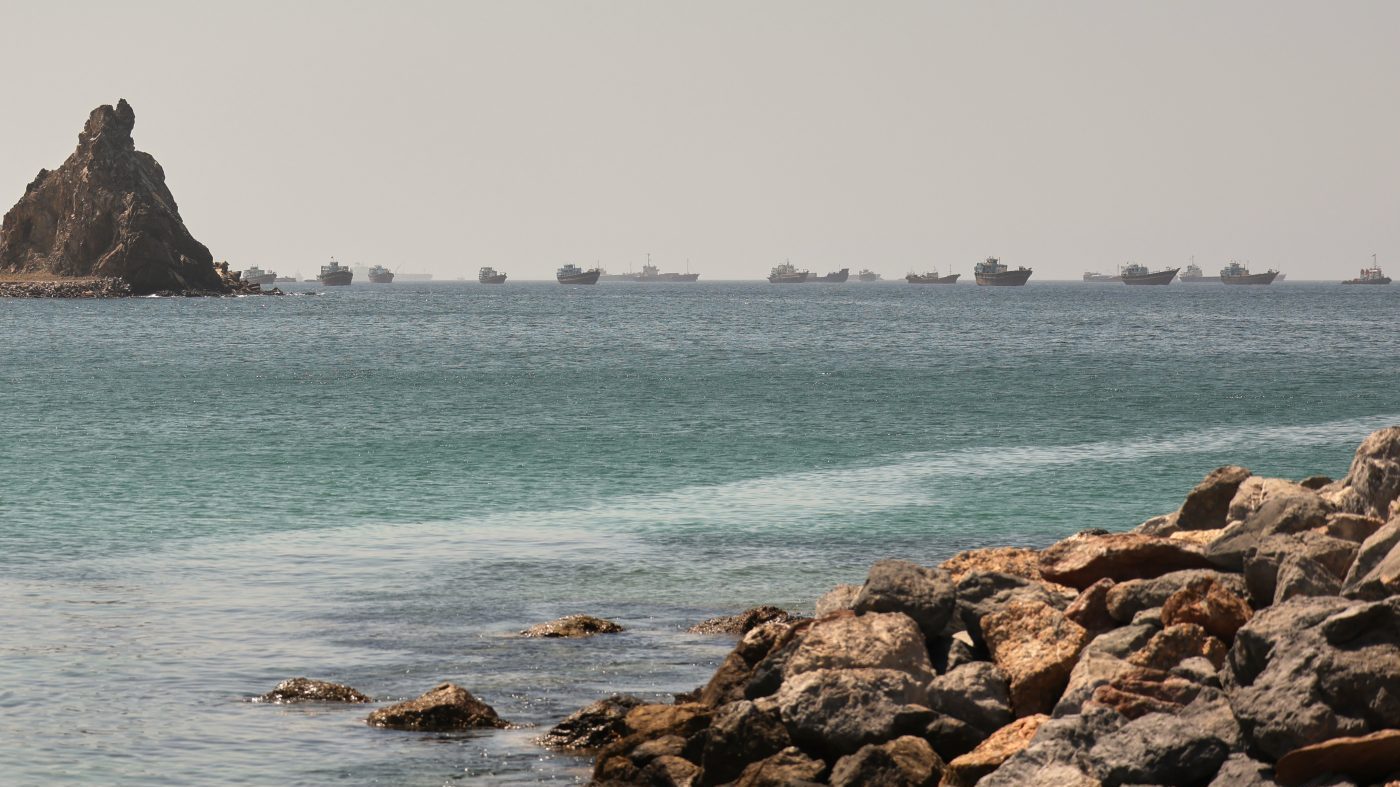
The USS Forrest Sherman, a destroyer designed shortly after World War II, carries its main armament in a configuration that once drew cynical jokes: one gun forward, two aft. Critics said it was built to fight while running away. Last week, three events suggested that metaphor now applies to the United States itself.
Drone Threats Force Bomber Relocation
First, the Pentagon swiftly moved a dozen B-1 bombers from RAF Fairford in the United Kingdom, reportedly in response to a possible Iranian drone attack. The move echoed Ukraine's Operation Spider's Web, where drones smuggled into Russia struck strategic bomber bases. Quadcopters flying near Fairford could have posed a similar threat, prompting the relocation.

But the threat extends beyond that single base. U.S. F-15 Strike Eagles sit at RAF Lakenheath, Navy destroyers are homeported in Rota, Spain, and Army and Air Force units are spread across Europe. Each installation offers a potential target for Iran or terrorist groups. Even domestic bases, as seen on September 11, are not immune. The danger is neither exaggerated nor ignored, but it is real.
Staggering Aircraft Losses in Operation Epic Fury
Second, a Congressional Research Service report released last week detailed the loss of 81 U.S. aircraft in Operation Epic Fury. The tally includes 12 F-15 Strike Eagles, one F-35, seven KC-135 tankers, an E-3 Sentry, and 50 drones or unmanned systems. Estimated replacement costs run up to $3.3 billion, on top of $38 billion in munitions expended. War, as always, is expensive.
Houthi Attacks on Saudi Airport
Third, Houthi strikes on King Khalid International Airport in Riyadh shut down operations twice in two days, killing 12 people and wounding around 300. The attacks came as President Trump was reportedly weighing U.S. involvement against the Houthis. They also underscored how vulnerable civilian infrastructure is to remote attacks, a lesson reinforced by Ukraine's drone campaign.
These three episodes highlight the fragility of American bases and infrastructure in an era of cheap drones and precision munitions. Iran, meanwhile, has intensified strikes on Gulf energy facilities, defying Trump's post-election threats.
Strategic Retreat from Europe?
Beyond tactical vulnerabilities, the United States appears to be retreating from its traditional role in Europe. The Trump administration has demanded that European allies bear more defense costs, a familiar refrain from past presidents. But no previous president has threatened to remove U.S. forces to compel compliance—a step that would be unprecedented.
Next month, U.S. Defense Policy Undersecretary Elbridge Colby will meet in Poland to discuss NATO's future, reportedly without the United Kingdom, France, or the Baltic states. The Pentagon is also reviewing its force posture in Europe, including a proposed 20 percent cut in flag and general officer billets. Could the four-star European Command be downgraded? Could the alliance's supreme allied commander in Europe become a non-American for the first time in history?
Such a move would be strategically catastrophic. It would signal the abdication of U.S. leadership, with no other nation able to fill the void. It would also sever the link to the U.S. nuclear deterrent, as the supreme allied commander would no longer sit in the American chain of command. That would hand Vladimir Putin an opportunity to expand Russia's "active measures" designed to divide NATO, and could embolden further Russian aggression against Ukraine.
Inside the Trump administration, who is advocating for a balanced approach toward Europe? Who is arguing against the singular focus on China while ignoring Russia? If such a voice exists, it is staying quiet. The bedrock of U.S. security for 75 years may be on the brink of being discarded—and the consequences could be irreversible.