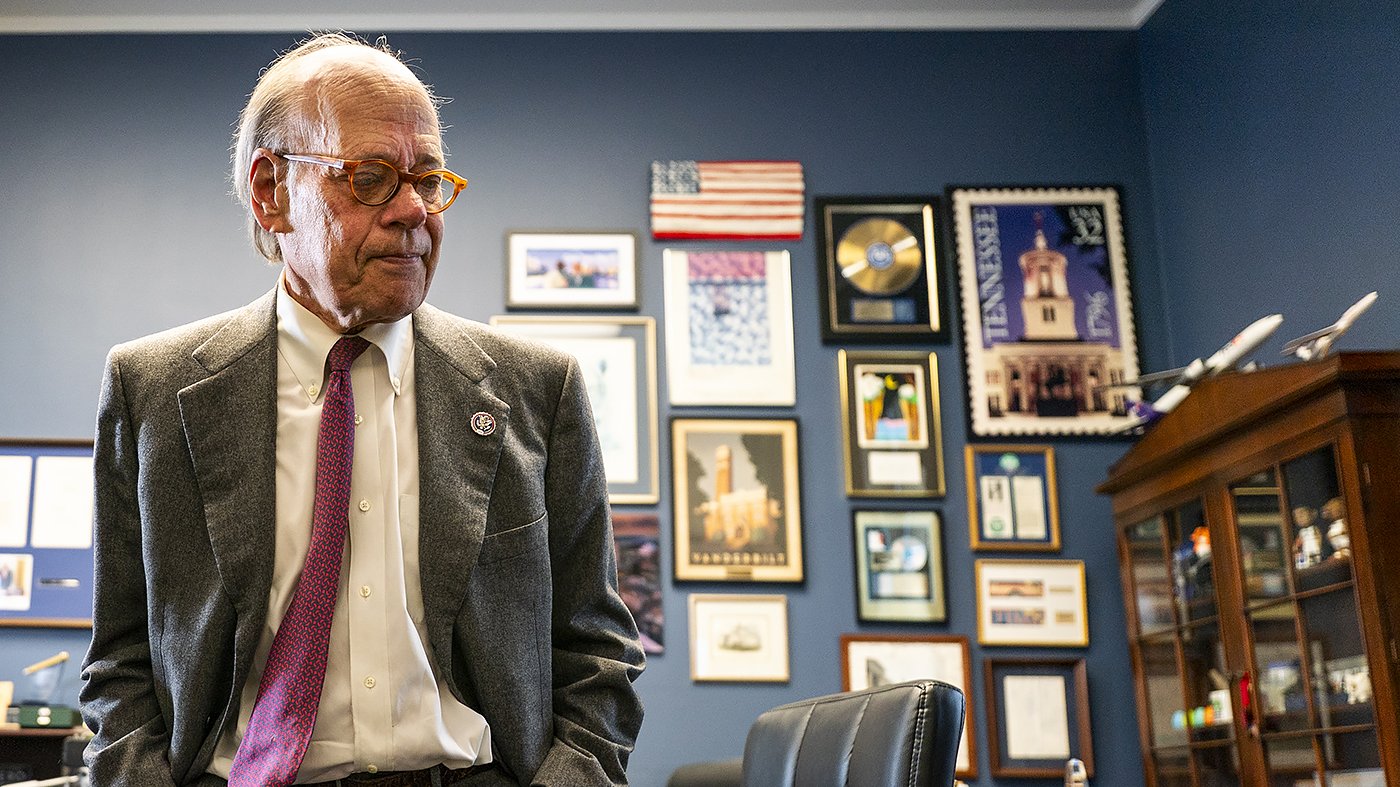
Representative Steve Cohen (D-TN), a liberal stalwart serving his 20th year in Congress, announced Friday that he will not seek reelection in November, becoming the first lawmaker to bow out due to the GOP's aggressive redistricting campaign ahead of the midterms. Cohen, who turns 77 this month, accused Republicans of engineering a power grab that disenfranchises Black voters in his Memphis district.
“I don’t want to quit, I’m not a quitter,” Cohen told reporters in his Rayburn Building office. “But these districts were drawn to defeat me.” With the new map signed into law by Governor Bill Lee (R), Cohen acknowledged that the cards were stacked too heavily against him to mount a viable campaign.

Cohen has long been the sole Democrat in Tennessee's nine-member House delegation, representing a heavily Democratic, majority-Black area in Memphis. Last week, GOP state lawmakers approved a map that dismantles his district, splitting it into three sprawling seats that stretch into the middle of Tennessee, each designed to dilute Democratic voting strength. The move follows the Supreme Court's decision to nullify a key provision of the 1965 Voting Rights Act, which had protected minority voters from such racial gerrymandering.
The new map all but guarantees that Republicans will hold all nine of Tennessee's congressional seats in the next Congress. The NAACP has already filed a lawsuit challenging the map, arguing it violates the Voting Rights Act by fracturing a Black-majority district. Legal experts say the case could have broader implications for redistricting battles in other states.
Cohen's retirement is a significant blow to House Democrats, who already face an uphill battle to retain their slim majority. The GOP's redistricting gains have fueled their midterm strategy, but recent polling suggests potential shifts in voter sentiment by 2028. For now, however, the Tennessee map is a clear victory for Republicans, who acted at the urging of President Trump to shore up their control of Congress amid low approval ratings and rising costs.
Cohen’s departure marks the earliest casualty of the GOP's nationwide redistricting push, which has targeted Democratic strongholds in states like Georgia and South Carolina. In Georgia, Republicans are already eyeing 2028 maps after a Supreme Court ruling on Louisiana, while South Carolina Governor Henry McMaster has called a special session to advance a GOP-biased map.
As the midterms approach, Cohen’s decision underscores the high stakes of redistricting battles. “This is about power, pure and simple,” he said. “They drew these lines to silence the voices of tens of thousands of Black voters in Memphis.” The fight over Tennessee's map is far from over, but for Cohen, the writing was on the wall.