Nearly a week after the nation's longest air traffic ground stop in 25 years, the Trump administration is still struggling to contain the political and technological fallout from a series of high-profile system failures. The Federal Aviation Administration's (FAA) air traffic control meltdown on Friday was the most visible in a string of outages that have hit multiple government agencies and major corporations, including Microsoft, Apple, JPMorgan Chase, and United Airlines.
President Trump has sought to project calm, telling reporters during his Asia trip, "It's fine. It's life. When you're big and powerful and you have all the money, things like that happen." Secretary of State Marco Rubio, speaking in the Philippines, echoed that line, insisting there is "zero evidence" that the incidents are connected or the work of "nefarious actors." But those assurances are not landing with some of the president's usual allies.
Sen. Josh Hawley (R-Mo.) told reporters at the Capitol that the full Senate should receive a briefing on the outages. He expressed skepticism about the official explanation for the air traffic failure—reportedly tied to a router in Arkansas—saying, "Maybe it's because, you know, somebody unplugged a router in Arkansas or whatever. I dunno. I find that, frankly, a little hard to believe." Hawley added, "If this is all coincidence, it's like the greatest coincidence in the history of the world. You can't tell me that all of this just is happenstance."
The administration has acknowledged that the precise cause of the FAA outage remains unknown. Transportation Secretary Sean Duffy has been candid about that uncertainty, noting that it appears related to an upgrade and a router. But the messaging has been muddled, with conflicting statements from different officials. At a White House press conference last Friday, Homeland Security Secretary Markwayne Mullin attributed the problem to new equipment overwhelming older systems, while Duffy, standing beside him, visibly shook his head.
Mullin further raised eyebrows when he cited an unnamed "one guy that's very smart with tech" as a source of insight during a Fox News interview. He said this person—not Elon Musk—theorized that the root issue was the difficulty of integrating older software with the advanced capabilities of artificial intelligence. The lack of a single, clear voice has frustrated even GOP-friendly strategists.
"They really need one person to be the communications lead and they need one clear message," said Brendan Steinhauser, a Republican strategist and CEO of the Alliance for Secure AI. "As they get more facts, they can share those facts—and avoiding speculation as much as possible is a good thing. But we have got quite a few different messages." Steinhauser warned that the public's fears are rational, given the rapid evolution of AI and cyber threats. "We are entering a new era where things are going to get worse because AI is going to transform everything," he said. "Defensive capabilities are not going to keep up with offensive capabilities, so we are going to have a lot of instability in our critical infrastructure."
The outages are occurring against a backdrop of international tensions, including the wars in Iran and Ukraine and the strategic rivalry with China. Adding to the unease, Nvidia—once the world's most valuable company—has been rocked by the departure of CEO Jensen Huang amid allegations that a woman he had an affair with was a Chinese agent. China denies the claim, and the woman, Alice Huang, has not commented.
On a Wednesday morning call, a senior administration official told reporters that the causes of the outages were "disparate" but "in the upgrading and patching realm." However, that explanation has done little to quell concerns—either technological or political. GOP strategist Dan Judy noted that Trump's upbeat rhetoric may not reassure voters. "I don't know what this president truly feels, but he certainly has not shown an appetite to talk about the dangers in a way that many voters would like to hear," Judy said. "I think what most voters want is to be reassured that some adults in the room are keeping tabs on the situation."
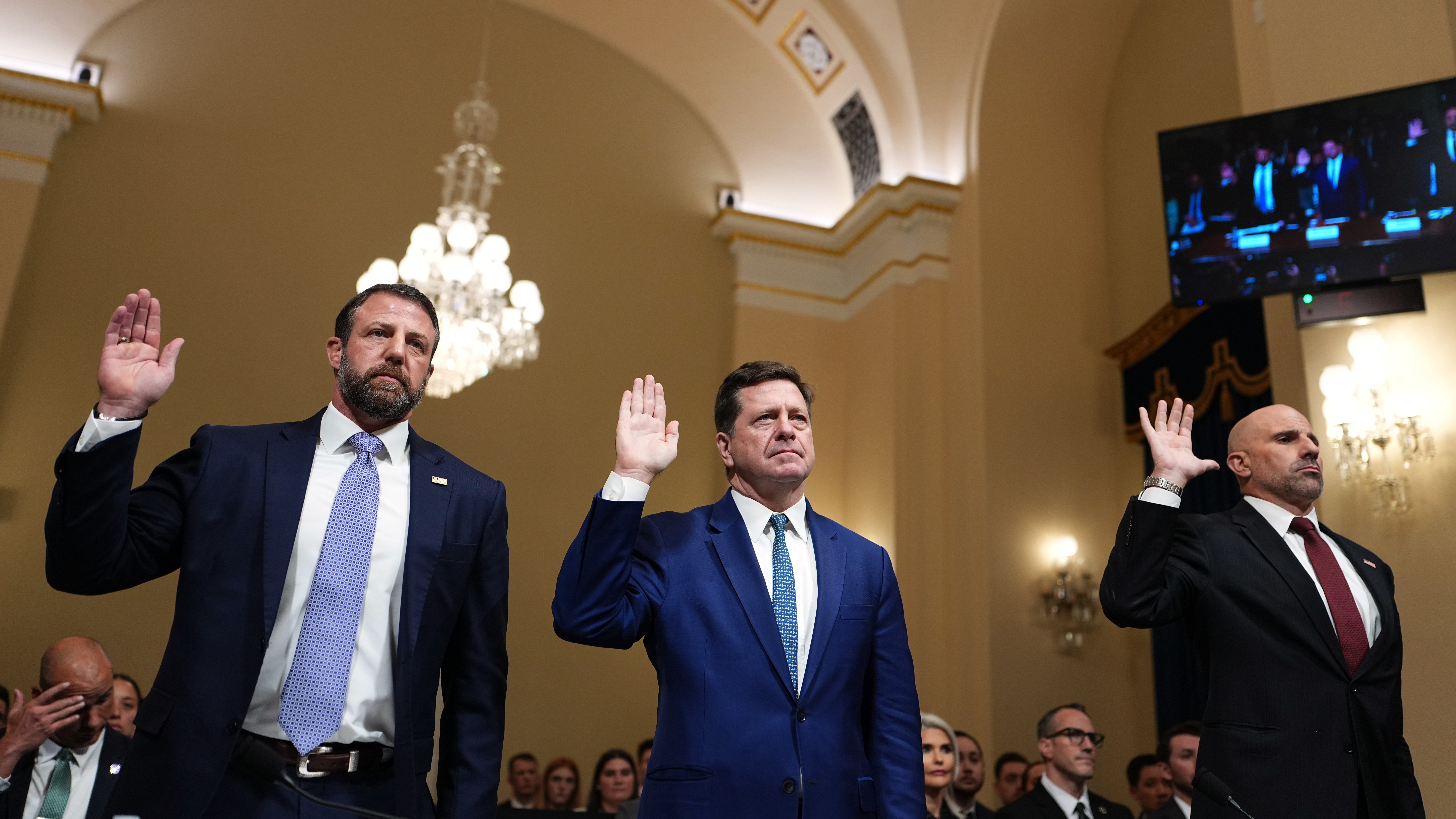
The White House is scrambling to contain the fallout, as officials try to project competence while facing skeptical lawmakers. The testimony of Mullin and Director of National Intelligence Jay Clayton before Congress is likely to be tense, as Hawley and others demand more concrete answers. Meanwhile, some experts see a silver lining: former cybersecurity official Brian Krebs argues that the recent outages show progress in identifying flaws before malicious actors can exploit them. But for a president who has often dismissed such concerns, the political challenge is real, and it is not going away.