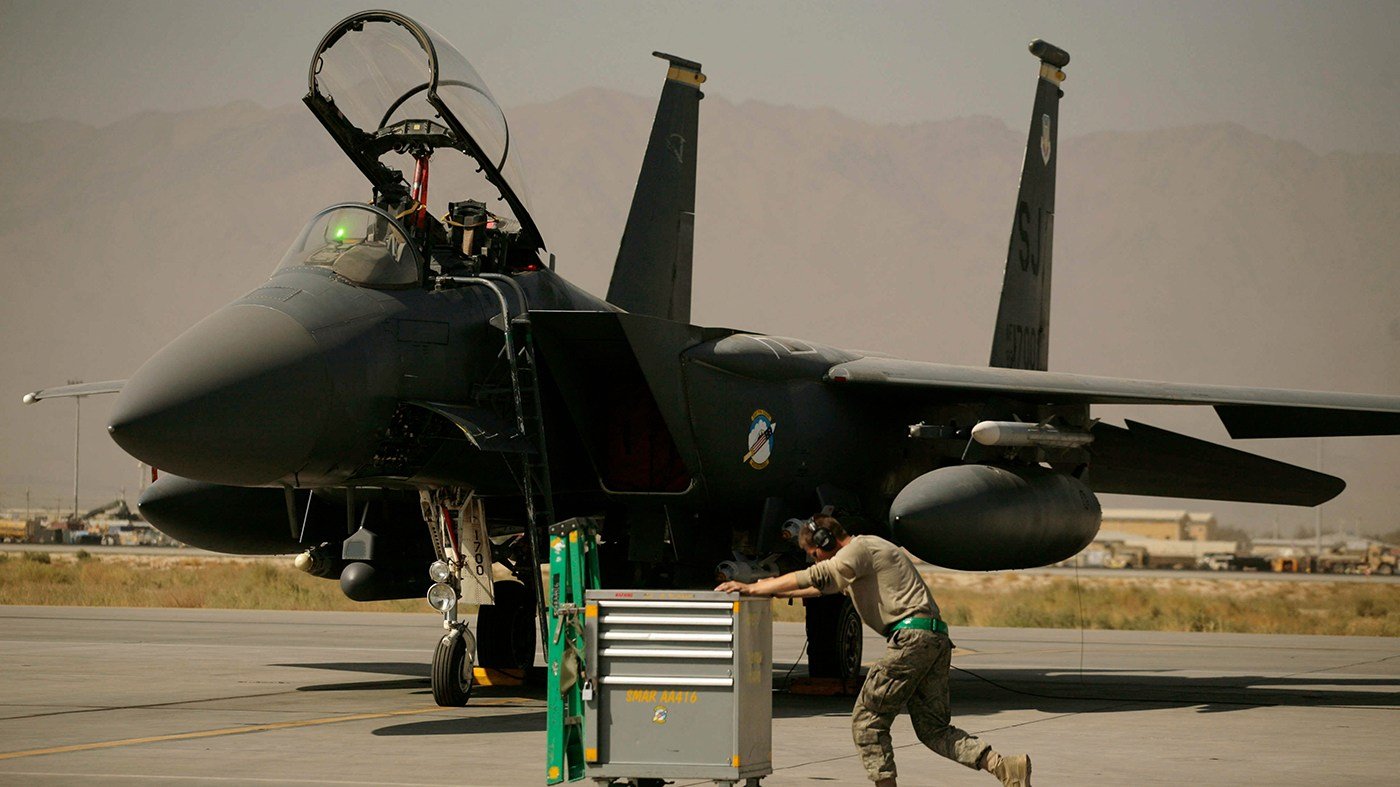
A U.S. Air Force colonel has detailed his harrowing survival after his F-15E fighter jet was shot down over Iran in April, during the early phase of the U.S.-Israeli conflict with Tehran. In an interview with CBS News' 60 Minutes, the officer—identified only by his call sign, Bravo, for security reasons—described the moment his aircraft was struck and his subsequent ordeal on the ground.
Bravo, who served as the weapon-systems officer on the two-man crew, told Norah O'Donnell that the jet was hit by an Iranian shoulder-fired missile, causing him to eject and plummet at an estimated 70-100 mph. His parachute was damaged, and he recalled the terrifying moment he looked up and saw no canopy above him. "At one point when I looked up and saw no parachute, that was the most terrifying thing I've ever seen," he said, adding that he prayed for help if he was to survive.
The mission, designated Dude 44, was a strike on Iranian industrial facilities linked to Tehran's drone and missile program, according to U.S. Central Command (CENTCOM) commander Adm. Brad Cooper, who also spoke to O'Donnell. Bravo compared the missile impact to "getting hit by a freight train." He and his pilot, identified as Alpha, ejected after failing to save the jet. Alpha landed safely, but Bravo crashed hard about five miles away, breaking his back, an arm, and a shoulder. Despite his injuries, he managed to move away from the crash site, eventually hiking to a 7,000-foot ridgeline.
Bravo described his survival as a "modern-day miracle," noting that Iranian forces came within a few hundred meters of his hiding spot in a valley. U.S. rescue teams located Alpha within six hours, but Bravo's position was more precarious. Defense Secretary Pete Hegseth told O'Donnell that the decision to wait 24 hours before extracting Bravo was "really tough," especially after the rescue helicopter came under fire. Bravo survived with almost no food or water during that time.
When rescue planes finally arrived, they encountered another problem: sand jammed their landing gear, stranding more than 90 elite U.S. service members on Iranian soil. To prevent the aircraft from falling into enemy hands, the troops destroyed them before being picked up by additional forces. Bravo praised the operation as a testament to teamwork, training, and leadership, saying it will "live in history as an example of what America's willing to do... to leave no man behind."
The incident underscores the ongoing volatility in the region, now in its seventh month of conflict. President Trump has suggested the war could end after the midterms and has floated the idea of taking control of Iran's oil supply, similar to the Venezuela oil deal, as the Strait of Hormuz shutdown has driven gas prices up since March. The military's handling of the rescue has also drawn scrutiny, with some former Air Force leaders criticizing the politicization of the military under Hegseth, though this operation has been hailed as a success.