Japan and the United States have agreed to stand up a joint production line on Japanese soil for advanced medium-range air-to-air missiles, a move aimed at shoring up allied deterrence as China's military posture grows more assertive across the Indo-Pacific.
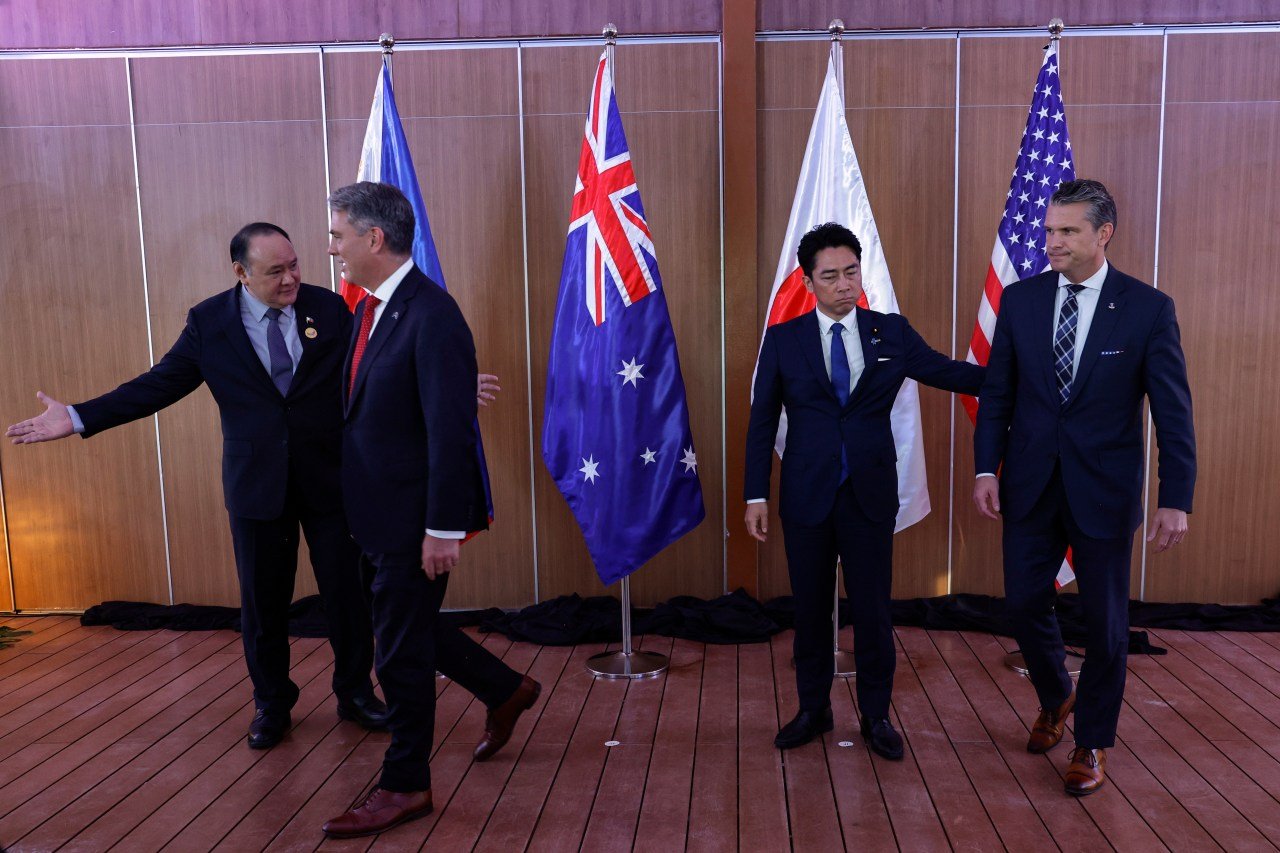
Japanese Defense Minister Shinjiro Koizumi unveiled the plan late Wednesday on the sidelines of a gathering of Southeast Asian defense chiefs in Cebu, Philippines, where he met with U.S. Defense Secretary Pete Hegseth. Koizumi said the missiles produced under what he called "Operation Supercharge" would be "essential for the F-35," the stealth fighter flown by both nations' militaries, but he offered no further technical or timeline details.

The agreement marks the latest step in a deepening military industrial partnership between Tokyo and Washington, which have repeatedly voiced alarm over Beijing's actions in the region. Koizumi said he and Hegseth "shared a sense of crisis" about the deteriorating security environment and agreed to boost the alliance's "deterrence and response capabilities with greater speed and intensity than ever before."
He also stressed the importance of a "free and open international order based on the rule of law" that rejects any attempt to change the status quo by force or coercion, while carefully noting that their talks were not aimed at any particular country. Hegseth, in a separate session with ASEAN defense ministers, echoed that sentiment.
"The approach we're taking, we describe as strong, quiet and clear," Hegseth said, adding that it should be "strong enough to deter coercion and aggression, quiet enough to avoid needless escalation or public theatrics." He assured the Philippines, Washington's oldest treaty ally in Asia, that the Trump administration would help build robust deterrence against Chinese actions in the disputed South China Sea.
The missile production deal comes amid a broader U.S. push to strengthen allied defense manufacturing. The Pentagon recently reached a preliminary agreement with Lockheed Martin on a new F-35 production pact, and Japan has committed billions to chip plants in New York. But the joint missile facility is a direct response to regional security pressures, including China's expansive claims in the South China Sea and its separate maritime dispute with Japan over the Senkaku/Diaoyu islands.
Australian Defense Minister Richard Marles, also in Cebu, said his country would not be deterred from asserting the rules-based order, despite a recent incident in which a Chinese fighter jet released flares and flew within 30 meters of an Australian surveillance aircraft. "Freedom of navigation on the high seas is profoundly important for Australia," Marles told the Associated Press.
China claims nearly all of the South China Sea, a vital shipping lane, while the Philippines, Vietnam, Malaysia, Brunei, and Taiwan have overlapping claims. Clashes between Chinese and Philippine coast guard and naval vessels have escalated in recent months, and Washington has warned it is obligated to defend the Philippines if its forces come under armed attack.
The U.S.-Japan missile initiative is the latest sign of a tightening alliance network in Asia, following Japan's first-ever deployment of fighter jets to India and continued U.S. arms sales to Taiwan, despite production constraints. As the Pentagon pushes to expand munitions output, the new Japanese facility is expected to bolster allied stocks and reduce reliance on U.S. production lines.