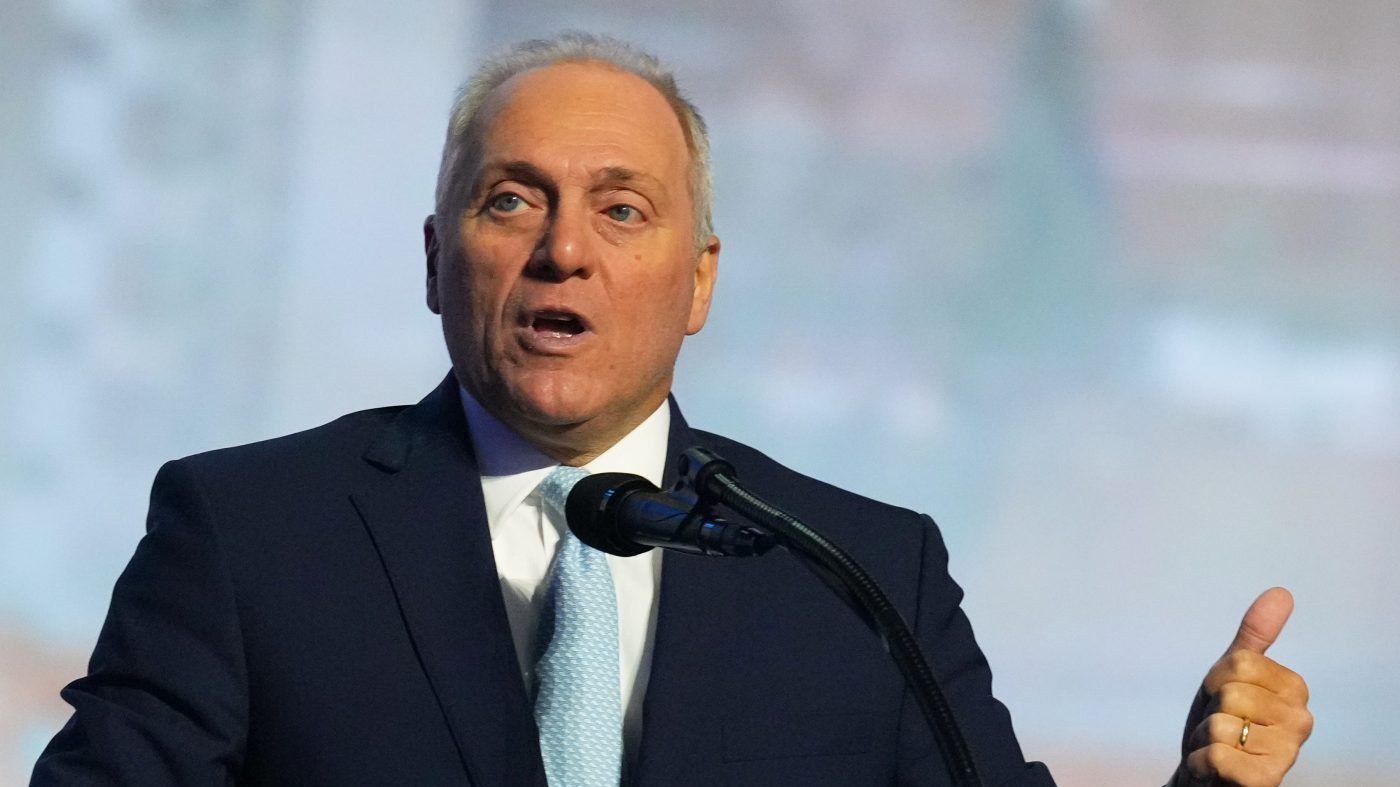
House Majority Leader Steve Scalise (R-La.) made the case Wednesday that Republicans can retain their narrow grip on the House if conservative voters show up in force on Election Day. In an interview on NewsNation's "Katie Pavlich Tonight," Scalise acknowledged the tight margins in many battleground districts but insisted that a motivated GOP base could overcome the current polling deficit.
When host Katie Pavlich pressed him on whether he was bracing for a Democratic takeover that would launch investigations into President Trump and his family—or attempt a third impeachment—Scalise pivoted to the importance of turnout. "Katie, we know this, and that is number one, there are a lot of close races right now, and if good people stay home, socialists can absolutely win some of these seats," he said.

"And that's why the biggest thing we're doing right now is encouraging people to turn out and vote, because if folks that normally sit out of midterm actually show up and vote this time around, we can hold the House," Scalise continued. He warned that if "good people stay at home, you're seeing these crazy far-left socialist candidates—they hate President Trump. They vowed retribution. They want to go after the president, go after his family."
Pavlich noted that the GOP's odds of keeping the chamber were "razor-thin," and asked whether Scalise was tracking specific toss-up races that could tip the balance. The Louisiana Republican responded that those races could break for the GOP "if folks show up."
However, forecasters are not as optimistic. Pollster Nate Silver said Sunday that for Republicans to hold the House, midterm polling "would have to be very wrong." He added that Democrats face a tougher battle in the Senate, where they must win states Trump carried in 2024 to flip control.
Polling averages have consistently favored a Democratic House takeover. Decision Desk HQ, The Hill's election partner, currently gives Democrats an 80 percent probability of winning the lower chamber. Such an outcome would serve as a referendum on Trump's first two years back in office, a pattern seen in most midterms when the president's party loses ground.
Trump has urged Republicans to turn out as if he were on the ballot, telling them to "pretend" he's running. He has touted his administration's achievements at rallies across the country, but public polling shows growing dissatisfaction with his priorities, particularly on the economy and cost of living.
Midterm elections historically draw lower turnout than presidential years. The 2020 and 2024 elections saw turnout of 66 percent and 64 percent, respectively, according to the Pew Research Center. By contrast, the 2018 and 2022 midterms saw 49 percent and 46 percent participation—though 2018 was the highest midterm turnout since 1914, and 2022 was the highest since 1970.
With voter support for Congress at historic lows, and split-ticket voters potentially deciding key races, the outcome may hinge on which party can mobilize its base. Scalise's message is clear: the GOP's fate rests on turnout, not on the polls.