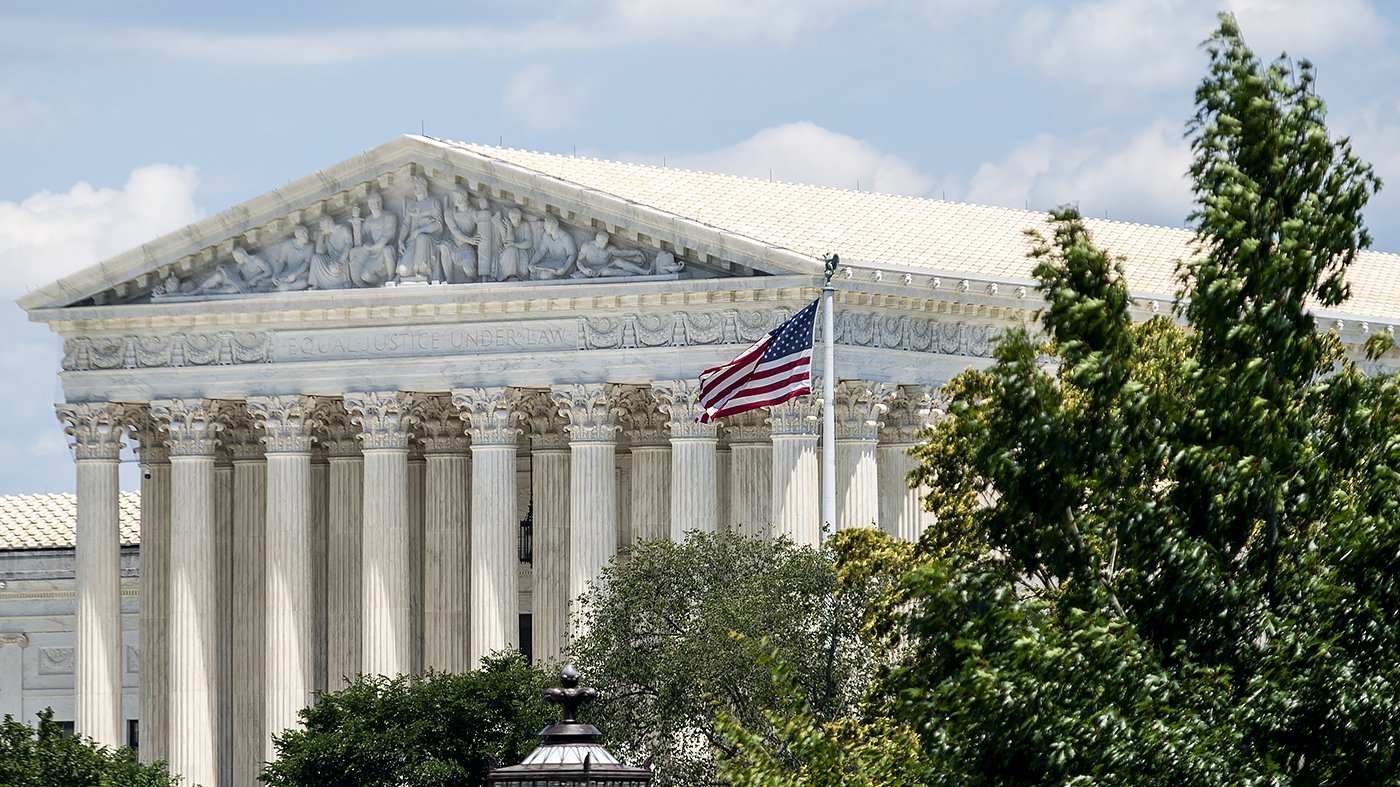
The Supreme Court announced Monday that it will take up a contentious legal battle over Arizona's voting laws, which require residents to provide proof of U.S. citizenship before casting a ballot. The justices granted a request from the Republican National Committee to review a lower court ruling that found the state's measures were preempted by the National Voter Registration Act of 1993.
At the heart of the dispute are two Arizona laws—House Bills 2492 and 2234—enacted in 2022 amid heightened scrutiny of the 2020 election, during which former President Donald Trump made unsubstantiated claims of widespread voter fraud. The laws mandate that voters submit documentary proof of citizenship, such as a birth certificate or passport, when registering with a state form, and they also prohibit officials from canceling registrations of suspected noncitizens within 90 days of an election.
The lower court's decision blocked enforcement of these requirements, ruling that the NVRA, which governs voter registration for federal elections, supersedes state law. The 9th Circuit Court of Appeals largely upheld that ruling, though it excluded a finding that the laws were not intentionally discriminatory.
The Supreme Court will now weigh whether Arizona can enforce its proof-of-citizenship mandate and implement a program to remove noncitizens from voter rolls. The justices will also consider whether the state's laws violate a 2018 consent decree between the secretary of state and the League of United Latin American Citizens, the nation's largest Latino civil rights group.
This is not the first time the issue has reached the high court. In a 5-4 decision ahead of the 2024 presidential election, the justices reinstated part of the law requiring officials to reject state voter registration forms lacking proof of citizenship. The current case consolidates three separate petitions, though only the RNC's request was granted full review.
The Republican National Committee's petition focuses on the proof-of-citizenship and voter-roll removal provisions. Meanwhile, a separate petition from Arizona GOP lawmakers Warren Peterson and Steve Montenegro, which also challenged the mail-in voting ban and discriminatory intent findings, was denied. A third petition from the state and Attorney General Kris Mayes, a Democrat, was also rejected.
Legal challenges from groups like the League of United Latin American Citizens and Promise Arizona argue the laws are unconstitutional and could disenfranchise thousands of registered voters. A district court previously found that while the laws violated parts of the Civil Rights Act and the NVRA, state legislators did not intentionally discriminate in crafting them.
The Supreme Court is expected to hear oral arguments in its next term, starting in October, with a ruling likely in 2025. The outcome could have broad implications for voter access in Arizona and beyond, particularly as the court has recently upheld states' rights in other election-related cases, such as allowing states to count mail ballots after Election Day.