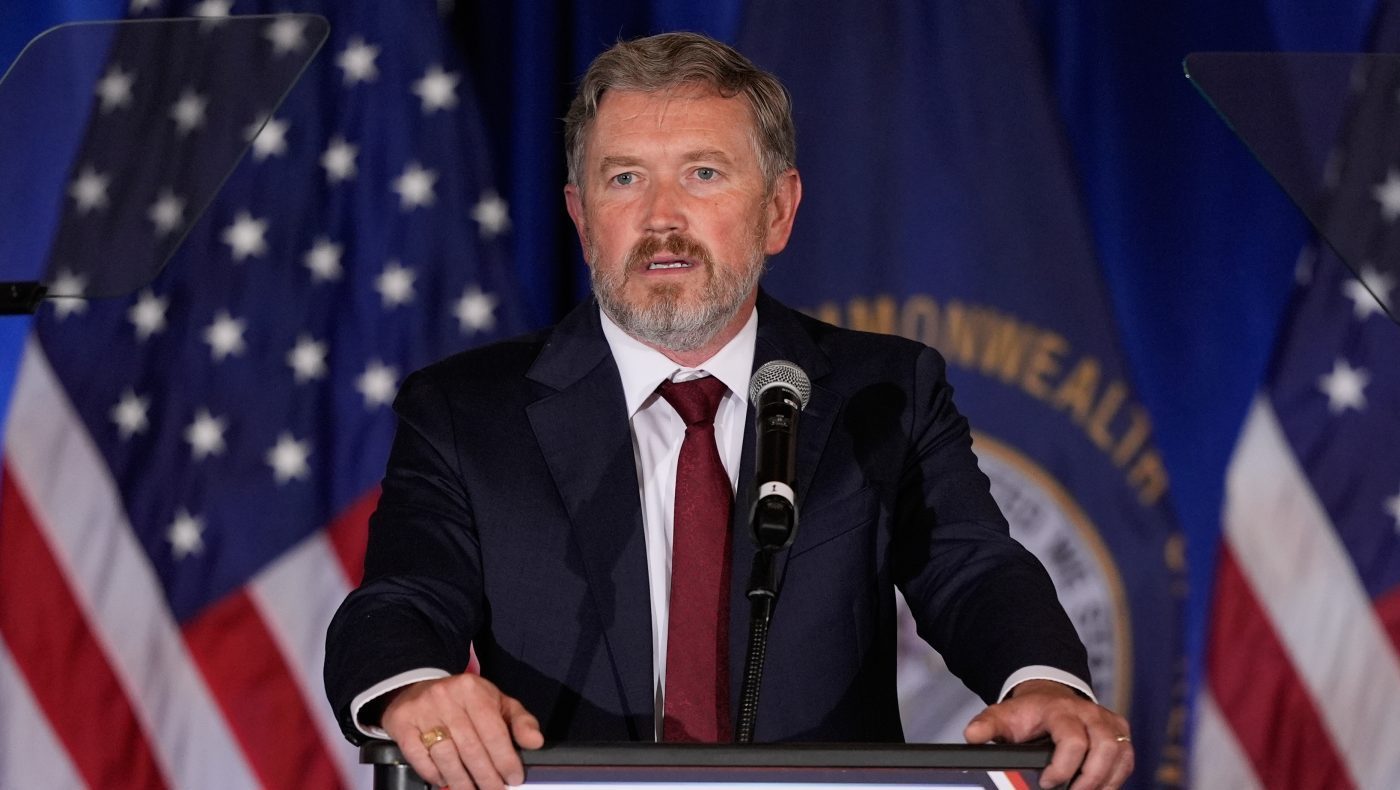
The Supreme Court on Monday declined to hear former Rep. Stephen Buyer's (R-Ind.) appeal to overturn his 2023 insider trading conviction, effectively ending his legal challenge. Buyer was found guilty on four federal charges for making hundreds of thousands of dollars by trading on confidential information he obtained while working as a telecommunications consultant after leaving Congress.
A federal appeals court upheld the conviction last year, but Buyer has consistently denied any wrongdoing. His legal team argued to the high court that the case should have been tried in a different jurisdiction, challenging the venue as improper.

Buyer's lawyers contended that the government's reliance on the New York Stock Exchange's Manhattan headquarters as the basis for venue was outdated, given that most trades now occur electronically on servers located elsewhere. They argued that the U.S. Attorney's Office for the Southern District of New York, under precedent from the 2nd Circuit, claims authority to prosecute virtually any insider trading case involving a publicly traded stock.
The Justice Department initially waived its right to respond to Buyer's petition, but the justices later requested the government's input. Prosecutors argued that lower courts had sufficient evidence that at least some of Buyer's trades were executed within the Southern District of New York, calling his objection a fact-bound issue that did not merit Supreme Court review.
Buyer's case highlights ongoing debates over venue in white-collar prosecutions, particularly in financial markets where trading is increasingly digital. The decision not to hear the case leaves the 2nd Circuit's broad interpretation of venue for insider trading cases undisturbed.
The former congressman's conviction stemmed from trades he made while consulting for telecommunications firms after leaving the House in 2011. He was sentenced to 22 months in prison and ordered to forfeit over $350,000 in illicit profits.
This development comes amid broader scrutiny of former lawmakers' activities after leaving office. In a related vein, Senators Warren and Scott have united to push a lifetime ban on former lawmakers lobbying, reflecting bipartisan concern over post-congressional influence peddling.
The Supreme Court's refusal to intervene also follows recent rulings on political and jurisdictional matters, such as the rejection of Virginia Democrats' bid to revive a congressional map and Virginia Governor's criticism of the Court after a redistricting defeat.
Buyer's legal team had framed the venue question as a matter of fundamental fairness, but the high court's decision to pass on the case suggests that the justices saw no pressing constitutional issue to resolve.