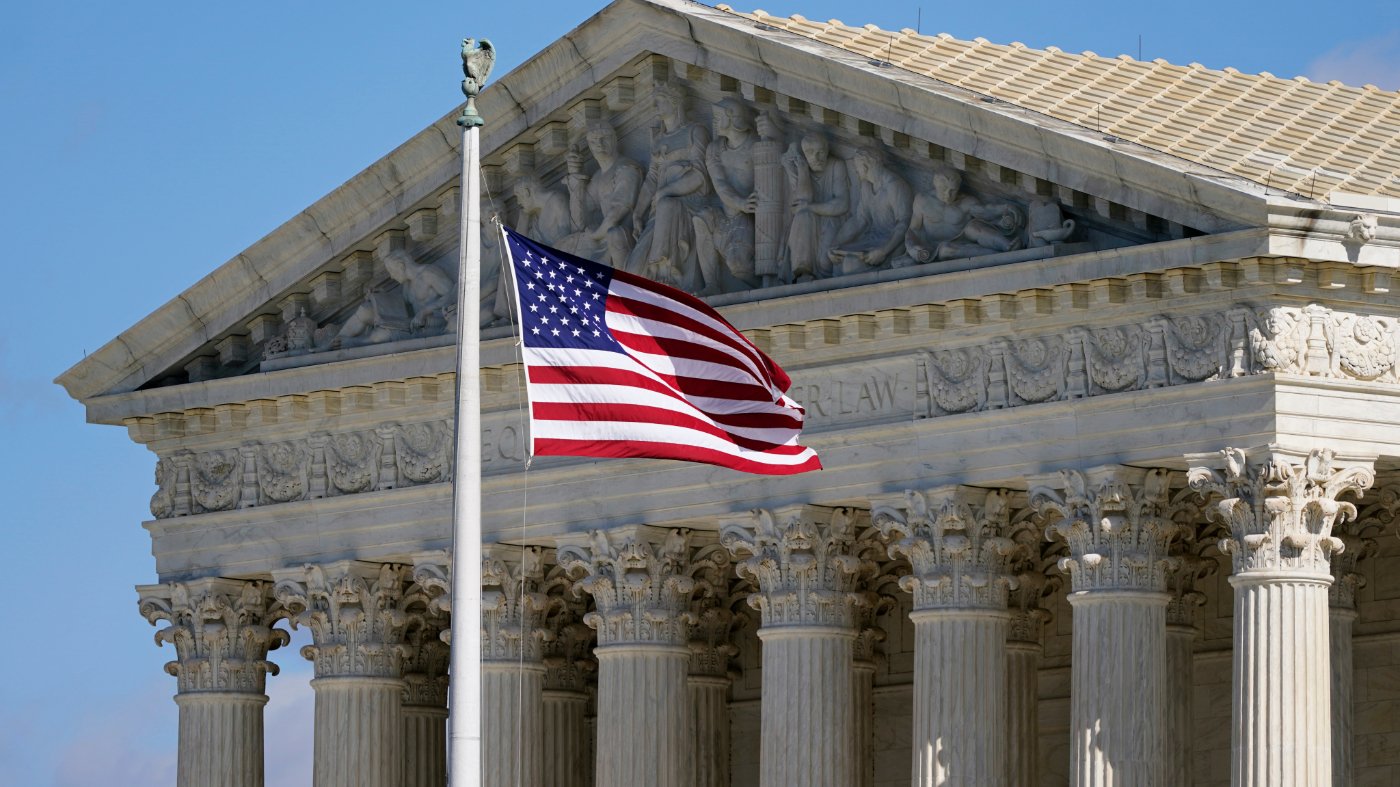
The Supreme Court dealt a setback to religious liberty claims behind bars Tuesday, ruling that a Rastafarian inmate cannot sue state prison guards for forcibly shaving his dreadlocks. The 6-3 decision split along ideological lines, with the conservative majority holding that the Religious Land Use and Institutionalized Persons Act (RLUIPA) does not permit damage suits against state employees who haven't explicitly consented to such liability.
Damon Landor, serving a five-month drug sentence in a Louisiana prison, was handcuffed to a chair and had his dreadlocks cut off just weeks before his release. He had handed guards a federal appeals court ruling that shaving Rastafarian inmates' hair violates RLUIPA. The guards reportedly threw the document in the trash. All sides condemned the treatment, but the legal question centered on whether Landor could collect damages.
Writing for the majority, Justice Neil Gorsuch emphasized that RLUIPA was enacted under Congress's spending power, which requires clear and unambiguous notice to state recipients that they can be sued for violations. “Mr. Landor does not allege that any of those individuals has entered any agreement with the federal government, let alone that any of them has voluntarily and knowingly consented to answer private suits under RLUIPA,” Gorsuch wrote.
The three liberal justices dissented sharply. Justice Ketanji Brown Jackson, joined by Justices Sonia Sotomayor and Elena Kagan, called the majority's reasoning “peculiar.” She wrote: “Today's decision magically transforms a federal statute into an invitation to be accepted or declined, deemed binding only if each particular defendant has explicitly agreed to be penalized. No matter that laws, as opposed to contracts, don't ordinarily work this way.”
Landor was backed by an unusual coalition. The Trump administration argued alongside his attorney, and Republican Senators Ted Cruz and Ted Budd filed briefs supporting him. The conservative Becket Fund for Religious Liberty and various religious groups also weighed in. That put them at odds with Louisiana Republican Attorney General Liz Murrill's office, which condemned the shaving but insisted RLUIPA doesn't authorize damage suits against state employees.
The case follows the Court's 2020 decision in Tanzin v. Tanvir, where a unanimous Court ruled that the Religious Freedom Restoration Act (RFRA) does permit damage suits against federal officials. But RLUIPA differs because it relies on Congress's spending power, while RFRA does not. Precedent requires spending-power laws to clearly and unambiguously notify recipients of potential liability.
Gorsuch noted that “Congress must clearly and unambiguously alert a grant recipient to any condition on federal funds.” The majority found RLUIPA fell short of that standard for individual damages.
The ruling narrows the remedies available under RLUIPA, which has been a key tool for inmates challenging religious restrictions. The Court's decision could affect other cases involving state prison policies, including those related to grooming and religious exercise. Legal observers say the ruling may prompt Congress to clarify the law if it intends to allow damage suits.
Landor's attorney expressed disappointment, saying the decision leaves victims of religious discrimination with little recourse. The case underscores ongoing tensions between federal religious liberty protections and state sovereign immunity, a divide that has grown sharper in recent years.