The Southern Poverty Law Center on Tuesday pushed back against Justice Department allegations that it secretly ran a paid informant program, filing two motions in federal court that argue the government's indictment is based on misleading claims and represents a break from standard policy.
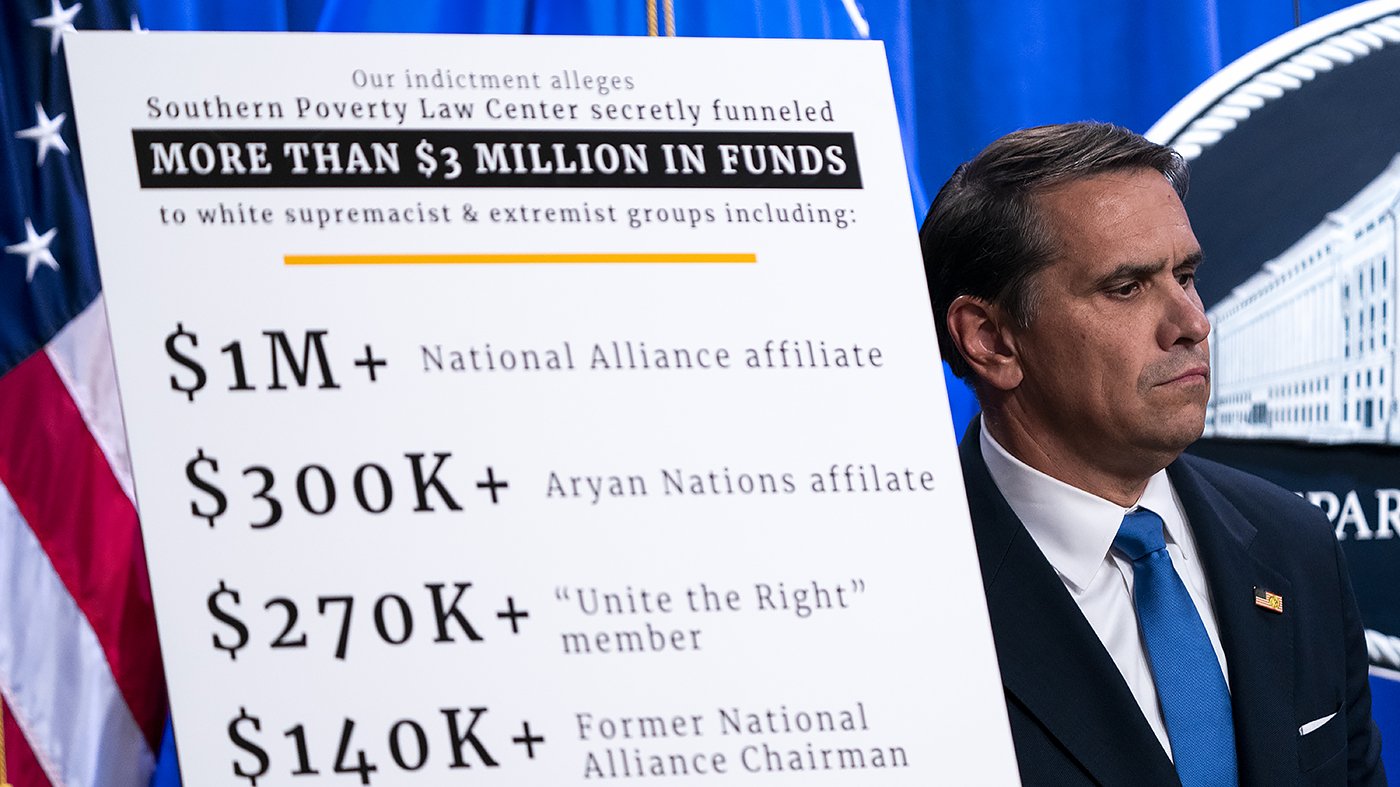
The Montgomery, Alabama-based civil rights organization was indicted by a federal grand jury on April 21 on six counts of wire fraud, four counts of bank fraud, and one count of conspiracy to commit money laundering. Acting U.S. Attorney General Todd Blanche has accused the SPLC of paying leaders of extremist groups, including the Ku Klux Klan, while failing to disclose those payments to federal authorities.
In its court filings, the SPLC called the indictment a “stunning and unremitting departure from Justice Department policy and established law,” highlighting what it described as “decades” of cooperation with the FBI. The group argued that the case appears to be the result of misleading both the public and the grand jury that voted on the charges.
SPLC Details Informant Program and Charlottesville Alert
The SPLC acknowledged it has paid informants within designated hate organizations as part of its efforts to detect and prevent violence. In a Tuesday press release, the organization said it shared a 45-page “event alert” with the FBI ahead of the 2017 “Unite the Right” rally in Charlottesville, Virginia, which included information from paid sources.
The Justice Department’s indictment alleged that the SPLC paid an organizer of that event while the individual made racist posts and coordinated transportation for participants. The DOJ claimed the SPLC opened bank accounts tied to “fictitious entities” to covertly pay informants, using donated money to disguise the true nature of the payments.
The SPLC pushed back, stating that its informant program has been a vital tool for preventing violence over the past 40 years. Interim President and CEO Bryan Fair said in the press release that the organization has “saved lives” by passing intelligence to federal, state, and local law enforcement.
“When we began working with informants, we were living in the shadow of the height of the Civil Rights Movement, which had seen bombings at churches, state-sponsored violence against demonstrators and the murders of activists that went unanswered by the justice system,” Fair said. “When threats and other unlawful activity were revealed, the SPLC immediately passed that information to law enforcement officials, local, state and federal and assisted in efforts to prevent violence and stop criminal activity.”
Legal and Political Context
The FBI led the investigation into the SPLC, with assistance from the Internal Revenue Service’s Criminal Investigation division. The SPLC has requested the full transcript from the grand jury proceedings and has called on Blanche and other government officials to retract what it terms “materially false statements” about the organization.
The case comes amid heightened scrutiny of political violence and security protocols. Recent incidents, such as the shooting at the White House Correspondents’ Association dinner, have prompted questions about law enforcement coordination with civil society groups. In a related development, lawmakers have pressed the Secret Service on its failure to implement security reforms after that attack.
The SPLC’s defense highlights a broader tension between federal prosecutors and advocacy organizations that monitor extremist activity. The group’s argument that its informant program was transparent and cooperative with the FBI could shape the legal battle ahead, as the Justice Department seeks to prove that the SPLC misled donors and law enforcement.
As the case unfolds, it remains to be seen whether the court will grant the SPLC’s request for grand jury transcripts or whether the Justice Department will adjust its approach. For now, the SPLC is fighting to preserve its reputation and its long-standing role in tracking hate groups.