Britain’s top diplomat in Washington has stirred transatlantic debate by declaring that the United States reserves its true “special relationship” for Israel, not the United Kingdom. In remarks reported by the Financial Times, U.K. Ambassador to the U.S. Christian Turner told a group of visiting British students in February that “there is probably one country that has a special relationship with the United States — and that is probably Israel.”
Turner, appointed by Prime Minister Keir Starmer in February, also characterized the term “special relationship” — coined by Winston Churchill — as “nostalgic” and “backwards-looking.” He acknowledged the “deep history and affinity” between the two nations, particularly on defense and security, where he said “we are intertwined.” Yet he cautioned that the partnership must evolve: “The relationship will carry on, if you want, being ‘special,’ but I think it’s going to have to be different.”
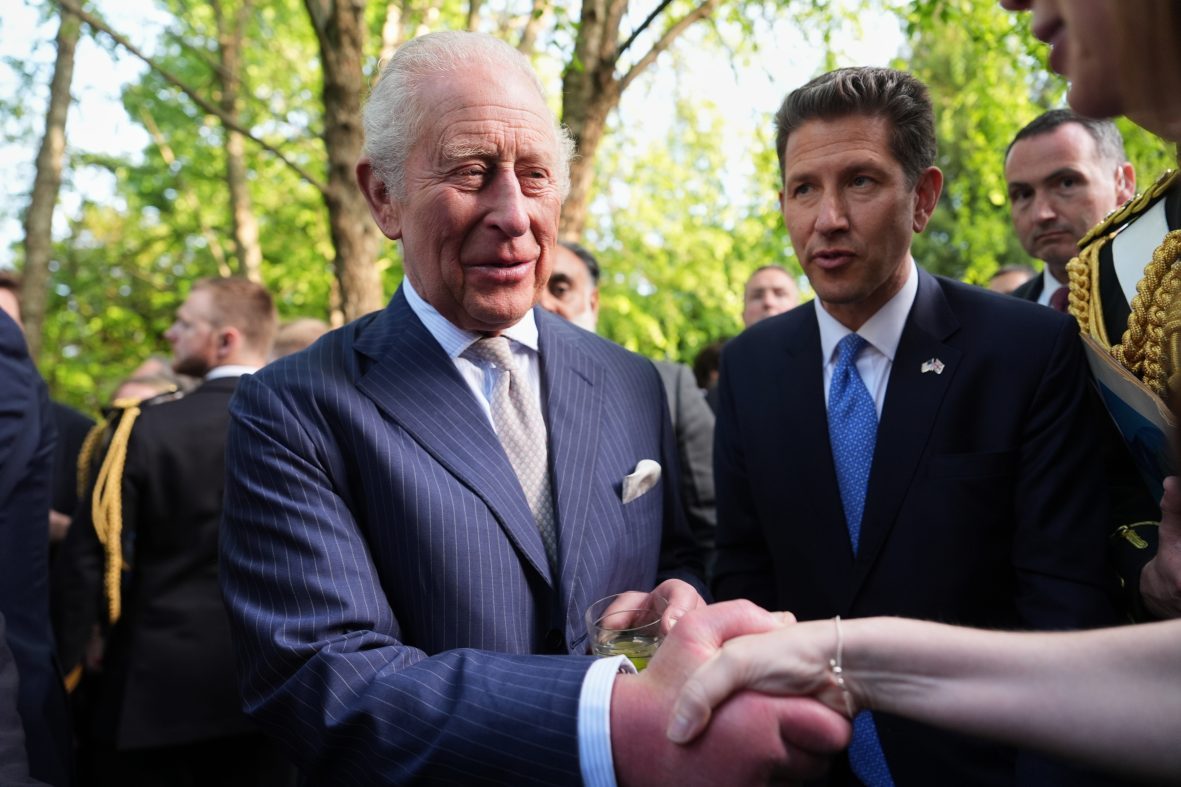
His comments come as King Charles III and Queen Camilla undertake a state visit to Washington, with the king scheduled to address a joint meeting of Congress on Tuesday at 3 p.m. EDT. The visit has placed the U.S.-U.K. alliance under renewed scrutiny, especially given President Trump’s recent criticism of Starmer for declining to militarily support the U.S.-Israeli campaign in Iran and for opting out of efforts to reopen the Strait of Hormuz.
Despite those tensions, Trump on Tuesday emphasized the “unique bond” between the two countries and even invoked the term “special.” Speaking at the White House with Charles present, he recalled how Churchill and Franklin Roosevelt met on a ship in the North Atlantic eight decades ago to outline a postwar vision. “That understanding of our nations’ unique bond and role in history is the essence of our special relationship, and we hope it will always remain that way,” Trump said.
U.K. Foreign Minister Yvette Cooper echoed that sentiment on Monday, telling CNN’s Jake Tapper that while the two governments may disagree at times, the foundation remains solid. “The fact that we have such a deep, longstanding relationship means that actually there are things that throughout our history of going back for 250 years, there are things, of course, that we have disagreed on, but there’s also, I think, that shared respect,” she said.
The debate over the “special relationship” reflects broader shifts in global alliances. Turner’s remarks underscore Israel’s unique standing in Washington, a point reinforced by recent U.S. actions such as the extension of the Israel-Lebanon ceasefire after White House talks. Meanwhile, the U.K. continues to navigate its post-Brexit role, balancing historical ties with the U.S. against emerging priorities.
Turner’s blunt assessment has reignited questions about whether the U.S.-U.K. partnership can retain its traditional label. For now, both sides are publicly committed to the relationship, even as they acknowledge it may need a new definition for a new era.