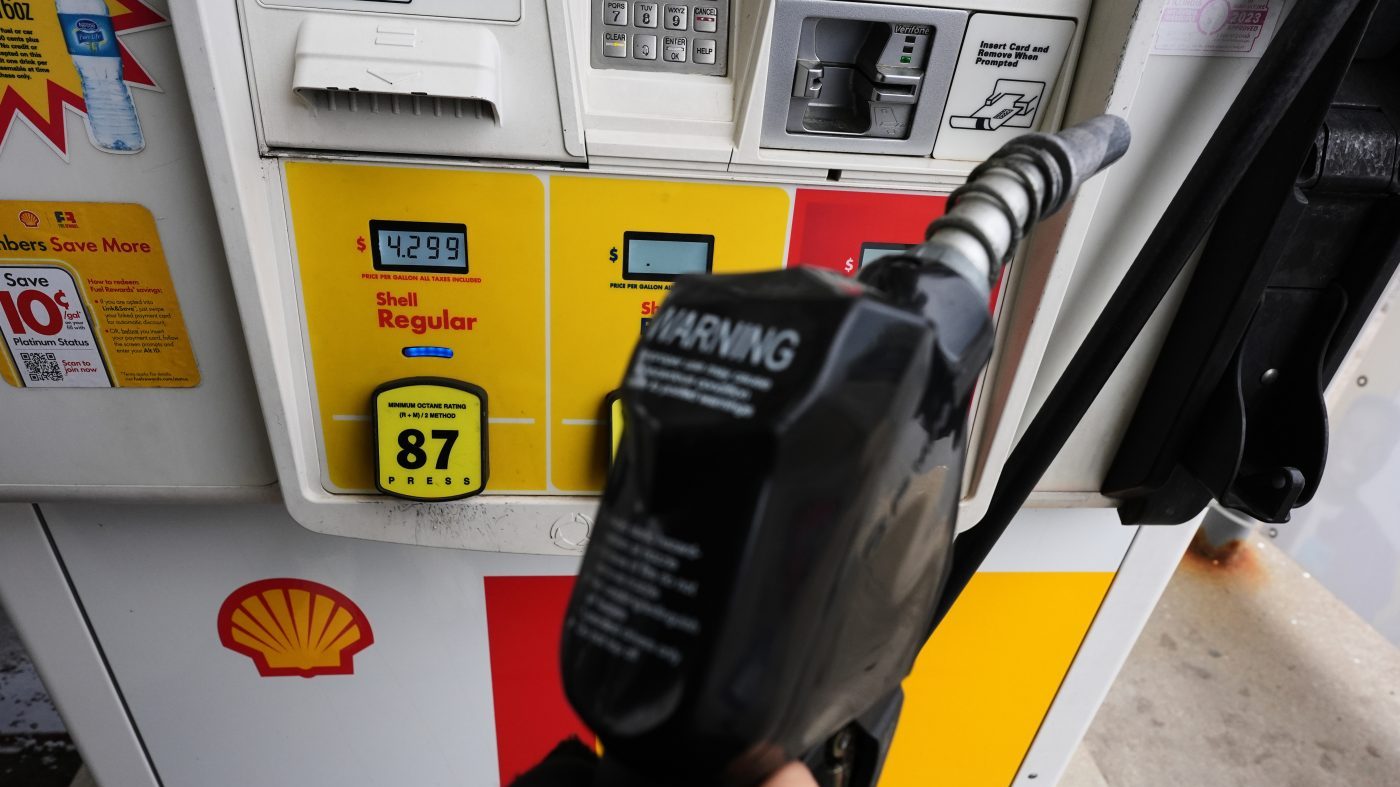
The average price of gasoline in the United States climbed to $4.18 per gallon on Tuesday, marking the highest level since the onset of the U.S.-Israeli military campaign against Iran, according to AAA data. That represents a 40% spike since February 28, when hostilities erupted.
California leads the nation with an average of $5.97 per gallon, while Oklahoma has the lowest at $3.57. The national figure has not been this high since April 2022, when Russia's invasion of Ukraine pushed prices to $4.11. That benchmark was matched Monday before rising another 7 cents.
The price surge is directly tied to the conflict with Iran, which shut down the Strait of Hormuz shortly after fighting began. The strait, a critical chokepoint for roughly 20% of the world's oil and gas shipments, has been reopened twice only to be closed again, effectively blocking tanker traffic. West Texas Intermediate crude futures climbed above $99 per barrel on Tuesday, while Brent crude topped $111.
A Reuters/Ipsos poll released Friday found that 77% of Americans believe President Trump bears at least some responsibility for the rising pump prices. Only 22% disagreed. The White House has defended its military offensive as necessary to prevent Iran from becoming an "imminent nuclear threat," a claim Tehran rejects, insisting its nuclear program is peaceful.
President Trump said Tuesday that Iran has asked the U.S. to "Open the Hormuz Strait" as soon as possible, suggesting Tehran is struggling with its "leadership situation." He did not provide details on who relayed the message or whether the administration will comply. Meanwhile, Iranian officials have submitted a proposal to end the war and reopen the strait, but it would postpone any discussion of Iran's nuclear program, according to The Associated Press, which cited two regional officials.
Secretary of State Marco Rubio dismissed that condition. "There's no doubt in my mind that at some point in the future, if this radical clerical regime remains in charge in Iran, they will decide they want a nuclear weapon," Rubio told Fox News. "That fundamental issue still has to be confronted. That still remains the core issue here."
The administration has extended a Jones Act waiver to help ease gas prices amid the crisis, but the impact has been limited. The conflict has also disrupted supply chains beyond fuel, including a shortage of fluoride for water systems and a 30% spike in condom prices. Americans are feeling the pinch across the board, with one survey showing that $6,000 in debt is pushing the average household toward bankruptcy.
As the war grinds on, the White House faces mounting pressure to stabilize energy markets. The president has not signaled any plan to reopen the strait unilaterally, and negotiations remain stalled over Iran's nuclear ambitions.