The Democratic Party is once again staring down the possibility of snatching defeat from the jaws of victory. With the 2026 midterms approaching, a familiar dread has settled in among party loyalists: Democrats seem united in their opposition to President Trump but offer few concrete alternatives. This vacuum has fueled the rise of self-described democratic socialists, who are gaining ground with young voters frustrated by Washington's repeated failures.
But a critical question looms: Are these candidates actually socialists? And if so, do they belong in American politics? As the Beatles sang, “If you go carrying pictures of Chairman Mao, you ain’t gonna make it with anyone anyhow.” The same logic applies today. If these politicians truly seek to seize the means of production and limit private property, they have no place in the American mainstream.

The roster of democratic socialist hopefuls includes New York Mayor Zohran Mamdani, Colorado congressional candidate Melat Kiros, and Washington, D.C., mayoral contender Janeese Lewis George. Their rhetoric often targets billionaires like Elon Musk and Jeff Bezos, but the real test comes when voters consider the impact on their own family businesses or real estate holdings.
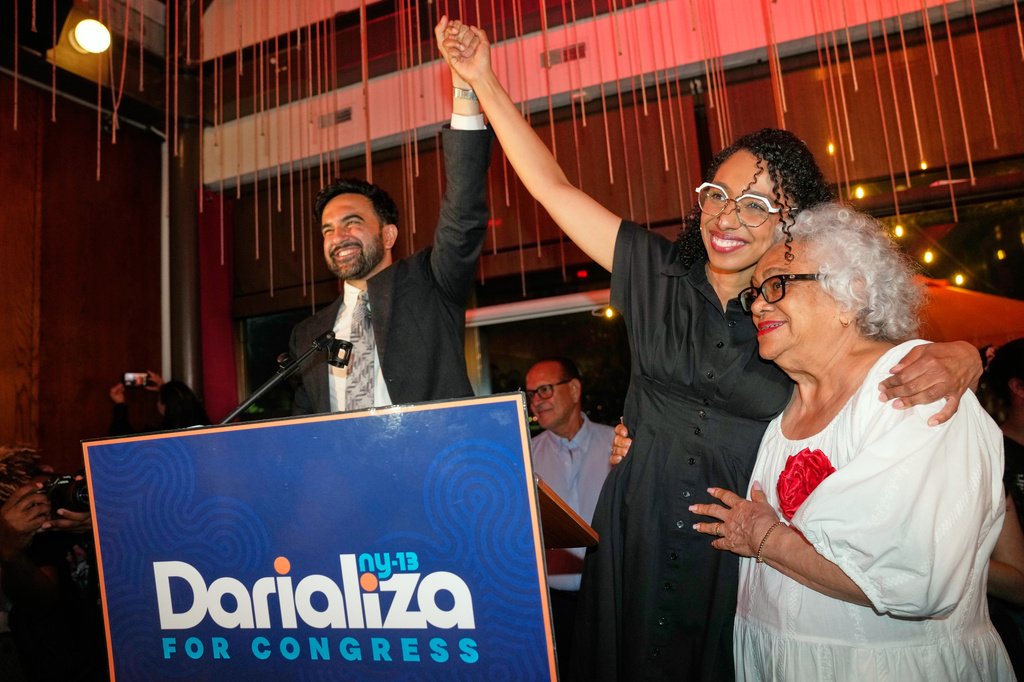
Take Darializa Avila Chevalier, whose deleted tweets praised Lenin and Marx and championed seizing the means of production. When asked by MS Now if she was a communist, she claimed to be merely a democratic socialist. Whether those tweets were youthful musings or a genuine worldview she now downplays remains unclear. But the ambiguity underscores a broader problem: the party must force clarity on whether these candidates embrace actual socialism or a free-market economy with a robust welfare state.
The Nordic model—characterized by free markets and strong social programs—offers a pragmatic alternative. It appeals to Americans who want affordable healthcare, education, and housing without dismantling the capitalist system. Countries like Sweden and Denmark have shown that preventing wealth inequality doesn't require nationalizing industries or abolishing private property. Yet some Democrats and Republicans alike mislabel this model as socialism, muddying the debate.
Senator Bernie Sanders, an avowed socialist, has long championed Nordic-style policies. But the question remains whether his followers share his ideals or believe that this time, socialism will work—despite its failures from the Soviet Union to Venezuela. The Nordic model succeeds because of its commitment to free markets, not in spite of it. Socialism, by contrast, typically leads to economic stagnation and authoritarian drift.
America's strength has always been the promise that anyone with equal opportunity can own property, start a business, and build wealth. That's why generations of immigrants have fled socialist countries to seek a better life here. As Republicans prepare to brand democratic socialists as un-American, the Democratic Party has a choice: adopt a platform rooted in the Nordic model, or risk being hijacked by a movement fundamentally at odds with American values.
As the party debates its future, it must remember that practical solutions—not ideological purity—are what voters need. The machine that puts food on the table doesn't need to be broken; it needs to be fixed.