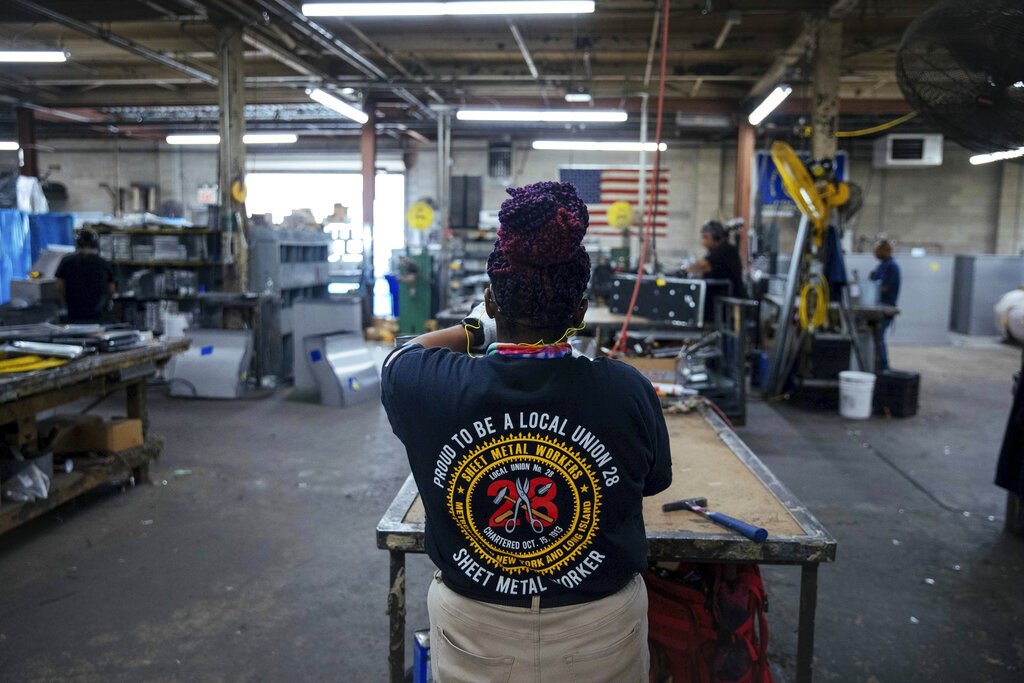
The cancellation of a planned restoration of the USS Boise, a Los Angeles-class attack submarine, last month laid bare a growing crisis: the United States doesn't have enough skilled tradespeople to maintain its military assets. The Navy cited a need to free up 'scarce shipyard labor and engineering talent,' and the White House projects the annual shortfall could approach half a million workers within a decade.
For years, leaders across government, finance, and the military have warned that this shortage threatens both economic prosperity and national security. Yet Congress has struggled to craft effective solutions, in part because few policymakers have firsthand experience in blue-collar jobs. The proposed fixes often ignore the steep upfront costs—sometimes exceeding $100,000—that deter Americans from entering the trades or starting their own businesses.

That's where the Jumpstart Savings Act comes in. Introduced by Rep. Riley Moore (R-W.Va.), the bill would create tax-advantaged savings accounts for tools and equipment, modeled after 529 college savings plans. Moore, a former welder on a West Virginia mining operation, says he walked away from the trade entirely after struggling to afford a work truck, industrial welding gear, and liability insurance when he tried to start his own business.
His experience is far from unique. A 2024 survey by DeWalt found that 78% of tradespeople see the initial cost of tools—ranging from several thousand to over $10,000—as a barrier to entry. More than half had to save up or take out loans to buy equipment. The same survey showed that 88% of workers in the trades believe easier access to tools would attract more people to the construction industry.
Moore frames the problem as a 'last mile' issue: training programs and educational funding are available, but workers lack the tools to apply that training on the job. The Jumpstart Act aims to fill that gap by letting workers save for these costs in a tax-advantaged way. The bill has bipartisan support, including co-sponsor Rep. Marie Gluesenkamp Perez (D-Wash.), and endorsements from trade groups like the American Cement Association and TV personality Mike Rowe, who called the proposal so good it 'agitated' him that anyone might oppose it.
Previous congressional efforts have focused on supporting trade schools and training programs—such as the Perkins Act and the Workforce Innovation and Opportunity Act—or allowing 529 accounts to cover vocational school costs, as in the Working Families Tax Cuts Act. But Moore argues these don't help with the immediate expense of tools. Section 179 of the tax code lets businesses write off equipment costs, but that doesn't assist someone just starting out. The Jumpstart Act is designed to help before a worker is ready to launch a business.
The bill builds on a state-level program Moore created as West Virginia State Treasurer. One mother in his district, Shana, opened accounts for her sons Clay and Quade, hoping they can one day start trades businesses. Clay, a senior, plans to join law enforcement; Quade wants to become a diesel mechanic. With the right tools, Moore says, that path becomes easier.
The USS Boise cancellation is a stark reminder of the stakes. Washington rarely considers the next generation of skilled workers when crafting national security policy, Moore argues. Passing the Jumpstart Savings Act, he says, would be a step toward equipping America's workforce with the tools it needs—and addressing a shortage that threatens both the economy and the nation's defense.