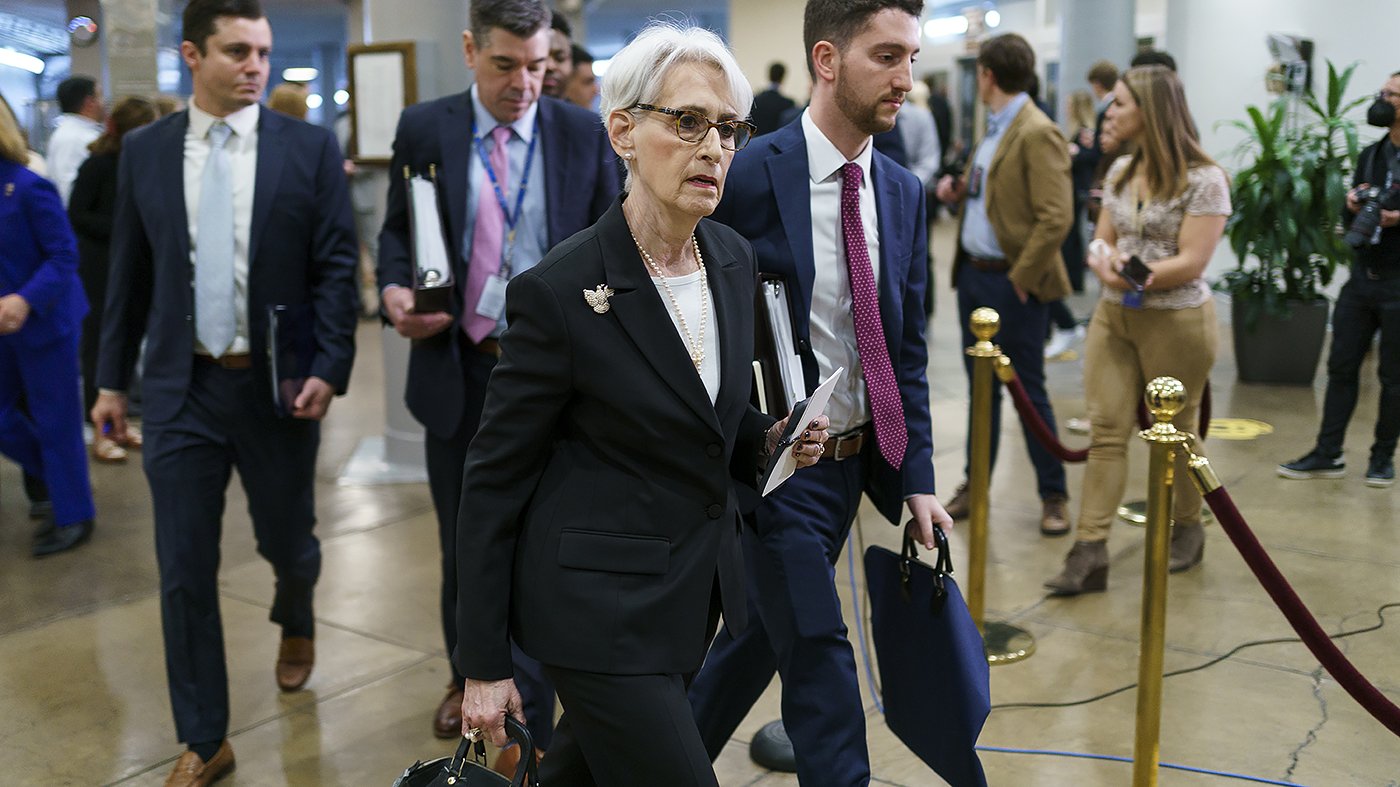
Former Deputy Secretary of State Wendy Sherman pushed back on the viability of a 60-day timeframe for US-Iran nuclear negotiations during an appearance on ABC's 'This Week' on Sunday. Sherman, who served as the lead negotiator for the 2015 Joint Comprehensive Plan of Action (JCPOA), told host Martha Raddatz that the window outlined in a draft peace plan is 'a pretty short period of time' and expressed doubt that both sides could reach a final agreement within that span.
Sherman noted that while the draft deal includes a provision allowing for an extension if both parties agree, she predicted that the 60-day deadline would not be enough to resolve the complex technical and political issues at stake. 'They will not get all of this done in 60 days,' she said, recalling that the JCPOA negotiations initially had a six-month target but ultimately stretched to 18 months.

She emphasized the need for a robust US negotiating team with expertise in nuclear physics, sanctions, treasury, commerce, law, and intelligence. 'You need an expert team to really get such a deal done,' Sherman said, underscoring the technical depth required for any credible agreement on Iran's nuclear program.
Sherman also highlighted the challenge posed by Iran's lead negotiator, Foreign Minister Abbas Araghchi, whom she described as 'very tough, very smart.' She pointed to recent Israeli strikes in Beirut as a complicating factor, noting that the ceasefire between Israel and Lebanon is one of Iran's conditions for maintaining a ceasefire with the US. 'The decapitation of the first and maybe second layers of the regime has left more hardliners in place than before,' she added, warning that the political landscape in Tehran has grown more uncompromising.
The draft deal, reported by Reuters, includes the release of $25 billion in frozen Iranian assets in exchange for Iran's commitment not to produce or acquire nuclear weapons. However, a source told NewsNation, The Hill's broadcast partner, that Israeli strikes in Beirut 'are creating issues' in finalizing the agreement.
President Trump and Pakistani Prime Minister Shehbaz Sharif had announced on Saturday that the US and Iran were close to signing a final deal. US Ambassador to the United Nations Mike Waltz told Raddatz that the administration was 'confident' the deal would be signed by Sunday, though he declined to provide specifics. 'I'll let the final details be announced by them,' Waltz said. 'They have every intent of getting this done today.'
The timeline remains uncertain as Trump has warned Iran it will 'pay the price' if talks stall, and frustration is mounting among GOP lawmakers who view the negotiations as a farce. Sherman's skepticism echoes broader concerns about the feasibility of a rapid diplomatic resolution amid ongoing military strikes and political shifts in Tehran.