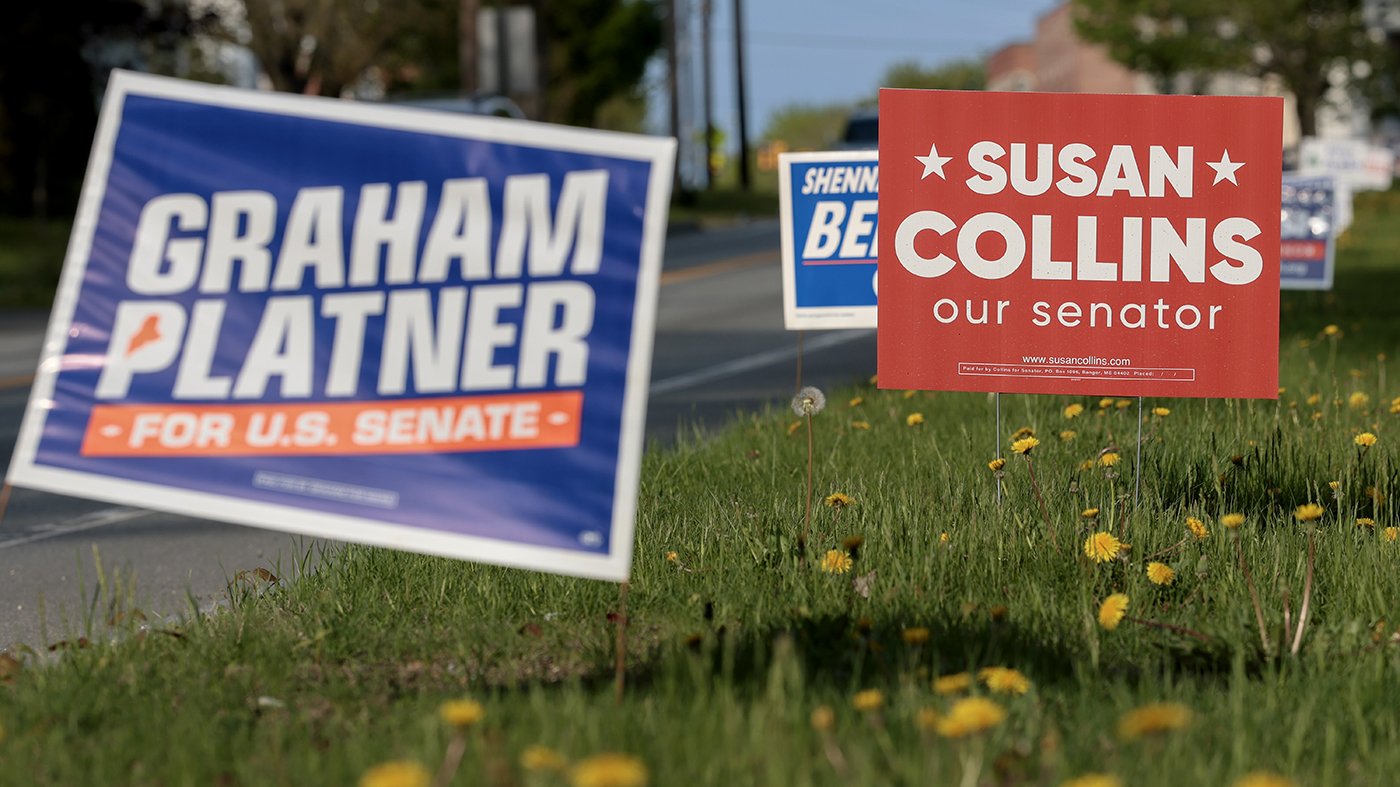
Democrats' quest to reclaim the Senate majority is facing serious headwinds after a cascade of setbacks in Maine and Michigan, two races once seen as prime pickup opportunities. The collapse of Graham Platner's campaign in Maine and the rise of progressive Abdul El-Sayed in Michigan have scrambled the party's electoral calculus just months before Election Day.
In Maine, Platner's abrupt withdrawal following a rape allegation—which he denies—has left Democrats without a clear challenger to Republican incumbent Susan Collins. The party is now in a frantic search for a replacement, with internal divisions threatening to undermine unity. Maine Democrats plagued by internal strife as Platner replacement nears deadline highlights how the vacuum could hurt the party's chances against Collins, who has voted with Trump 96% of the time.
“It’s not good news for the Democrats,” said Steven S. Smith, a political science professor at Arizona State University. “Not good news that so many prominent Democrats endorsed the dropout, and not such good news about how they’ll respond. It’s just bad news for the party.” Smith estimated Democrats had been “flirting with a 50-50 chance” of winning the Senate but now face odds below that threshold.
Platner, in a video message, accused the “corporate media system and the political establishment” of acting as “judge, jury and executioner.” David Paleologos of Suffolk University warned that such rhetoric could alienate progressive voters. “If you’re a progressive activist, in your mind there is very little difference between a Republican and a corporate Democrat,” he said, noting that some of Platner’s supporters may refuse to back any replacement.
Meanwhile, in Michigan, Abdul El-Sayed—a progressive backed by Sen. Bernie Sanders—has surged ahead of Rep. Haley Stevens in Democratic primary polls. El-Sayed, who uses the same political strategy firm as Platner, has called for Platner’s exit and is running as an anti-establishment candidate. Democratic leaders in Washington, including Senate Minority Leader Chuck Schumer, worry about El-Sayed’s general election viability against former Rep. Mike Rogers. Socialist candidates test Democrats as the party weighs whether to embrace or distance itself from the progressive wing.
“There is real concern that Abdul would not be able to beat Rogers and then potentially lose us a majority possibility in the Senate,” former Michigan Democratic Party Chair Lon Johnson told The Washington Post. The party’s establishment has rallied behind Stevens, but El-Sayed’s fundraising and donor base—bolstered by Platner’s collapse—could tip the primary.
Democrats need a net gain of four seats to flip the Senate. Despite the troubles in Maine and Michigan, there are bright spots. In Iowa, a Fox News poll shows Democratic state Rep. Josh Turek leading GOP Rep. Ashley Hinson by 4 points, with Trump underwater by 13 points in the state. In Ohio, former Sen. Sherrod Brown leads incumbent GOP Sen. Jon Husted by 8 points. And in Texas, a New York Times/Siena poll finds Democrat James Talarico tied with Republican Attorney General Ken Paxton.
“The major consideration is who’s the next nominee” in Maine, Smith said. “If there’s lots of good public relations that comes from that, the Democrats can turn this around.” But with time running short, the party’s path to a Senate majority is narrowing, and internal battles over ideology and electability are only intensifying.