President Trump's decision to bar several news outlets from the White House has drawn sharp criticism from Democrats and press advocates, but Senate Republicans are largely declining to follow suit, expressing comfort with the wide access reporters enjoy on Capitol Hill.
Senate Majority Leader John Thune (R-S.D.) said the courts will likely settle the legality of Trump's move, but he made clear it is not his policy. "That's not my policy," Thune told The Hill, adding that the White House action is a separate matter from congressional press access.

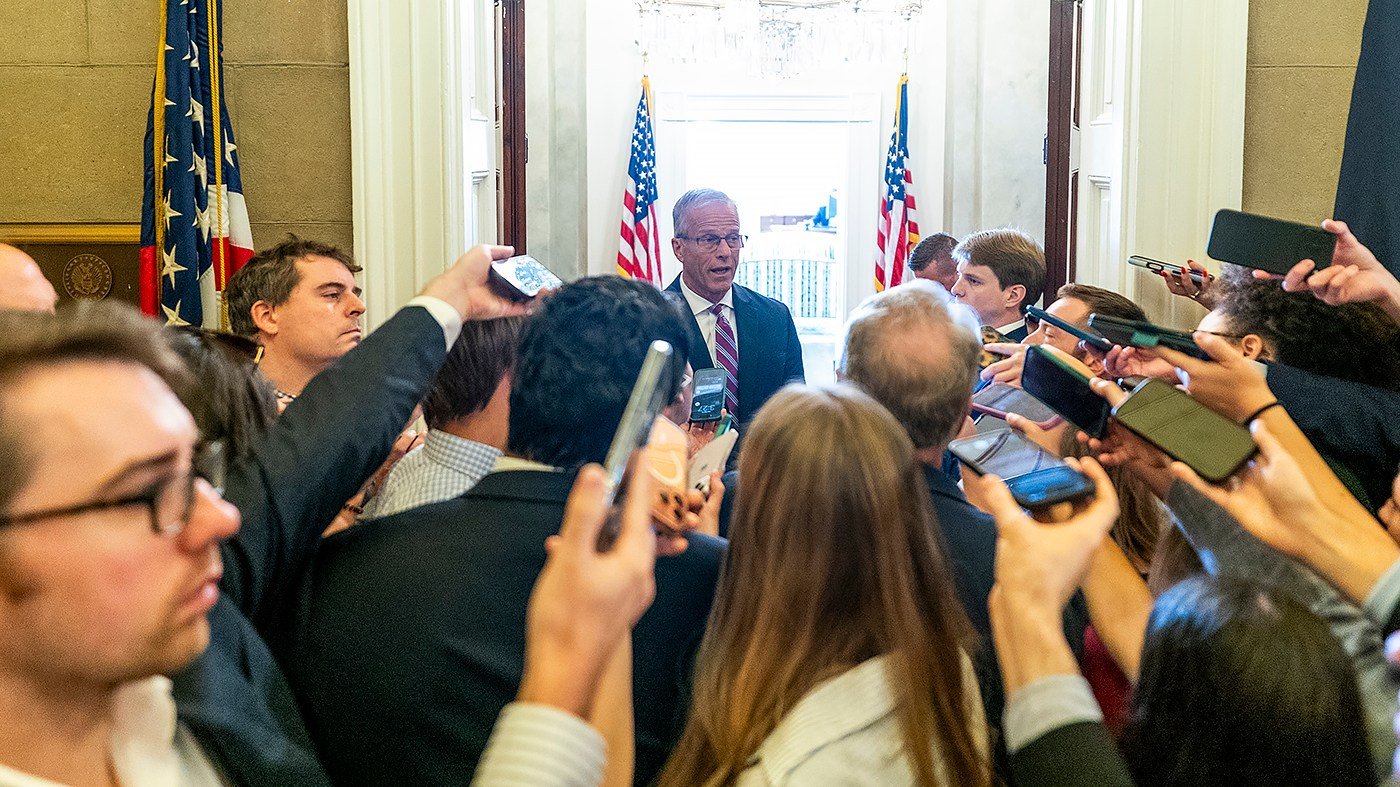
Unlike the White House, where the president can control who enters the press pool, Congress permits reporters credentialed by the nonpartisan press galleries to roam nearly all areas where staff and members operate—including the underground tunnels and trains that lawmakers use to move between buildings. The public can also freely walk the hallways of the House and Senate office buildings.
GOP Senators Defend Current System
Several Republican senators told The Hill they are content with the status quo, even as some acknowledge frustration with certain outlets. Sen. James Lankford (R-Okla.) said he has "thought a lot about" Trump's ban, citing instances where outlets were "incredibly untruthful" in their reporting, leading him to decline comment. Still, he backed continued access: "They have access to the building, but I'm just not going to answer the question because I just can't trust what's going to run," Lankford said.
Sen. Tommy Tuberville (R-Ala.) echoed that sentiment, calling the ban "his option" and suggesting Trump is "tired of the fake news." But Tuberville added, "I'm fine with it, but he deals with 100 times more than we do," referring to the volume of press attention the president faces.
Sen. John Hoeven (R-N.D.) predicted the dispute would resolve quickly, framing the ban as a message to the media. "I think he's sending them a message like, 'Hey, be fair.' And I think at some point they'll be able to cover him, and we'll move on," Hoeven said.
Criticism from Within GOP Ranks
Not all Republicans are on board. Sen. Thom Tillis (R-N.C.), who is retiring and has become more willing to criticize the administration, called the ban "silly." "The American people don't like that," Tillis said, drawing parallels to authoritarian leaders. "Didn't work for Victor Orbán ... it hasn't worked for [Defense Secretary] Pete Hegseth. Look, be proud of what you have to say. Have a counter," he said, urging officials to engage with the press rather than shut it out.
The three outlets blocked—Politico, MSNBC, and CNN—have filed suit, and a federal judge appeared skeptical of the administration's arguments during a Wednesday hearing. The case is seen as a major test of presidential authority over press access, with potential implications for how future administrations handle the press corps.
Meanwhile, House Rules Committee Chair Virginia Foxx (R-N.C.) has drawn attention for suggesting that reporters in the Speaker's Lobby—a small room off the House floor—are an irritant to many members. That space was closed during the pandemic but reopened in 2021. Republicans who spoke to The Hill, however, indicated they have no plans to restrict access there or elsewhere.
The contrast between the White House and Capitol Hill is striking, as GOP senators navigate a delicate balance between supporting the president and defending institutional norms. For now, the Senate appears willing to let the courts decide the fate of the White House ban, while preserving the unfettered access that has long defined congressional reporting.