Senate Republicans are pushing back against the idea of restricting press access to the Capitol, even as President Trump bars certain news outlets from the White House and a prominent House Republican floats limits on reporters’ movements.
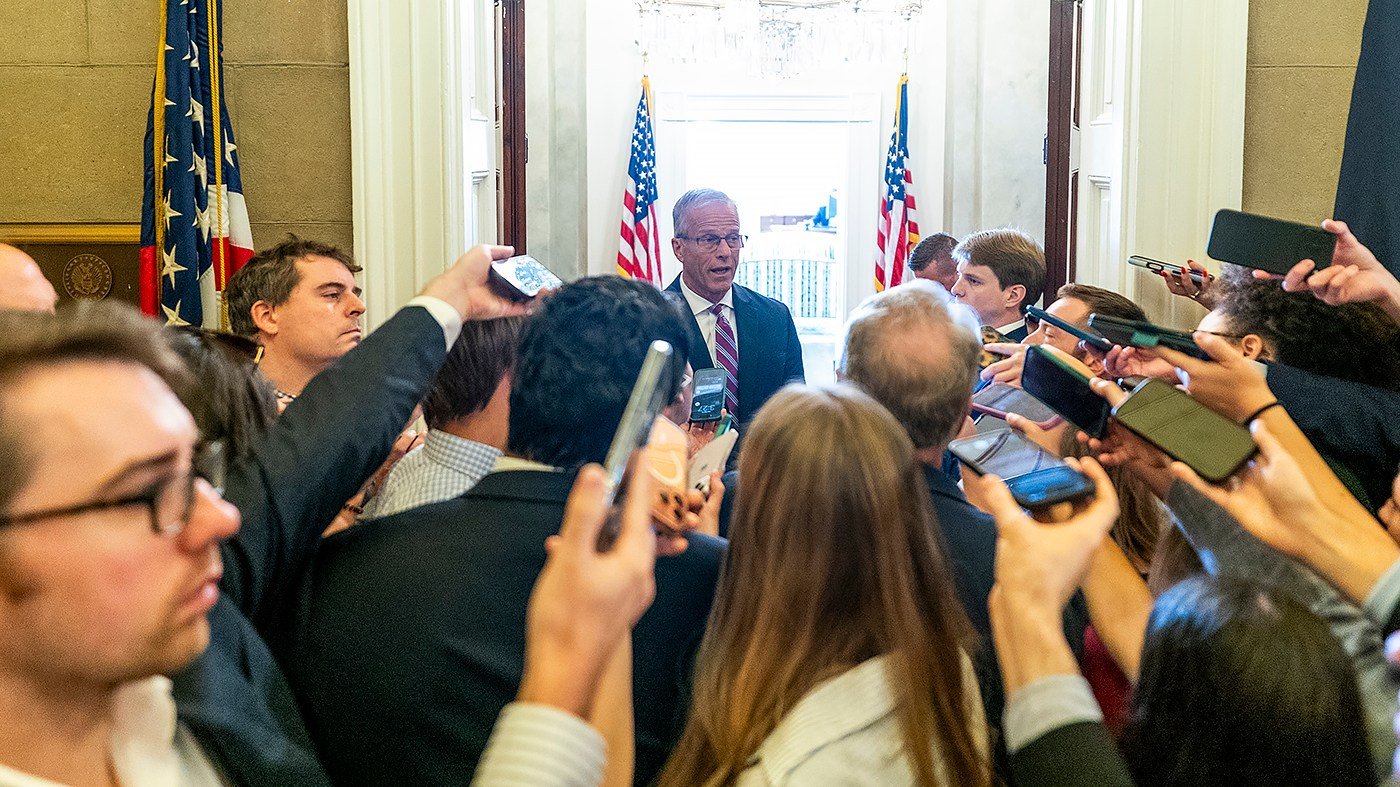
Unlike the executive branch, where access is tightly controlled, reporters on Capitol Hill enjoy near-unrestricted ability to buttonhole lawmakers in hallways, tunnels, and even the underground trains that shuttle members between votes. That’s a setup most GOP senators say they’re comfortable with, despite occasional frustrations over coverage.

“The courts will decide” the legality of Trump’s move, Senate Majority Leader John Thune (R-S.D.) told The Hill, adding that banning outlets is “not my policy.” His comments reflect a broader sentiment among Senate Republicans that the legislative branch’s open-door approach to the press is worth preserving, even as the White House tightens its own rules.
Sen. James Lankford (R-Okla.) acknowledged he’s “thought a lot about” Trump’s decision, citing outlets he considers “incredibly untruthful in their reporting.” But he stopped short of endorsing similar measures for the Capitol. “They’ve got to have some kind of access,” Lankford said, noting the practical need for pool reporters to cover lawmakers. He added that he’s content with the current arrangement, where reporters can roam freely but senators can simply decline to answer questions if they distrust a particular outlet.
Rep. Virginia Foxx (R-N.C.), who chairs the House Rules Committee, made waves last week by saying many members are “irritated” by reporters in the Speaker’s Lobby, the cramped space just off the House floor. That area was closed to the press during the pandemic but reopened in 2021. Foxx’s comments sparked speculation about potential restrictions, but no formal proposal has emerged.
Other Republicans who back Trump’s right to control White House access see the Capitol as a different matter. Sen. Tommy Tuberville (R-Ala.) said the president “is probably tired of the fake news,” but added, “I’m fine with it, but he deals with 100 times more than we do.” Tuberville’s remarks suggest a belief that the executive branch faces a uniquely hostile press corps, while lawmakers on the Hill enjoy a more manageable relationship.
Sen. John Hoeven (R-N.D.) predicted the White House standoff would resolve quickly, framing it as Trump “sending them a message like, ‘Hey, be fair.’” He expects the barred outlets—Politico, MSNBC, and CNN—to eventually regain access. “At some point they’ll be able to cover him, and we’ll move on,” Hoeven said.
Not all Republicans are as sanguine. Sen. Thom Tillis (R-N.C.), who has become increasingly critical of the administration, called the ban “silly” and warned it could backfire. “The American people don’t like that,” Tillis said, citing failed efforts by foreign leaders like Hungary’s Viktor Orbán and even Defense Secretary Pete Hegseth to suppress unfavorable coverage. “Be proud of what you have to say. Have a counter.”
The legal battle over Trump’s ban is ongoing, with the three outlets arguing in court this week. A judge initially appeared skeptical of the administration’s position. Meanwhile, Senate Republicans appear united in their preference for the status quo, even as some privately acknowledge tensions with the press.
For now, the Capitol’s hallways remain open to reporters, and GOP senators seem in no hurry to change that. As Lankford put it, “They have access to the building, but I’m just not going to answer the question because I just can’t trust what’s going to run.”