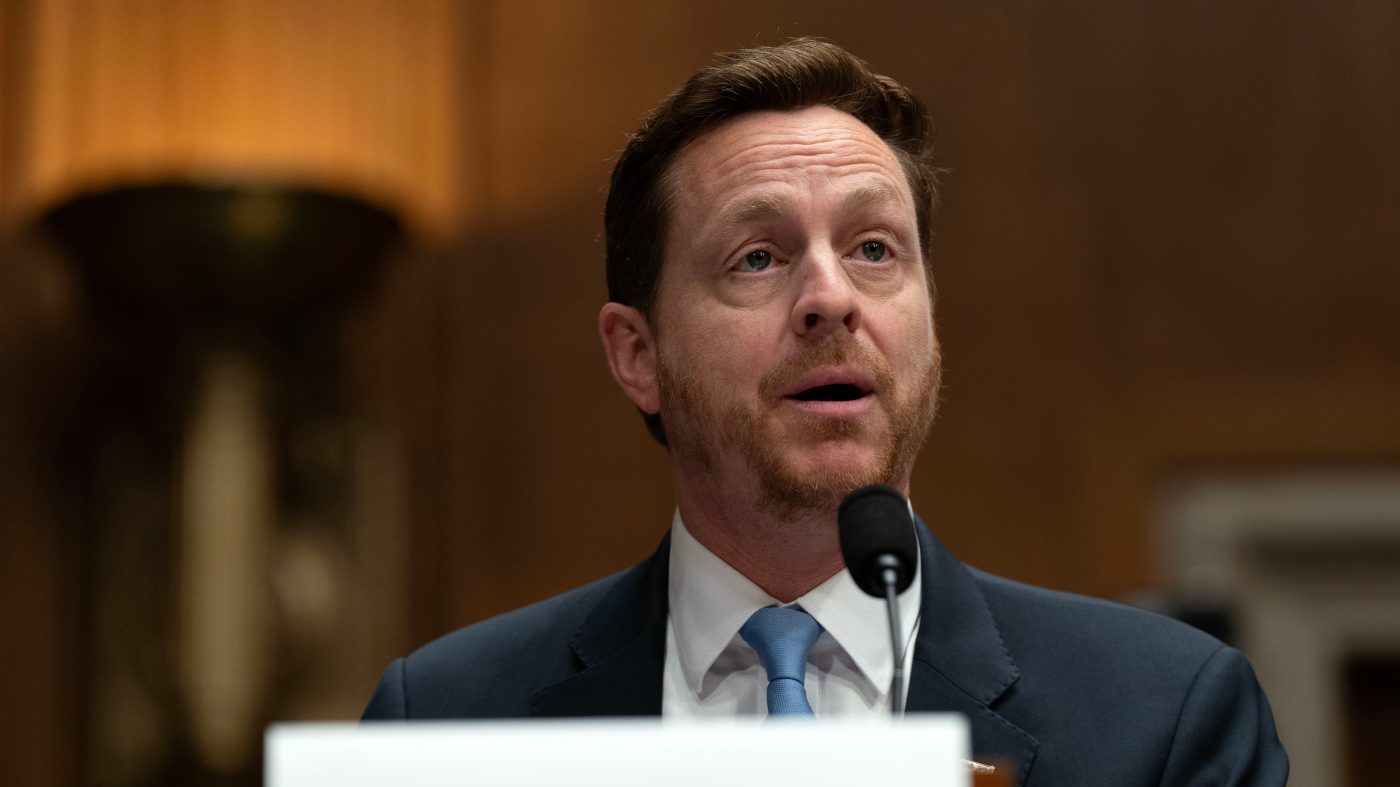
The Senate Finance Committee on Thursday voted 15-12 to advance the nomination of Chris Klomp to serve as deputy secretary of the Department of Health and Human Services, sending his confirmation to the full Senate.
Sen. Sheldon Whitehouse (D-R.I.) broke with his party to support Klomp, joining all Republicans on the panel. The vote sets up a floor fight over a nominee who has already wielded significant influence at HHS as a senior adviser to Secretary Robert F. Kennedy Jr.

Klomp has been a central figure in the Trump administration's drug pricing negotiations, leading talks over "most favored nation" agreements with pharmaceutical companies. He has also played a key role in staffing decisions at the department, a point he emphasized during his confirmation hearings before both the Finance Committee and the Senate Health, Education, Labor and Pensions Committee.
"Part of my responsibility is to enable the smooth operations of the department. I'm responsible for personnel, among other things," Klomp said last week. "My job is to make sure that we have everything."
Democrats pressed Klomp on vaccines, seeking commitments that he would counter false statements about vaccine safety from Trump and Kennedy. "I want somebody who's going to stand up to the lies," said Sen. Ron Wyden (D-Ore.), the committee's ranking member.
Wyden on Thursday accused Kennedy of lying when he pledged not to restrict vaccine access or discourage uptake, calling Klomp "complicit" in those lies. He also demanded that Klomp disclose details of the drug pricing agreements he helped negotiate, which remain secret.
Those deals are expected to exempt certain drugs from Medicare price deductions and shield pharmaceutical companies from tariffs. In exchange, the companies agreed to sell certain drugs to Medicaid at the same price as peer countries. Wyden said he had received only "excuses and misrepresentations" from Klomp on the matter.
The nomination now heads to the Senate floor, where Republicans will need to hold their caucus together to confirm Klomp over likely unified Democratic opposition. The vote underscores the ongoing partisan tensions over health policy and the administration's approach to drug pricing and vaccine messaging.