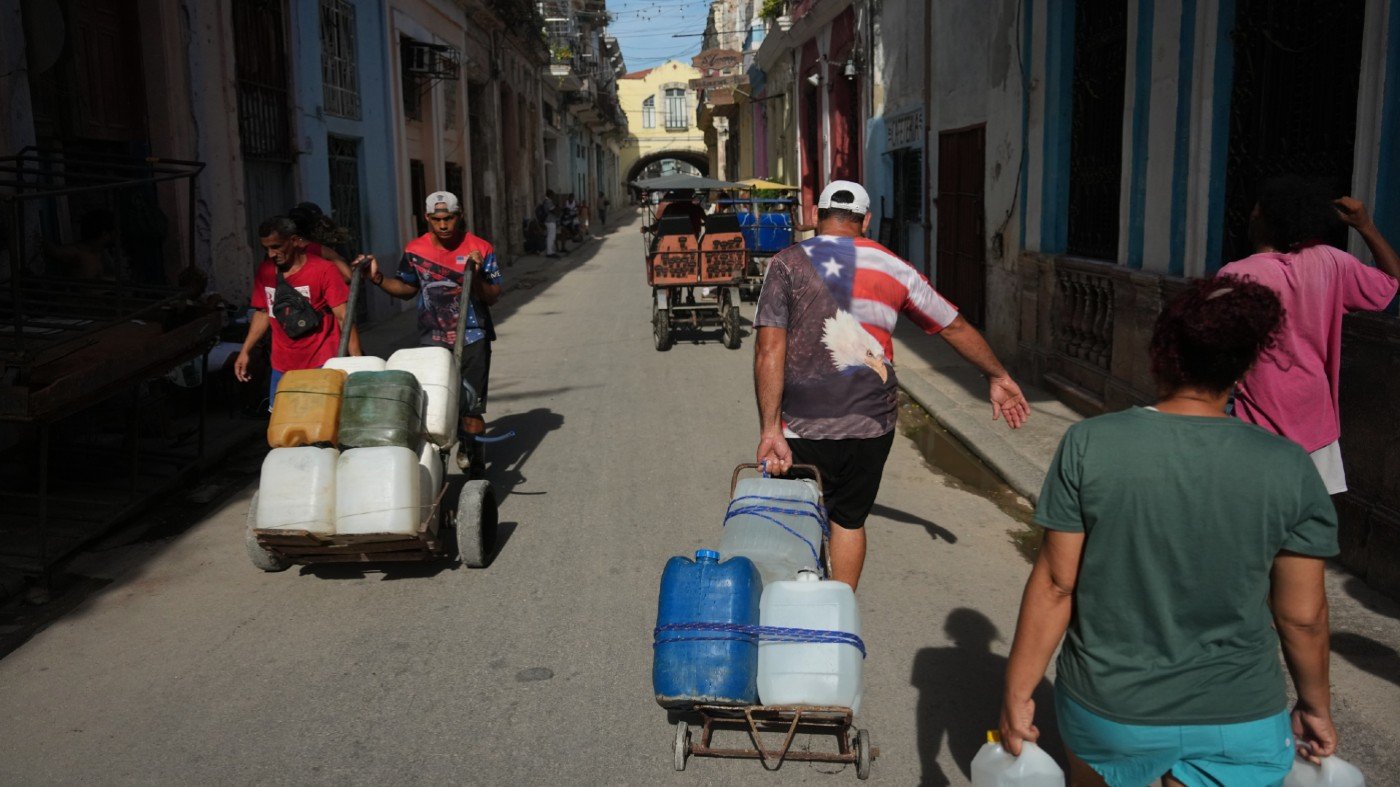
For the more than nine million Cubans enduring the country's sixth nationwide blackout of the year, the argument that the Trump administration's campaign against the island has already begun is hard to refute. Seven months of a de facto naval blockade, sweeping secondary sanctions on foreign firms operating in Cuba, and threats of secondary tariffs against nations that ship fuel to Havana have inflicted severe damage on the island's economy. Hospitals are running on fumes, food is spoiling in ports and refrigerators, transportation is grinding to a halt, and most Cubans believe conditions will deteriorate further before any improvement.
While pundits debate whether Cuba might become Trump's next military target, the economic siege is already punishing the Cuban people as much as—if not more than—a poorly conceived military operation would, and without the congressional debate that such action would require. The war powers resolution currently awaiting action in the Senate is perhaps lawmakers' best chance to halt this slow-motion disaster, restrain the administration's reckless regime-change ambitions, and clear the path toward a serious negotiated solution that could promote genuine economic and political transformation on the island.
As the situation on the ground grows increasingly untenable, Cubans want and deserve change that politicians on both sides of the Florida Straits have denied them for too long. But unauthorized U.S. military action—however targeted or limited—would only delay that change while trampling the U.S. Constitution. It must be prevented on strategic, legal, and humanitarian grounds.
The Senate's Cuba war powers resolution, introduced by Sens. Tim Kaine (D-Va.), Adam Schiff (D-Calif.), and Ruben Gallego (D-Ariz.), mirrors a measure that narrowly failed in late April. It is a commonsense tool to constrain further military adventurism from the Trump administration, this time just off U.S. shores. The backlash to the Iran conflict has made clear that the American people do not want another costly, perilous, and unpopular nation-building project—one that would put U.S. servicemembers in harm's way, risk a major refugee crisis just 90 miles from Florida, harden the Cuban regime's siege mentality, and rewind bilateral relations to the early 20th century. As Democratic leadership reportedly avoids voting on a similar House initiative to protect vulnerable Florida members in the upcoming midterms, the pending Senate vote may be among the last opportunities for Congress to reassert its constitutional authority over matters of war in our own hemisphere—before it's too late.
In recent weeks, administration officials have used disingenuous, inflated, and outdated arguments to manufacture consent for military aggression in Cuba that few Americans outside a small group of South Florida exiles seem to want. Secretary of State Marco Rubio's allegations that Cuba poses an extraordinary and imminent threat to U.S. national security come on the heels of a flurry of anonymous leaks and opaque reports on everything from Russian and Chinese intelligence bases and Iranian drone purchases to ongoing sponsorship of international terrorism. This is on top of a heavily criticized State Department publication on Cuba's purported influence operations in the U.S.
The administration has also ramped up reconnaissance flights around Cuba, dispatched scores of new intelligence agents to the island, drawn up plans to send in the 101st Airborne Division, and issued a criminal indictment against former President Raúl Castro. While Cuba's intelligence service has certainly punched above its weight, it is by no means the influence and espionage superpower that Secretary Rubio claims. Over six decades, Cuba has been unable to convince successive U.S. administrations to lift the Cold War-era embargo, and over the past six months, it hasn't persuaded a single ally to stick its neck out for Havana and risk 30 percent U.S. tariffs by exporting much-needed fuel to the island.
Regardless of Havana's attempts to cultivate sympathizers in U.S. politics, academia, and civil society, alleged foreign influence activity does not justify unauthorized military operations against another country. It appears to be more a flimsy pretext for another war of choice than a pressing and credible threat as determined by the intelligence community. Ultimately, a negotiated, bilateral solution that puts saber-rattling and maximalist demands for regime change aside—and centers the wellbeing of the Cuban people—is the only way for the administration to promote genuine economic and political transformations on the island.
By recommitting to diplomatic efforts and abiding by the U.S. Constitution—as the Senate war powers resolution seeks—the administration has a better shot at advancing U.S. commercial and national security interests on the island. It can also avert a humanitarian catastrophe on our doorstep that could become a legitimate crisis. The resolution, if passed, would signal that Congress will not cede its war powers to the executive, a principle that has been tested repeatedly in recent years. Similar concerns have been raised regarding the failure of the War Powers Act in the Iran conflict, underscoring the stakes of this vote.
The administration's push for military options comes amid broader debates over executive authority, including emergency powers to control midterm voting, and its approach to foreign policy has drawn criticism from lawmakers who argue that unilateral actions undermine U.S. security goals, as seen in Senator Murphy's critique of Israel's actions. The Senate vote on Cuba could set a precedent for how Congress handles future conflicts, making it a critical test of constitutional checks and balances.