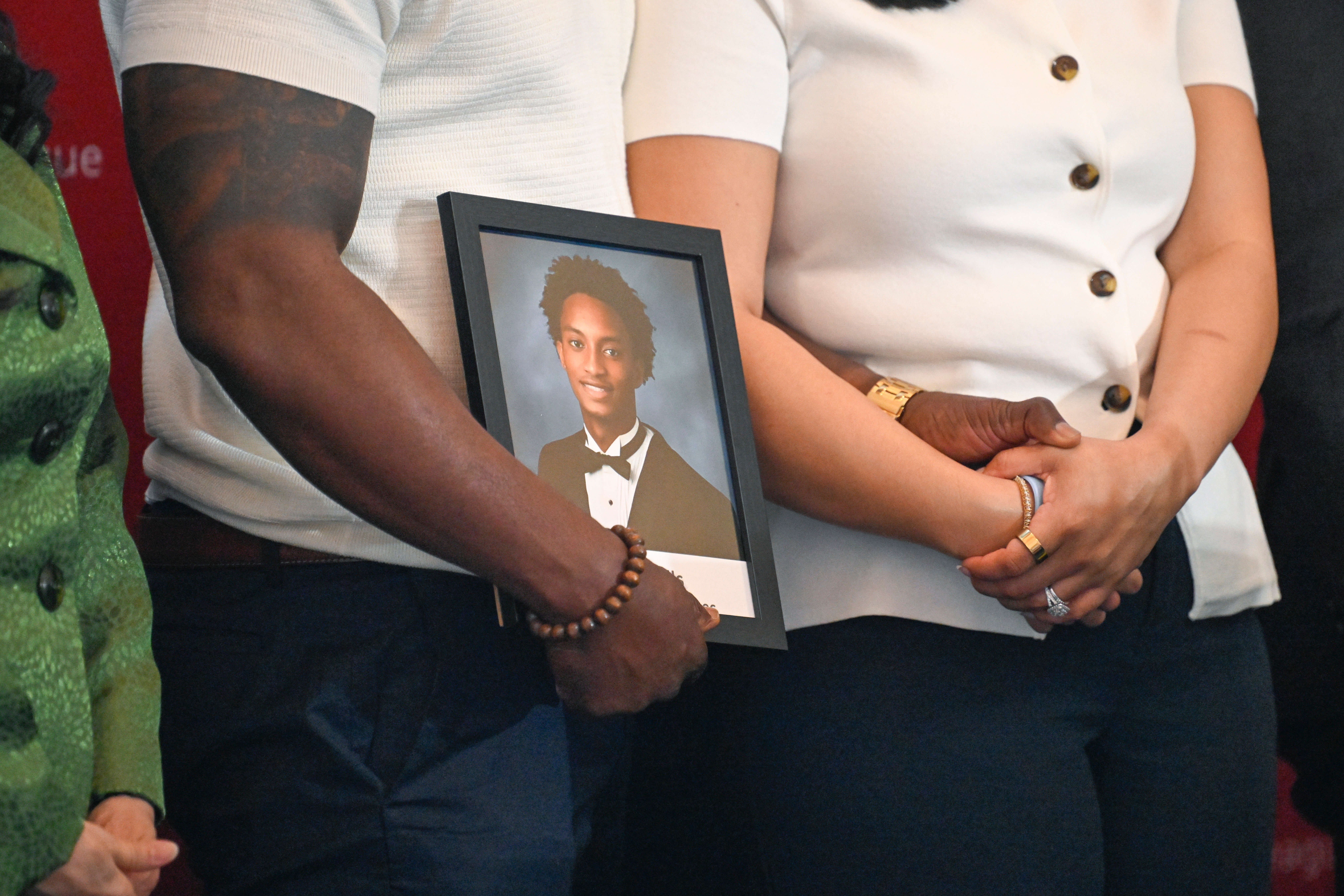
The recent killings of two 18-year-olds—Daremiah Banks in Southeast Washington and Nolan Wells in Mississippi—expose a troubling pattern in how the nation responds to Black loss. Banks was shot and killed when a gunman fired into her residential block, leaving eleven bullet holes in a parked car and a bullet that passed through a window inches from her. No national civil rights attorney took her case, no vigils were held on Martha's Vineyard, and no convention invited her mother to speak. Her death, for the purposes of the national conversation on race and violence, is invisible.
Contrast that with the case of Nolan Wells, who disappeared during a July 4 boat trip and was found dead two days later. Colin Kaepernick funded an independent autopsy, and attorney Ben Crump announced the results at an NAACP convention—though they were inconclusive and showed no evidence of wrongdoing. Nearly two months later, no crime has been proven, yet the case has generated a vigil in Martha's Vineyard, a platform at the National Association of Black Journalists convention, and accusations of state complicity, grounded more in Mississippi's history than in any actual evidence.
I'm from Mississippi, and I understand why this case resonates. The state has a documented history of racial violence, and an initial sheriff's statement ruling out foul play before toxicology results were available was bound to raise suspicions. Wells's family has every right to demand a thorough investigation. What is manufactured is the machinery built on top of their grief—the national campaign, the vigils, the convention stages—none of which required any facts beyond what the family already had. Banks's family has the same grief and the same right to answers, but only Wells's family got the machinery.
This selectivity is not new. In 2020, the narrative was that police were hunting unarmed Black Americans in the streets, but The Washington Post's police-shootings database never supported that claim. Unarmed Black victims of police shootings have numbered in the low double digits annually—a tiny fraction of Black homicide victims overall. That didn't stop D.C. Mayor Muriel Bowser from painting "BLACK LIVES MATTER" near the White House, nor Senate Democrats from blocking Senator Tim Scott's Justice Act, a bipartisan police-reform bill, rather than hand a win to a Black Republican.
Even those the movement claims to serve have spoken out. Samaria Rice fired Ben Crump, accusing him and other activists of "monopolizing and capitalizing" on the death of her son Tamir, a 12-year-old killed by police who mistook his toy gun for a real one. When a grieving mother says the attorneys and activists around her son's case are profiting, that's not a partisan talking point—it's a receipt.
None of this diminishes Nolan Wells. But it raises a hard question: why does a case with no evidence of foul play generate a national campaign, while a case with a confirmed shooter and a confirmed victim gets minimal local coverage? The uncomfortable answer is that Banks's killer wasn't wearing a badge, and Mississippi isn't the villain in her story. Her death doesn't fit the narrative, so it doesn't get the funding, the platform, or the vigil.
This selectivity is the actual scandal, and Black voters are noticing. It's part of why President Trump won 16 percent of the Black vote in 2024, the largest share for a Republican since Gerald Ford. People can tell the difference between an institution that shows up for the dead and one that shows up for the cameras. They are voting accordingly.
Nolan Wells's parents want the truth about their son, and they're entitled to it. Banks's mother wants the same for her daughter, but no one is offering her a stage. A real justice movement makes room for every grieving family. A business, on the other hand, only takes the clients it can monetize.
For more on the systemic issues in the justice system, see forensic science funding cuts and calls for a full accountability agenda.