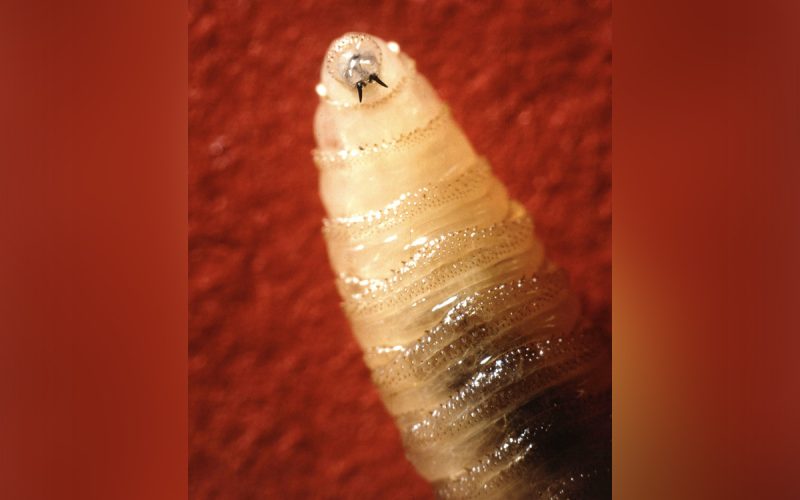
The U.S. Department of Agriculture has confirmed 45 cases of New World screwworm infestations as of August, with the latest detected in a domesticated sheep in Terrell County, Texas. The parasitic fly, which has crossed into the United States this summer, has so far only been found in animals—cattle, sheep, and dogs—but officials warn that humans are not immune.
The screwworm fly can deposit eggs on any warm-blooded host, including people. Once hatched, the larvae burrow into the flesh, feeding on live tissue and causing severe wounds that can be fatal if left untreated.

How the parasite spreads and who is at risk
Unlike the cyclospora parasite that has sickened people through contaminated produce, screwworm infestations are not contracted through food. The flies lay eggs in open wounds or natural body openings such as the nose, mouth, eyes, or ears. According to the Centers for Disease Control and Prevention, even a wound as small as a tick bite can attract a female fly to lay eggs. A single female can deposit 200 to 300 eggs at a time and may lay up to 3,000 eggs during her 10- to 30-day lifespan.
People who spend significant time outdoors or around livestock are at the highest risk, especially if they have any open cuts or sores. The CDC advises that treatment involves physically removing all eggs and larvae, which may require surgery if the maggots have embedded deeply.
Containment efforts and industry impact
Agricultural authorities are scrambling to halt the spread, which poses a serious threat to the cattle industry. So far, infestations have been largely contained to Texas, with one case reported in New Mexico. The USDA is deploying sterile flies to disrupt the screwworm's reproductive cycle, and the Food and Drug Administration has issued an emergency use authorization for a preventative medication.
This development comes as the USDA accelerates the opening of a sterile fly facility in Texas, a key part of the containment strategy. The agency's response has drawn attention amid broader concerns about the nation's preparedness for invasive species and zoonotic threats.
While the current cases are confined to animals, the potential for human infection remains a public health concern. Health officials urge anyone with unexplained wounds or exposure to livestock to seek medical evaluation, particularly in affected regions.