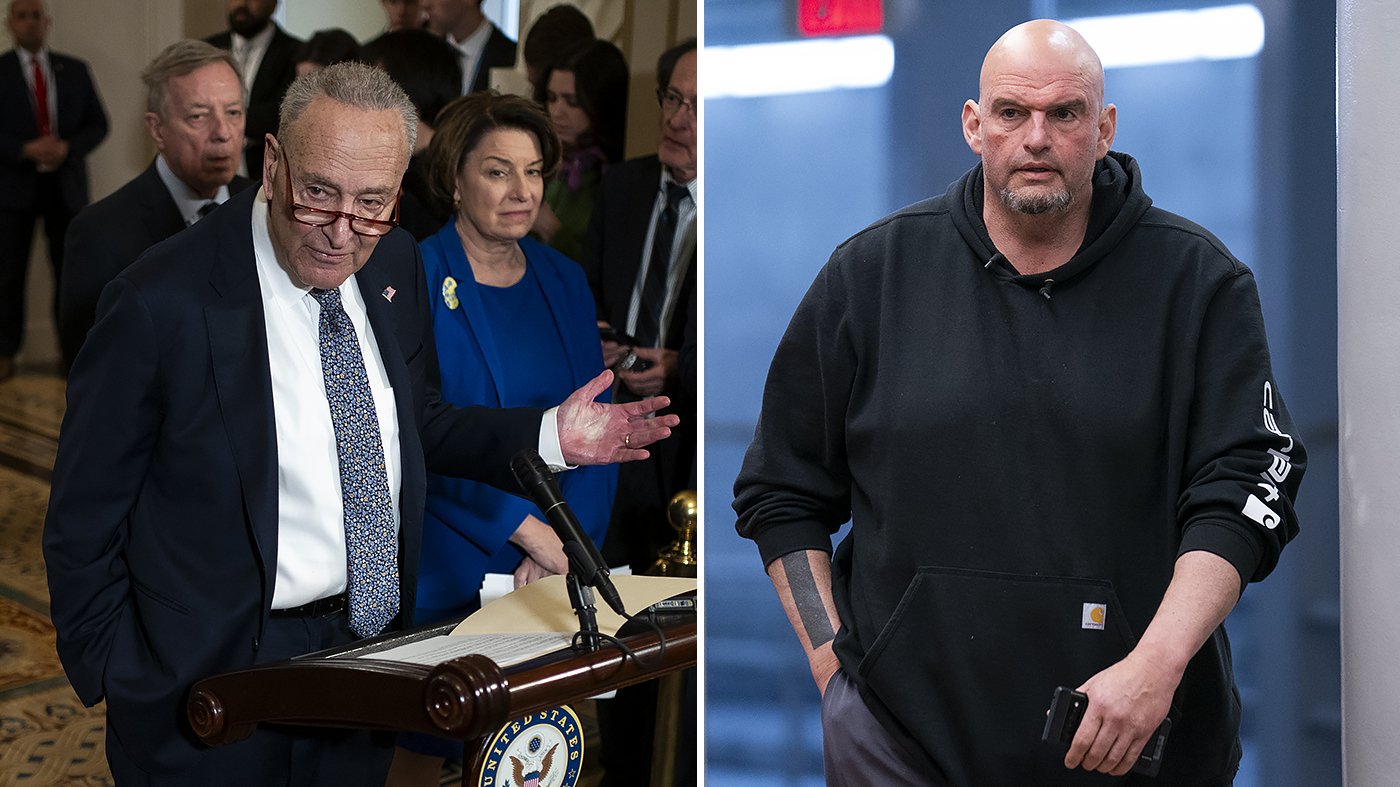
Senate Democratic Leader Chuck Schumer (N.Y.) made a direct appeal Wednesday for Sen. John Fetterman (D-Pa.) to stay within the party fold, calling him a “very good” lawmaker even as tensions between Fetterman and the progressive wing intensify.
Asked directly whether he wants Fetterman to remain a Democrat, Schumer replied: “Yes, and he is a very good member of Congress.” He added that “people in our caucus very much like him and respect him,” framing the party as a “big-tent” organization that can accommodate divergent views.
The remarks come after Senate Republican Whip John Thune (S.D.) last week publicly offered Fetterman a warm welcome should he ever decide to defect. Thune told reporters that Republicans would “roll out the red carpet” and acknowledged having “conversations” with the maverick Democrat about switching parties—a sentiment echoed by other GOP senators.
Thune argued that Fetterman might find a more comfortable home with Republicans, claiming the Democratic Party is “moving further and further, more radically, to the more extreme left on a lot of issues.” That assessment aligns with Fetterman’s own warnings about his party’s direction on foreign policy.
Earlier this month, Fetterman told the Hill Nation Summit that he would leave the Democratic Party if it “ever becomes—and just makes it official—the anti-Israel party.” He stressed that Israel policy is a matter of “moral clarity” for him and voiced alarm over growing hostility toward Israel among far-left progressives and Democratic socialists. “I can’t understand why the Democratic Party … would turn against a long-standing ally,” he said.
Fetterman’s stance has put him at odds with a significant portion of his own base. A Quinnipiac University poll of 895 registered voters in Pennsylvania found that while 48 percent approve of his job performance—and 77 percent of Republicans approve—69 percent of Democrats disapprove. More strikingly, 52 percent of Democrats said they would like to see Fetterman leave the party altogether.
The internal friction has not gone unnoticed by political strategists. Some see the DNC's financial and leadership struggles as compounding the party’s vulnerability ahead of the 2026 midterms. Meanwhile, Republicans are poised to weaponize Democratic Socialist influence in swing districts, a tactic that could further test party unity.
Schumer’s plea reflects a broader effort to keep the caucus intact as ideological fractures widen. Whether Fetterman—who has already traded sharp barbs with progressive figures—will heed Schumer’s call remains an open question. For now, the Pennsylvania senator has not indicated any imminent move, but his warnings about Israel suggest the threshold for a break is clearly defined.