The recent string of Democratic Socialist and progressive primary victories isn't just reshaping the Democratic Party's internal dynamics—it's handing Republicans a potent weapon for the 2026 midterms. The GOP is already moving to fuse the words "Democrat" and "socialist" in voters' minds, a tactic that could prove devastating in purple states.
Troy Jackson's win in Maine's Senate primary, Abdul El-Sayed's tight race in Michigan, and self-described democratic socialists triumphing in New York and Colorado have given the GOP a clear narrative: a vote for any Democrat is a vote for socialism. This is no accident; many of these candidates openly embrace left-wing policies that align with socialist platforms.

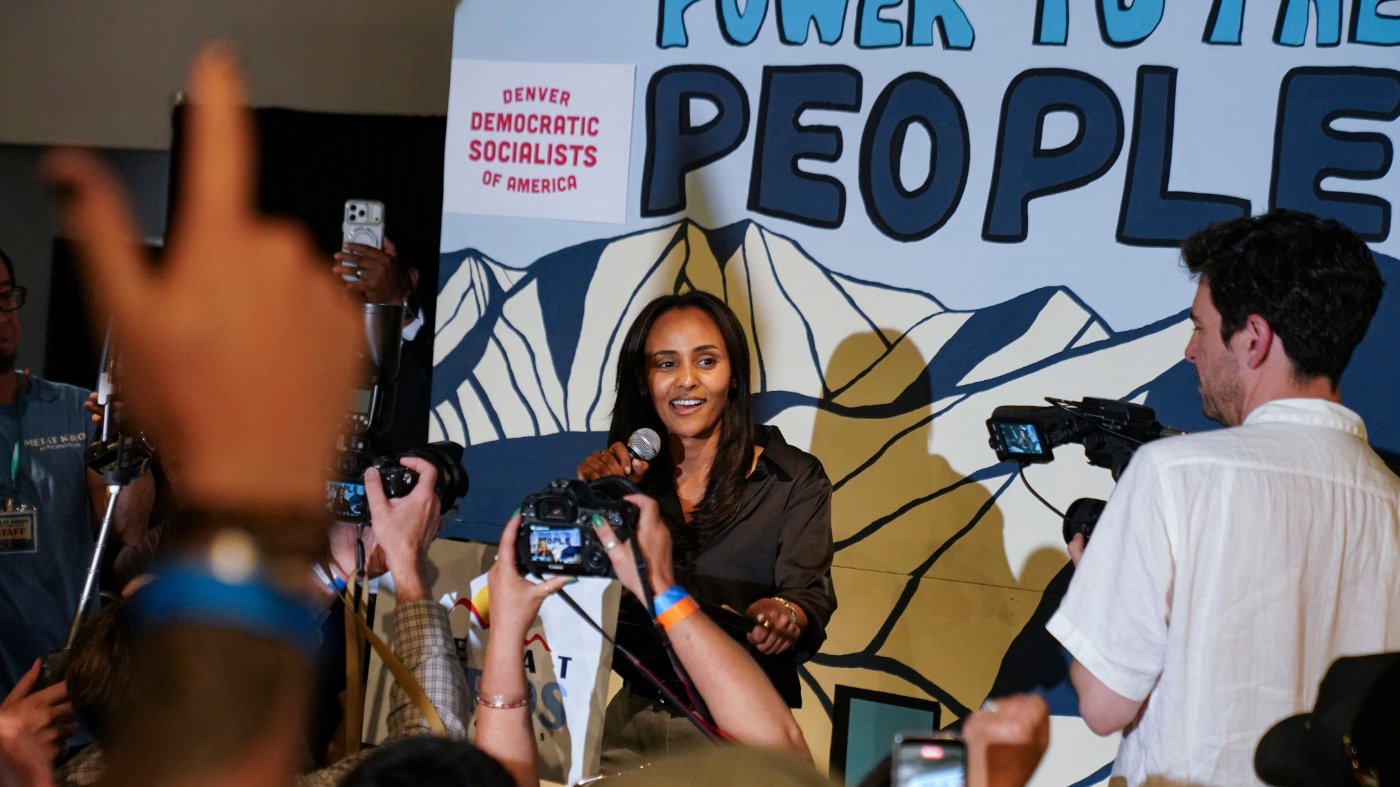
In New York City, Mayor Zohran Mamdani, a proud member of the Democratic Socialists of America, has become the public face of the party's ascendant left flank. His endorsed candidates unseated two incumbents, despite one, Darializa Avila Chevalier, having a history of extremist and racist remarks. In Colorado, Melat Kiros, who has called America fundamentally "exploitative" and refused to label a deadly firebombing of Jews in Boulder as antisemitic, won her primary in a safe blue district, virtually guaranteeing a House seat.
In Maine, Jackson, aligned with Senator Bernie Sanders, will rely on the progressive populist movement led by Graham Platner, pushing him further left. In Michigan's August 4 primary, El-Sayed, backed by Sanders and Representative Alexandria Ocasio-Cortez, is locked in a close battle with establishment favorite Representative Haley Stevens. Polling shows a tight race: Stevens leads in five of the last ten polls, averaging a 3-point edge, while El-Sayed led in four by an average of nearly 7 points, with one tie.
Neither Jackson nor El-Sayed calls themselves a socialist, but their advocacy for populist, left-wing policies and support from socialist-progressive backers makes the distinction politically irrelevant. Republicans don't need every Democrat to be a DSA member; they just need enough high-profile left-wing candidates to make the caricature stick.
The GOP is explicit about this strategy. A National Republican Congressional Committee memo outlines a "plan to weaponize Mamdani as the new face of the Democratic Party." House Speaker Mike Johnson recently warned that the midterms are a choice between preserving the republic or sliding "down this dark road of death to communism." While being a socialist may play well in deep-blue districts, it's toxic among independents and swing voters in purple states—precisely the voters Democrats need to win the White House.
Democrats enter the critical summer with a damaged brand. The party's favorability sits at 38 percent, 17 points underwater, lower than President Trump's 41 percent approval. Layering the socialist label on top of that is a recipe for trouble. Only 38 percent of independents view socialism positively, per a September 2025 Gallup survey. A CNBC All America Economic Survey found that just 32 percent of Americans would be more likely to vote for a Democratic Socialist, while 50 percent would be less likely. Only 28 percent view socialism favorably.
There's growing evidence that the socialist perception is hurting Democrats. Despite Trump's grim 37 percent approval rating, Democrats lead the generic congressional ballot by only 3 points—well within the margin of error. That narrow edge suggests that the focus on socialist-progressive candidates is blunting Democrats' ability to capitalize on anti-Trump sentiment. Some party figures are sounding the alarm. Democratic strategist Van Jones recently lambasted the far-left's "crazy ideas," accusing the DSA of pushing an agenda "FAR outside" traditional Democratic policies. Potential 2028 contender Rahm Emanuel warned that the socialist "Bernie bros" could "spoil Democrats' midterms hopes" and eventually cost them the presidency—a warning that Sanders has rejected.
Democrats face a tough dilemma: the socialist-progressive movement has energized a new bloc of voters, but it also turns off a significant share of the electorate. If El-Sayed wins in Michigan, the problem will intensify. Even if anti-Trump fatigue is enough to flip the House, as some polls suggest, the real prize is the presidency. To win that, Democrats must shed the socialist label—or risk losing the swing voters who decide national elections.