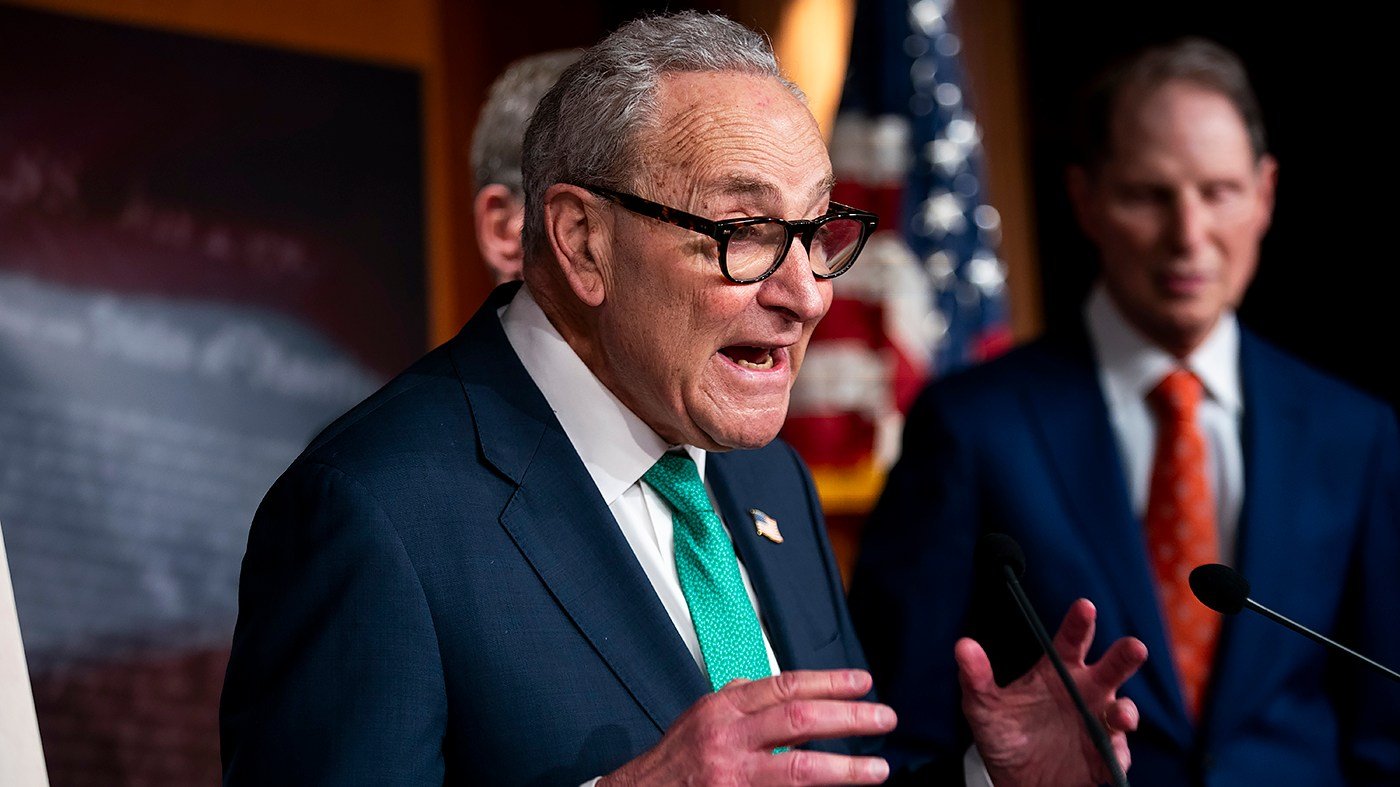
Senate Democratic Leader Chuck Schumer (D-N.Y.) on Monday formally requested that the Trump administration provide a classified briefing to all senators on the national security risks posed by artificial intelligence. The move comes after a researcher at Anthropic, a leading AI safety company, publicly warned that companies racing toward artificial superintelligence are “gambling with our lives.”
Schumer, in a statement, framed the request as a matter of accountability. “The American people deserve better from their government at such a consequential moment. I have long argued that we must keep the U.S. as the global leader in AI innovation and security,” he said. “But that innovation must be coupled with serious guardrails that earn the trust of the American public.”
The New York Democrat accused the administration of ignoring mounting warnings. “Warning bells are ringing louder than they ever have — and the Trump administration is looking the other way,” Schumer said. “Well, if they won’t hold themselves accountable, we will. And if Trump does not act, Congress must.”
Schumer outlined three specific areas where he wants answers from administration officials. First, he is demanding a full accounting of the administration’s new framework for testing the most powerful frontier AI models. Second, he is pressing for details on what steps are being taken to prevent AI chips and semiconductor manufacturing equipment from reaching China. Third, he is asking the White House to explain its plans to defend the U.S. against increasingly sophisticated AI-enabled cyberattacks.
The request adds to a growing chorus of bipartisan concern on Capitol Hill. Several lawmakers have already called for briefings or stricter oversight of the emerging technology. For instance, Rep. Ruben Gallego (D-Ariz.) recently likened AI to Frankenstein's monster as tech leaders urged a pause on development. Meanwhile, Democratic donors have returned with wallets open, but they are bypassing party committees, a sign of broader unease within the party about current leadership dynamics.
Republican leaders, including President Trump, have so far resisted calls for stricter AI regulations, arguing that too much oversight could cede technological leadership to rivals. But Schumer’s push reflects a growing sentiment that the risks, particularly in national security, are too significant to ignore.
The classified briefing request is not the first time Schumer has sought to elevate AI on the Senate’s agenda. He previously convened a series of “AI Insight Forums” with industry leaders, but this is a more urgent, security-focused ask. The administration has not yet publicly responded to Schumer’s request.
As the debate intensifies, the stakes are high. The outcome of this request could shape how Congress approaches AI oversight in the coming months, with implications for innovation, national security, and public trust.