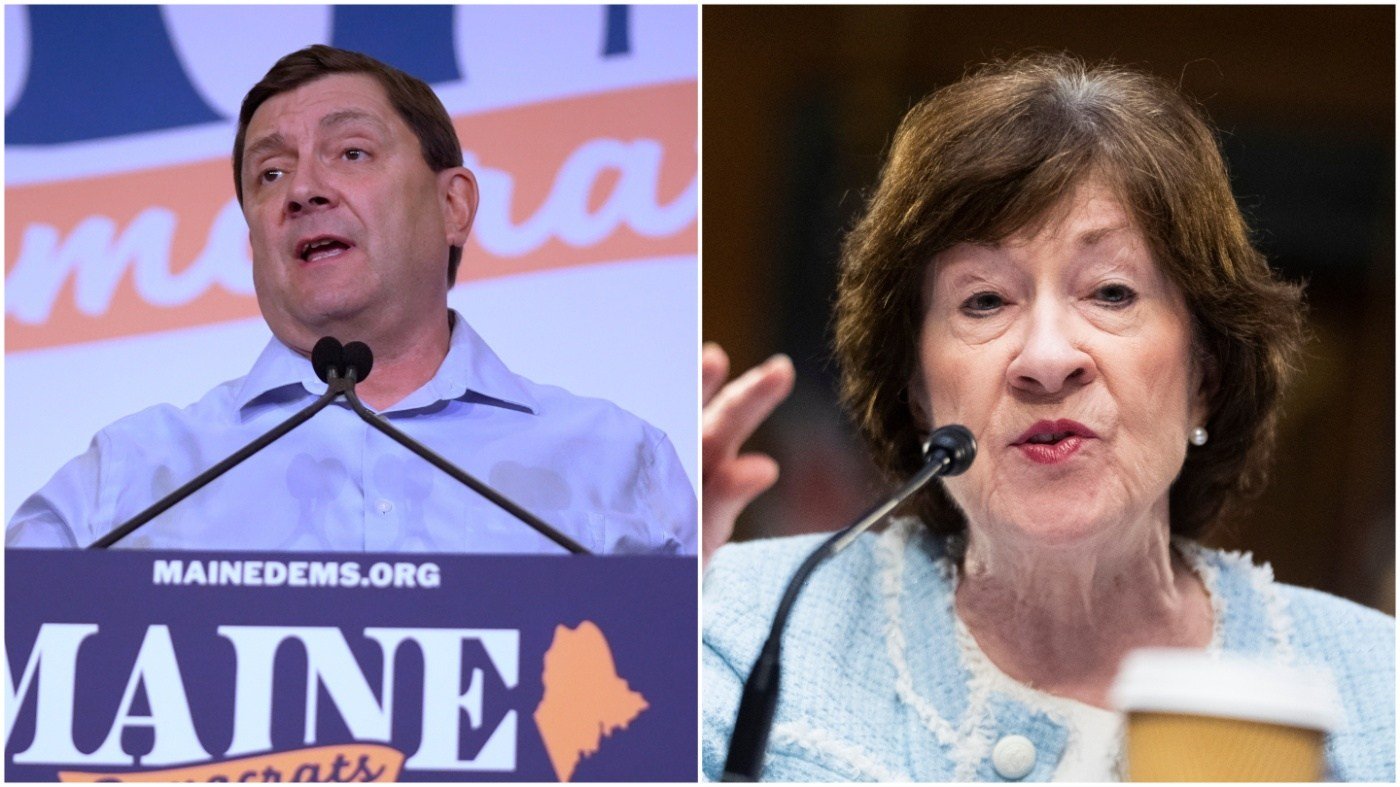
The battle over redistricting has moved beyond simple map disputes into a broader conflict over whether constitutional limits still apply when political power is at stake. After the Virginia Supreme Court struck down the state's redistricting referendum, Senate candidate Graham Platner (D-Maine) remarked, "I'm old enough to remember when Republicans in Ohio just ignored court rulings repeatedly and did it anyway."
Platner's comment, while bold, highlights a growing hypocrisy driving the mid-decade redistricting wars. As analyst Nathan Gonzalez noted, both parties view gerrymandering as a problem only in states they don't control. The old adage "As Ohio goes, so goes the nation" rings true: years before the current crisis, the Ohio Supreme Court repeatedly ruled state maps unconstitutional, only for Republican lawmakers to ignore those rulings. State Senate President Matt Huffman (R-Lima) famously said, "We can kind of do what we want."

That attitude has now spread nationwide, especially after the U.S. Supreme Court weakened Section 2 of the Voting Rights Act in Louisiana v. Callais. In Louisiana, Governor Jeff Landry (R) suspended congressional primaries even after early voting had started—a stark contrast to his 2022 argument that five months wasn't enough time to draw new maps without undermining public trust. In Tennessee, the legislature passed new maps eliminating the state's only majority-minority district in just 48 hours, despite a state law barring mid-decade changes. In Florida, similar Republican-friendly maps were rushed through a two-day special session, flouting a constitutional provision that prohibits partisan favoritism.
Legal challenges to these maps are pending, but reliably conservative state courts are unlikely to impose meaningful constraints. This has fueled frustration among Democrats, who see their party held to standards Republicans ignore. Some have cheered Platner's defiance of court orders, viewing it as necessary pushback. But openly advocating for ignoring judicial rulings won't improve an already dangerous situation.
Republicans did enormous damage by treating constitutional anti-gerrymandering rules as inconveniences. Now Democrats risk making the same mistake in reverse—concluding that if rules aren't enforced equally, they don't need to be followed at all. That logic may yield short-term victories, but it destroys the only mechanism capable of restraining power when political fortunes shift.
Every act of redistricting hardball creates permission for the next. Today's justification becomes tomorrow's escalation. The mid-decade redistricting wars are a race to the bottom—and the further down we go, the harder it will be to climb back. If courts can't or won't impose limits, voters must demand reforms.
What Voters Can Do
High voter turnout can turn overengineered maps into "dummymanders," but structural reform is essential. National standards with enforceable consequences would offer stronger protections than the current patchwork of state rules. Proposals like independent redistricting commissions—similar to those discussed in articles like Black Democrats denouncing GOP redistricting as modern-day Jim Crow—deserve serious debate. More ambitious ideas, such as expanding the House or eliminating single-member districts, also merit consideration. Meaningful penalties for parties that intentionally violate anti-gerrymandering rules—like banning them from future redistricting—could deter abuse.
An eye for an eye makes the whole world blind, but a map for a map makes the whole country more divided. It's time to stop treating redistricting as a zero-sum arms race and start getting serious about reform. As the Virginia governor's blast at the Supreme Court after redistricting defeat shows, the stakes are high. The path forward lies not in escalating the war, but in building a system that can withstand partisan abuse.