In my backyard, outside Atlanta, I've been battling fire ants. Anyone who's lived in the South knows you don't just trim a fire-ant problem—you destroy the nest. Ignore one, and you'll have a dozen. That's the same logic I see now with voting rights across this region, where those with resources have once again looked away.
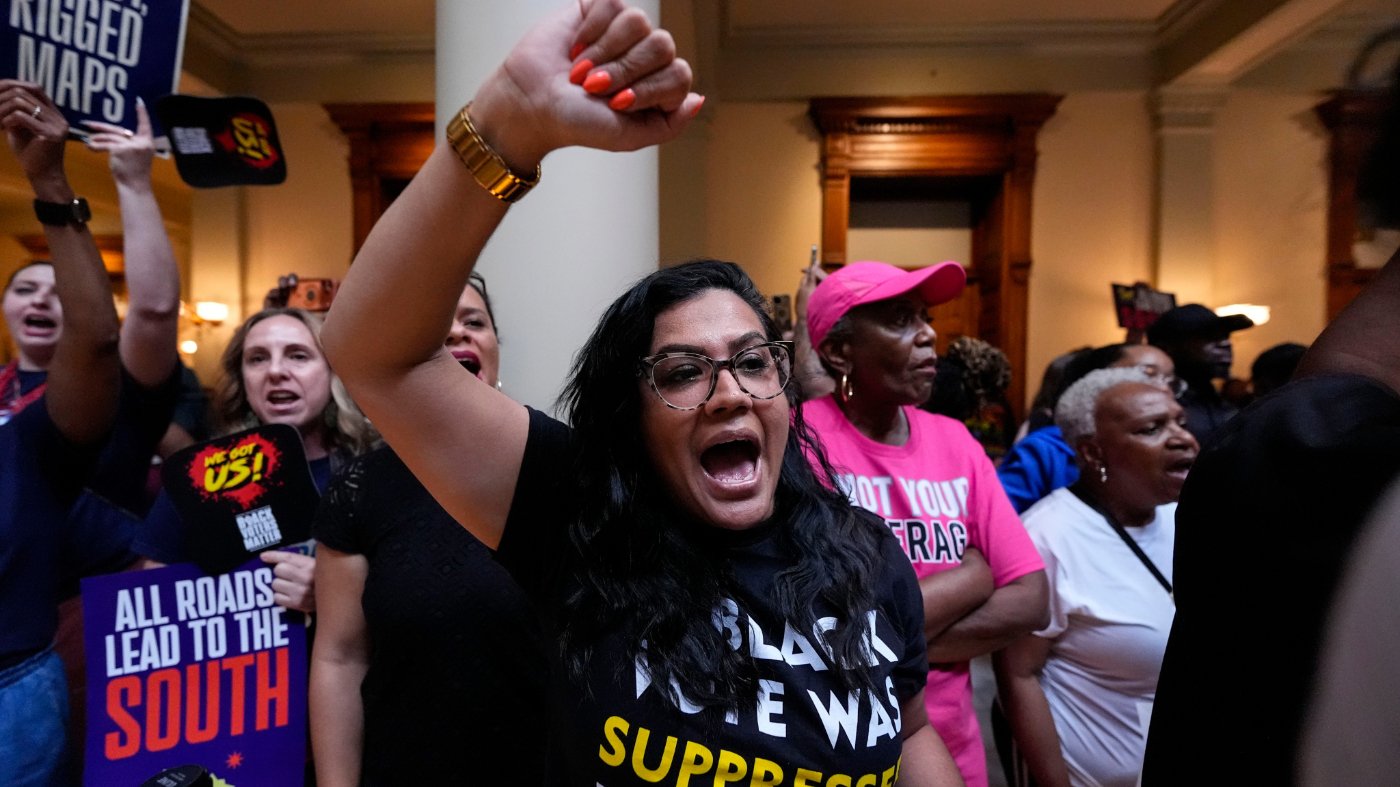
For over three decades, I've organized in the South. The assault on voting wasn't a hypothetical; it was always the plan. We didn't just sound alarms—we delivered. When Georgia flipped in 2020, it was Black Southern organizers who gave this country four more years of democracy. But this spring, the Supreme Court's 6-3 decision in Louisiana v. Callais gutted Section 2 of the Voting Rights Act, unleashing a wave of mid-decade redraws aimed at erasing Black political power across the South. Where we were organized, we held the line. In Georgia, Republican leaders pulled redistricting hours before their special session, as the Capitol chanted “Black voters matter.” South Carolina's Republican Senate killed its redraw. Mississippi canceled. Court-mandated redraws like Louisiana's went through; voluntary ones, where we organized, did not. Resistance works, but it's not free.

Losing these seats isn't just a Black problem—it's an American problem. The legislation that expanded who this country works for—the Voting Rights Act, the Affordable Care Act, the Civil Rights Act—was shaped and championed by Black legislators from Southern districts. Draw a Black member out of a district, and you silence the constituency that has most consistently pushed this country to live up to its promises. The whole country moves right, whether it means to or not.
This is why the right targets the South first. President Trump launched the MAGA movement in Alabama in 2015, before his first stadium crowd. President Reagan opened his 1980 campaign in Mississippi, on a promise of “states' rights.” These were dog whistles, pitched to the region the right understood as the laboratory for a politics it meant to take national. Whatever takes root in the South doesn't stay there—it spreads. As Botswana's diamond-fueled democracy shows, resilience can defy authoritarian myths, but the South's fight is far from over.
When the right launched its assault, blue states answered fast. Gov. Gavin Newsom's committee raised more than $100 million to redraw California's maps, a counterpunch thrown three states away from where the blow landed. That was right and necessary. But redistricting in California isn't a resistance campaign in the South. We needed both. Yet the consulting class has every incentive to steer money toward what enriches them: traditional television buys in battleground states, the same antiquated strategy that has lost ground cycle after cycle. In 2024, the five highest-paid political vendors took in about $2.1 billion, every one a media-buying firm, pocketing roughly 15 percent on every ad they placed. This is a trap into which the donor class has been led. Donors haven't been stingy—they've been misadvised.
Winning requires every tool to be aligned. Traditional nonprofit money is needed to build civic infrastructure, social welfare nonprofit money to fight in the policy arena, PAC money to win the elections. These aren't competing buckets—they're one strategy, and the South has been starved of all of it. The region is home to 56 percent of the country's Black population, yet receives less than 3 percent of national philanthropic investment. There was a redrawing campaign, but never a fully funded resistance campaign waged where the assault began. The Roberts Court's assault on democracy underscores the urgency for reforms to restore independence.
We now have proof that resistance works. The collapsed sessions in Georgia, South Carolina, and Mississippi happened because we understood the seriousness of this moment and mobilized our constituents on urgency and people power, not resources. But you can't run on adrenaline forever. Sustaining this work takes an investment the South has never been given. The left cannot surrender it and still believe it can hold off an anti-democracy movement that anchors itself here. A seat saved in Sacramento and a seat held in Selma are in the same fight. You can't win by funding the offset while starving the frontline.
The answer isn't one fund or fix. It's strategic funding at every level, sustained year-round, aimed where the assault begins, from national intermediaries to the small Southern groups that never leave. That infrastructure is already being built. It needs to be met at scale. A battleground-state strategy is a fallacy. You can't wall off seven states and expect the country to hold. What is decided in an Alabama courtroom binds a voter in Wisconsin. The South is the litmus test for how strong this democracy will hold, and we are the front line of its defense. We can lose an election and recover. We cannot recover a democracy.
This region's roots of racism run deep, but so do its roots of resistance: The same soil grew the Montgomery Bus Boycott and the Selma march. You don't win by abandoning the ground where the nest is growing. You win by digging in. The right has always known that. The only question is when the left will.
LaTosha Brown is co-founder of Black Voters Matter Fund and founder of the Southern Black Girls and Women's Consortium.