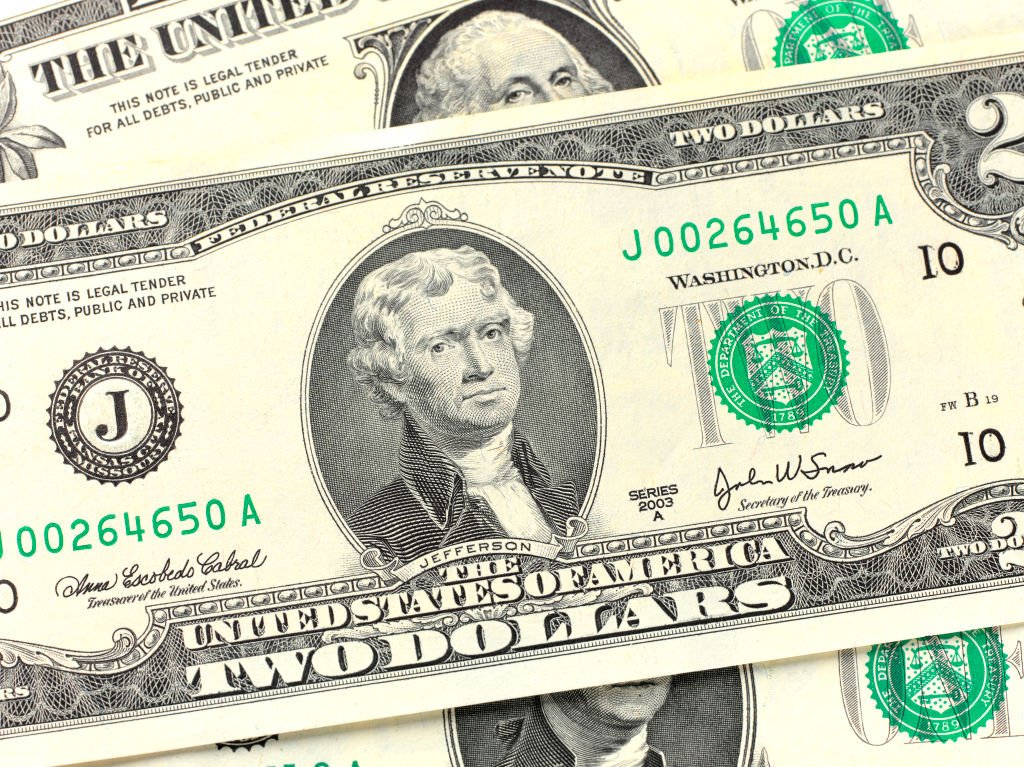
The $2 bill, a currency so rarely seen that many Americans have never handled one, is facing an unusual hiatus. For the first time in recent memory, the U.S. Treasury appears to have halted production of new $2 bills this year, leaving collectors and numismatists empty-handed as the nation approaches its 250th anniversary.
According to data from the Federal Reserve, there are roughly 1.8 billion $2 bills in circulation, a record high. That compares to 2.4 billion $10 bills and 3.7 billion $5 bills. Despite their relative scarcity in daily use, the $2 bill has been printed almost continuously for over 160 years. But 2025 marks a break in that tradition.

The pause comes as the Bureau of Engraving and Printing, which produces U.S. currency, has not included $2 bills in its annual production schedule. While the Treasury has not issued an official statement, the decision appears to be driven by low demand and an ample existing supply. Collectors, however, are disappointed, as they often seek crisp new notes for special occasions—including the upcoming Semiquincentennial, America's 250th birthday.
This hiatus is reminiscent of other currency production slowdowns. For example, the Bears board's vote to advance a stadium deal in Indiana reflects how major decisions often hinge on cost-benefit analyses. Similarly, the Treasury's calculus on $2 bills appears to prioritize efficiency over tradition.
The $2 bill's niche status means it is often hoarded or collected rather than spent. Some older or misprinted notes can fetch significant premiums on the collector market. But for those hoping to add a 2025-series note to their collection, the window has closed—at least for now.
The pause also highlights broader trends in currency use. As digital payments surge, physical cash—especially lower-denomination notes—faces declining circulation. A bipartisan House bill proposing a three-year pause on state AI regulations shows how lawmakers sometimes hit pause on emerging issues. Here, the Treasury is effectively hitting pause on a legacy currency.
For collectors, the news is a blow. The $2 bill has long been a favorite for gifts and commemorations. Without new issues, the existing supply may become more valuable over time, but the immediate effect is a gap in collections. The Treasury has not indicated when or if production will resume.
In the meantime, the 1.8 billion $2 bills already in circulation will continue to circulate—or, more likely, sit in drawers and albums. The pause underscores a quiet shift in U.S. monetary policy: even the most iconic notes are not immune to the economics of supply and demand.