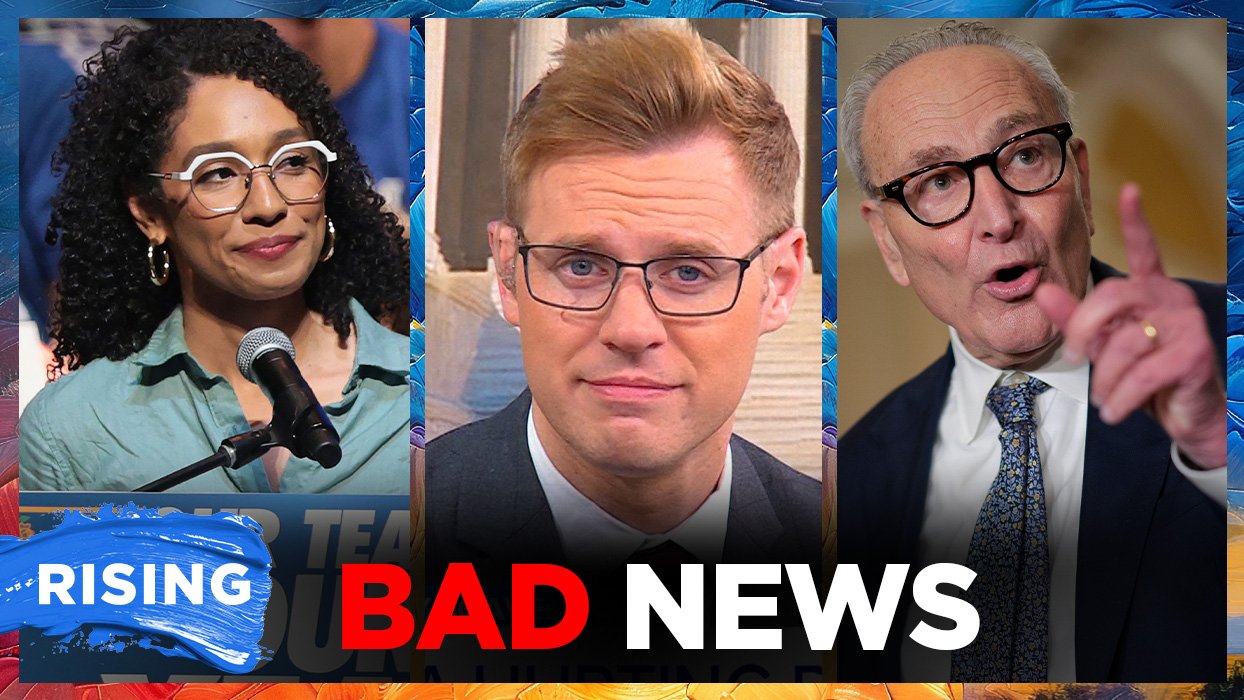
Democratic strategists are grappling with a perplexing question: Why aren't they cruising toward a midterm victory? President Trump's approval numbers are underwater, the economy is shaky, and the lingering conflict with Iran has eroded public trust. Yet, the expected blue wave looks more like a ripple.
According to recent polling, the GOP is projected to lose the House narrowly but could hold the Senate. That outcome would trigger intense finger-pointing within Democratic ranks. But some analysts aren't waiting for Election Day to assign blame.
The disconnect is stark. Trump's job approval rating is worse than Bill Clinton's in 1994, George W. Bush's in 2006, Barack Obama's in 2010, and his own in 2018—all years when the incumbent party suffered crushing midterm defeats. By historical standards, Republicans should be bracing for a rout. Instead, they're competitive.
Sarah Longwell, a former Republican strategist turned Never Trump activist and co-founder of The Bulwark, argues that the Democratic Party's embrace of far-left figures is alienating swing voters. At some point Dems are going to have to grapple with the reality that in the face of all of Trump and Republicans' manifest horribleness and incompetence, people aren't rushing toward the Democrats,
she wrote on X. If you think the DSA stuff is helping, you've never talked to a swing voter.
Jamie Metzl, a former Clinton staffer, echoed that sentiment, calling the Democratic Socialists of America (DSA) a fundamental threat to our party and our country.
He warned that the DSA is not merely a group of idealists seeking lower healthcare costs but a small group of radical extremists pursuing a strategy to take over the Democratic Party and ultimately our country in order to impose an agenda that would devastate our economy and fundamentally dismantle our system of government.
The DSA's platform includes price controls and mass wealth confiscation, policies that have failed in other countries. For many Americans, even those disillusioned with Trump, this vision is a nonstarter. They might support centrist Democrats but won't vote for a party they see as veering toward authoritarian socialism.
The party's internal divisions are on display. While older, more moderate figures like Longwell and Metzl push back, the grassroots is increasingly drawn to figures like Hasan Piker, a popular streamer who recently addressed the College Democrats and has praised Mao Zedong. Piker's influence signals a shift among younger activists who view the Democratic establishment as out of touch.
This ideological battle has real electoral consequences. In Maine, the Democratic candidate Graham Platner dropped out amid sexual assault allegations. In Michigan, the primary winner faces a tough general election fight. And in Texas, James Talarico is struggling against Ken Paxton. These races highlight a broader problem: the party's brand is tarnished by its leftward drift.
The irony is that Trump's vulnerabilities—economic discontent, corruption allegations, and foreign policy failures—should be a gift to Democrats. But as Longwell and Metzl argue, the party's flirtation with socialism is a self-inflicted wound. The result is a political landscape where the GOP, despite its own troubles, remains competitive.
For the country, the stakes are high. A healthy democracy requires two viable parties. If one party is captured by its radical fringe, voters lose a meaningful choice. The midterms will test whether Democrats can shed their socialist baggage and reclaim the center—or whether they'll hand Trump a victory he doesn't deserve.