In recent years, the public square has grown noticeably more vulgar, with politicians and public figures increasingly dropping expletives in formal settings. This shift marks a sharp departure from past norms, when even famously salty leaders kept their language behind closed doors. Today, however, coarse talk is often mistaken for authenticity, a trend that political observers say is poisoning civic discourse.
The roots of this shift can be traced to legal and cultural changes. In 2012, Supreme Court Justice Ruth Bader Ginsburg argued during oral arguments that federal regulators should not restrict indecent language on broadcast television, suggesting that words like the f-word and s-word had become 'common parlance.' Her view reflected a broader cultural drift, which has since accelerated dramatically.

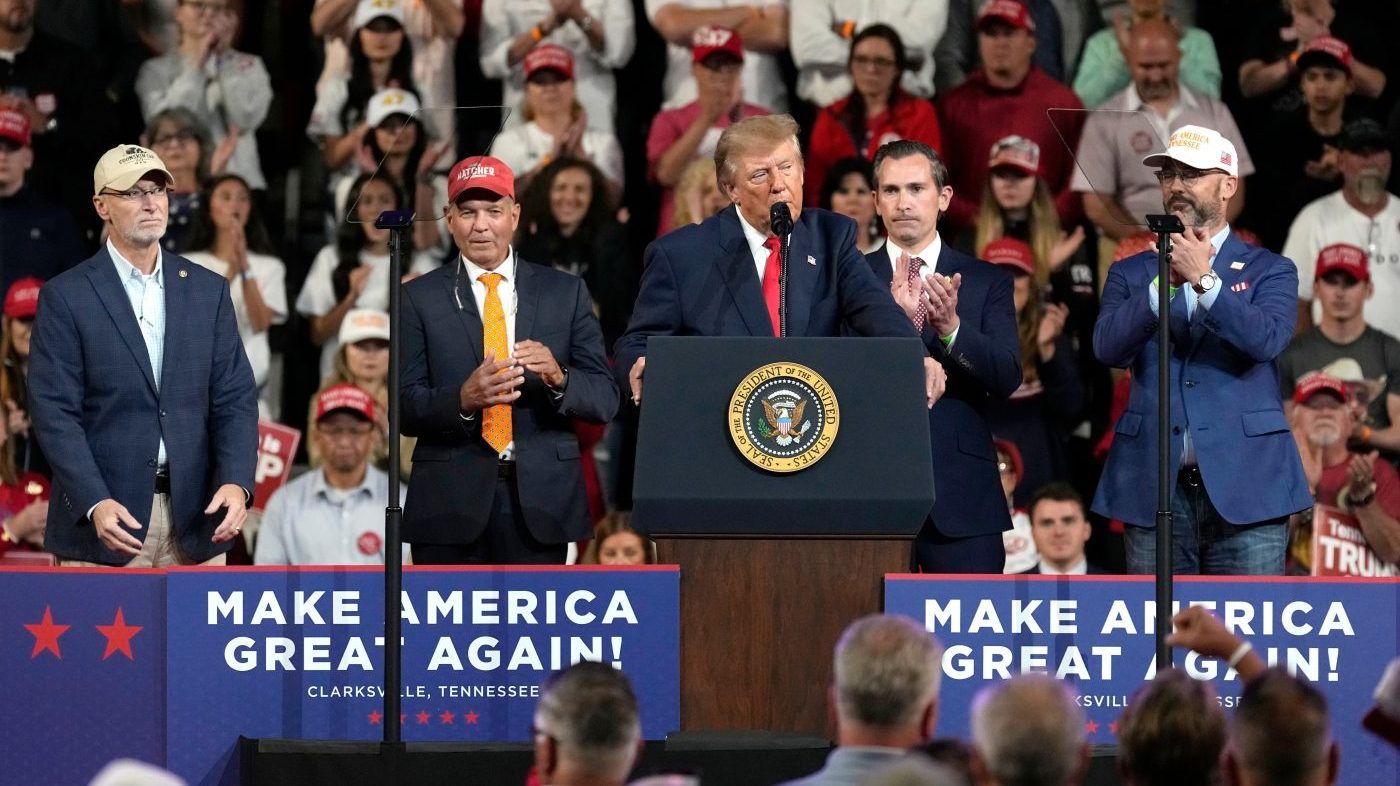
Now, profanity is pervasive across media, music, and politics. Even elementary school teachers report hearing language once reserved for locker rooms. The political sphere, in particular, has seen a notable uptick. President Donald Trump earned the moniker 'curser-in-chief,' but he is hardly alone. His predecessors, including Joe Biden, Barack Obama, Richard Nixon, Lyndon Johnson, and John F. Kennedy, were known to use crude language in private. Yet public displays of profanity were rare until Obama’s presidency, with Biden and Trump escalating the trend.
Congress has followed suit. Senator Bernie Moreno (R-Ohio) recently dropped an f-bomb directed at Dr. Anthony Fauci during a hearing, drawing little surprise. Senate Minority Leader Chuck Schumer has also contributed to the low bar, even praising a colleague for an expletive-laden outburst. Such behavior is now so common that it rarely raises eyebrows.
Researchers at the University of California-San Diego, including professors Benjamin Bergen and Pamela Ban, have documented the rise in politician swearing. They note that much of this profanity is performative, designed to project relatability rather than genuine emotion. This performative vulgarity, they argue, substitutes for substantive argument and fuels polarization.
The consequences extend beyond mere tone. As philosopher Alasdair MacIntyre observed decades ago, Western civilization risks a new dark age when it loses common virtues and civil community. Edmund Burke similarly warned that liberty cannot survive without morality. The erosion of decorum in public rhetoric, critics argue, is both a symptom and a cause of this decline.
Some dismiss concerns about language as prudishness, but cultural transmission through language matters. Vulgarity debases society and normalizes the abnormal. Public officials, who should model leadership, instead often choose shock value over intellectual rigor. This trend is bipartisan, making it a rare area of agreement in an otherwise divided era.
While salty language may have its place in private settings, the public deliberation sphere demands a higher standard. Restoring civility to political discourse would be a meaningful step toward healing a fractured nation. As the watchdog findings on FEMA conduct show, accountability and propriety are essential to public trust. Similarly, challenges to official reports underscore the need for careful, measured communication. The path forward requires leaders to choose words that elevate, not degrade, the public square.