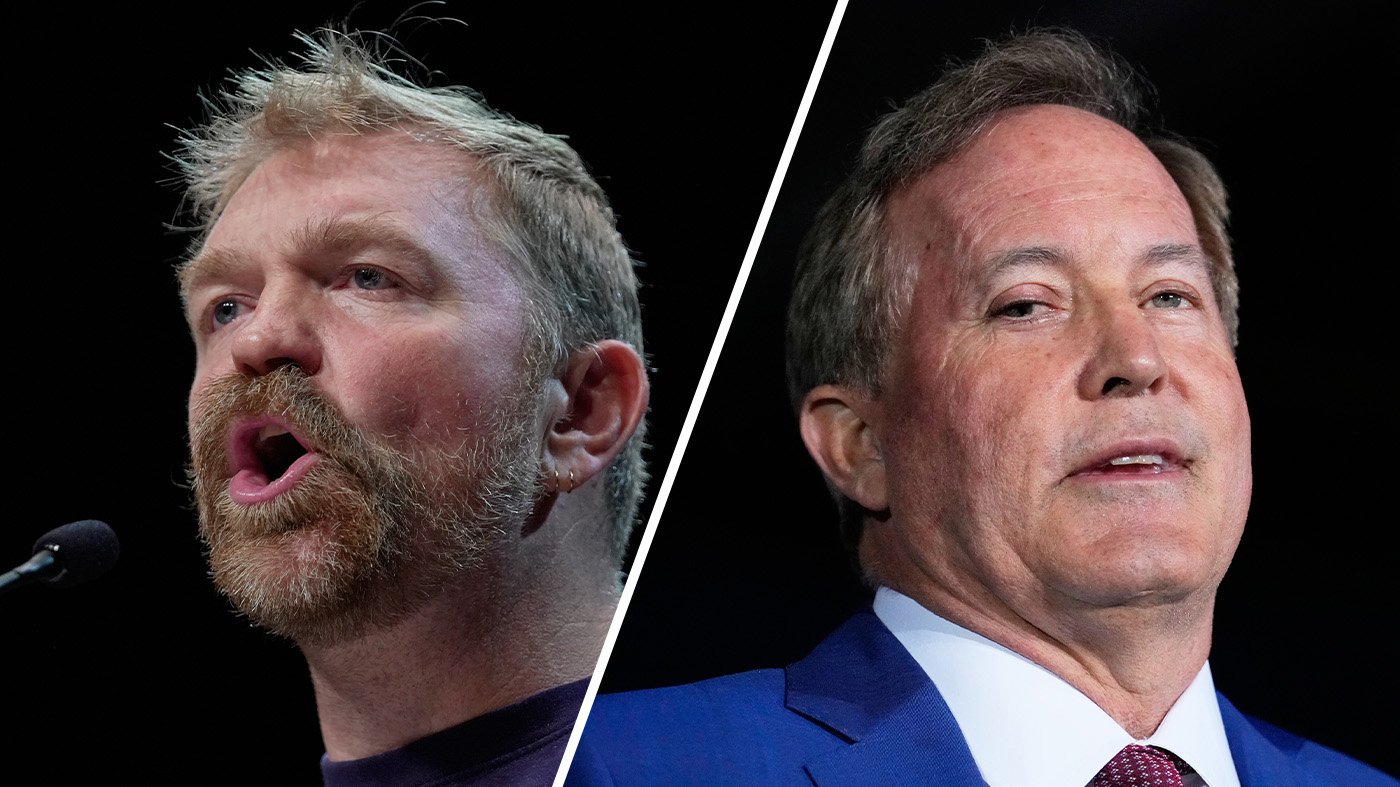
Political observers can debate endlessly whether Graham Platner or Ken Paxton is the less fit candidate for the U.S. Senate. But the verdict often hinges on partisan loyalty. Some might find Paxton worse for his alleged abuse of power as Texas attorney general, while others see Platner’s pre-nomination misconduct—including reported antisemitic remarks and sexting—as more disqualifying. Yet for most Americans, this is an academic exercise: Platner is Maine’s problem, Paxton is Texas’s.
For voters outside those states, a sensible stance is to hope both lose. But for partisans fixated on Senate control from 2027 to 2029, the choice matters deeply. Each side must argue its scandal-ridden candidate is the lesser evil, a contortion that echoes the 2017 Al Franken-Roy Moore episode, when Democrats demanded Moore’s ouster while defending Franken until his own accusations mounted.

The cases are distinct, as Platner’s sexting scandal tests voter tolerance in Maine, while Paxton faces a federal corruption probe and impeachment by his own party. But they share a deeper commonality: supporters believe their ideas—and the force to enact them—justify the baggage. The scandals, far from liabilities, are framed as proof of outsider credibility.
This marks a shift from earlier scandal politics. Bill Clinton’s “Slick Willie” and Richard Nixon’s “Tricky Dick” were nicknames that conceded flaws but also acknowledged talent. The bargain was that their skills outweighed the sleaze. Platner and Paxton offer no such trade-off. Their backers bypassed safer, scandal-free alternatives—like Maine Governor Janet Mills or Senator John Cornyn—because those choices were deemed too establishment.
When Platner’s wife warned his campaign about his explicit texts, he blamed “establishment forces” trying to destroy him to block his housing and income inequality policies. Similarly, Paxton called his impeachment a “weaponization” to silence him for representing voters. This rhetoric mirrors populist figures from Donald Trump to Huey Long to Jesse Jackson: accusations are not weaknesses but evidence that the movement threatens powerful interests.
There’s often a kernel of truth—Democrats did target Trump after January 6, and Standard Oil wanted Long gone. But the logic creates a slippery slope. As Sanders stands by Platner, dismissing the sexting scandal as a private matter, the question becomes: where does excusing misconduct for the cause stop? César Chávez’s legacy was tarnished only decades later by revelations of abuse. For now, Platner and Paxton test whether voters will draw that line before Election Day.