A fresh poll from the Associated Press-NORC Center for Public Affairs Research has laid bare a significant disconnect between Jewish Americans and the nation’s two major political parties, as well as President Trump. The survey, released Thursday, found that just 15 percent of Jewish adults believe the Democratic Party represents them “extremely well,” while 16 percent say the same about the Republican Party. Another 33 percent said Democrats support them “somewhat well,” and 24 percent gave that rating to the GOP.
On the flip side, 41 percent of Jewish Americans said the Democratic Party does not support them at all, and 49 percent said the same about the Republican Party. These figures underscore a broader dissatisfaction that cuts across party lines. When asked about their overall favorability toward the two parties, 50 percent of Jewish adults viewed the Democratic Party unfavorably, while 71 percent held an unfavorable view of the Republican Party. Only 49 percent had a favorable opinion of Democrats, and just 28 percent viewed the GOP favorably.
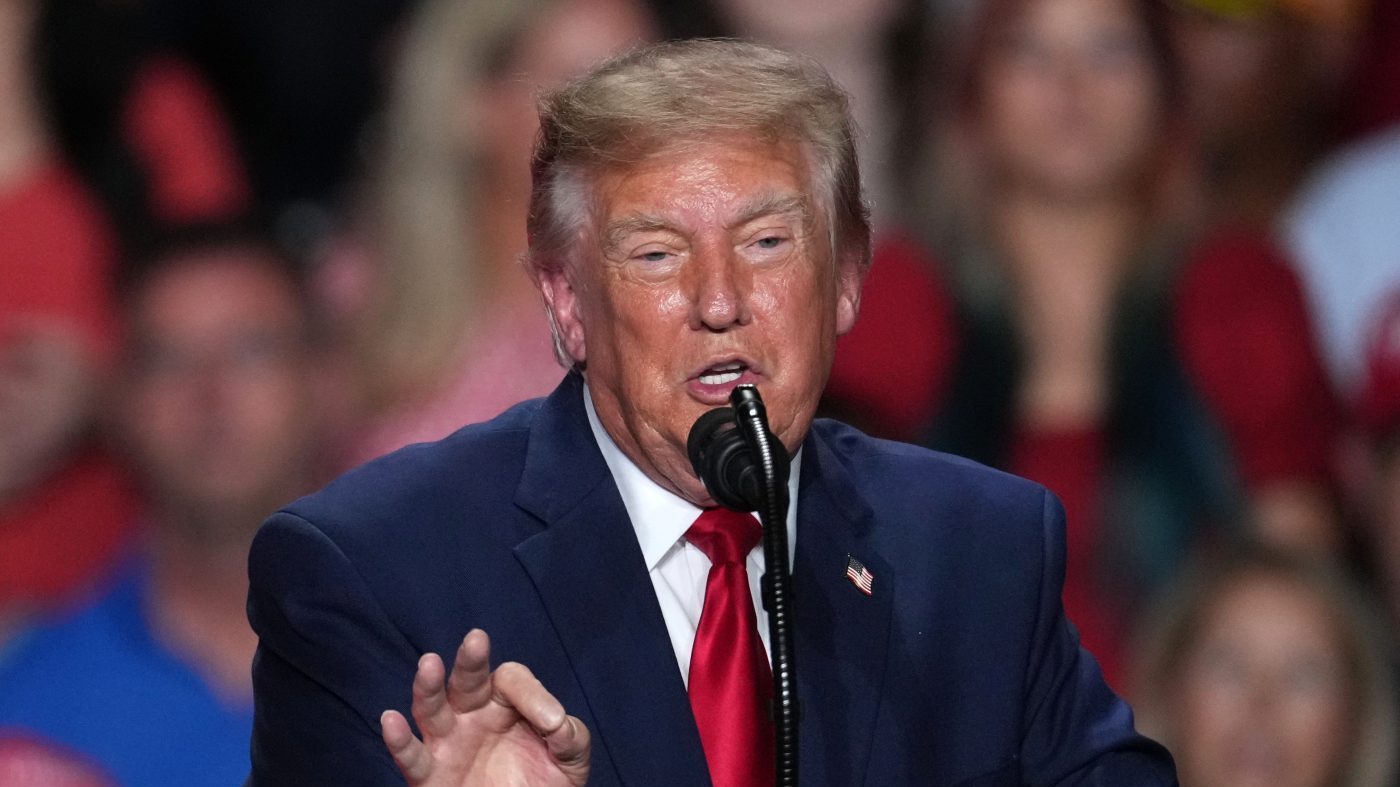
President Trump fared even worse in the eyes of Jewish respondents. Exactly half of Jewish adults said Trump does not support them, while 21 percent said he somewhat supports them and another 21 percent said he supports them extremely well. The remaining 8 percent were unsure or declined to answer.
The poll also probed views on the American Israel Public Affairs Committee (AIPAC), the influential pro-Israel lobbying group. Nineteen percent of Jewish Americans said AIPAC does not support them or does not support them extremely well, while 20 percent said it somewhat supports them. A large plurality—41 percent—said they don’t know how well AIPAC represents their interests, suggesting a lack of engagement or awareness even among the Jewish community.
The survey comes on the heels of a separate AP-NORC poll released Tuesday that highlighted a partisan divide over U.S. support for Israel. That poll found 58 percent of Democrats believe the U.S. provides too much support to Israel, compared with only 21 percent of Republicans. Just 17 percent of Democrats and 15 percent of Republicans said the U.S. does not support Israel enough.
The polling was conducted amid heightened tensions in the Middle East. President Trump declared this week that the interim peace deal ceasefire with Iran is effectively “over,” and Israel has refused to withdraw troops from Lebanon amid ongoing fighting with Hezbollah. These developments have kept the region on edge and underscored the complexities of U.S. foreign policy in the area.
The AP-NORC survey was conducted from June 11 to June 17, 2025, and included 3,040 respondents, of which 1,022 were Jewish adults. The overall margin of error is 2.8 percentage points, while the margin for Jewish adults is 5 percentage points. Respondents included those who identified as religiously Jewish as well as those who are culturally, ethnically, or familially Jewish but not religiously affiliated.
These findings come at a time when both parties are jockeying for support ahead of the midterm elections. The Democratic Party, traditionally seen as a home for Jewish voters, has seen internal splits on issues ranging from data center regulation to foreign policy. Meanwhile, the Republican Party has sought to solidify its pro-Israel stance under Trump, but the poll suggests that message is not resonating broadly with Jewish Americans.
For political strategists, the data points to a potential vulnerability for both parties. With nearly half of Jewish adults feeling abandoned by the GOP and a third feeling the same about Democrats, the community could emerge as a swing constituency in key battleground states. As the 2026 midterms approach, candidates from both parties will need to grapple with how to rebuild trust among Jewish voters who feel increasingly left out of the political conversation.