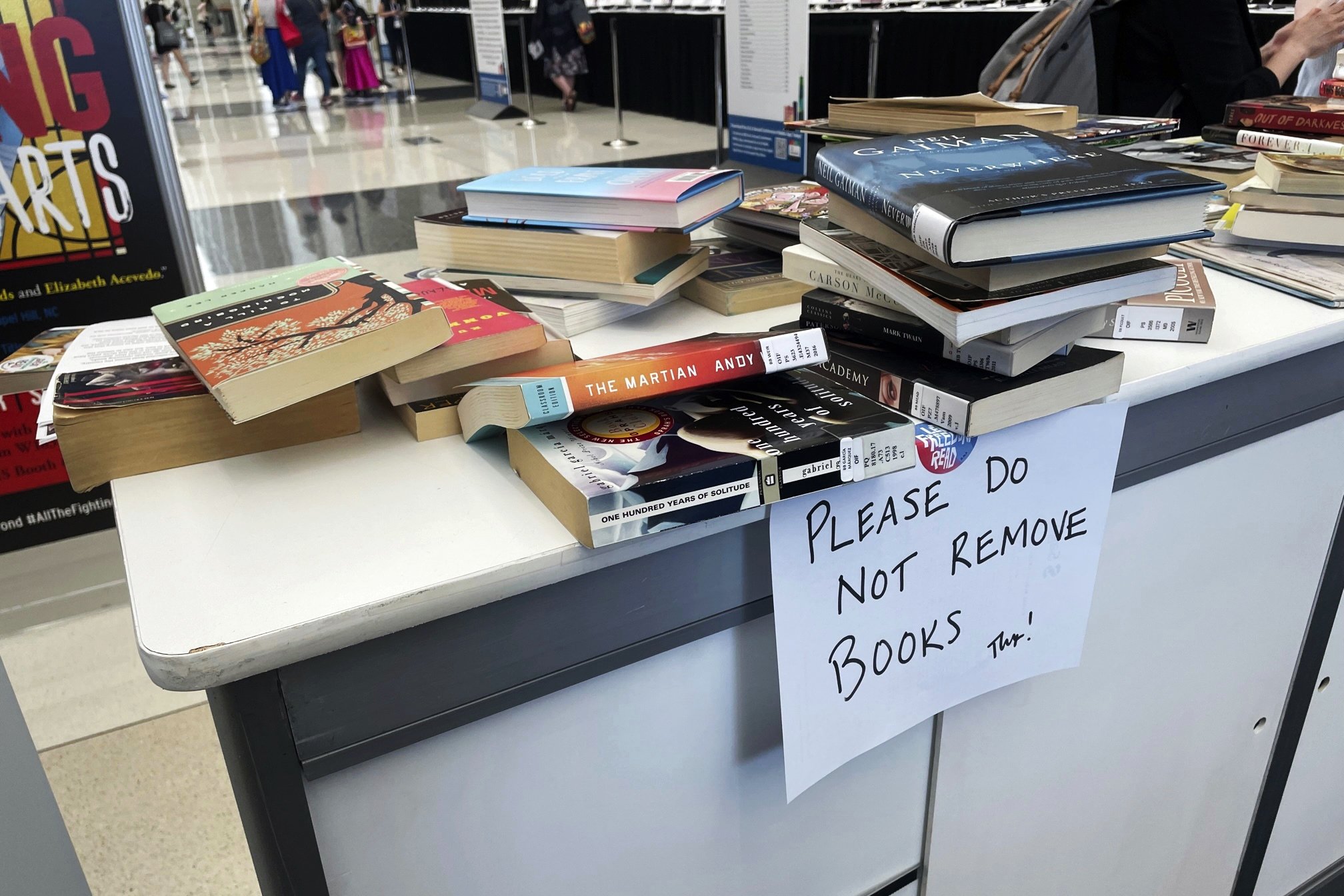
The American Library Association’s annual report on book challenges reveals that 2025 saw nearly as many titles targeted for removal as the record-setting 2023, but the nature of the fight has transformed dramatically. Political groups and elected officials now account for 92 percent of all challenges, up from 72 percent a year earlier, while individual parents make up less than 3 percent of complainants.
The ALA recorded 4,235 unique titles challenged in 2025, just shy of the 2023 peak of 4,240. The “Top 11 Most Challenged Books” list is dominated by new entries that had never appeared before, reflecting what Sarah Lamdan, executive director of the ALA’s Office for Intellectual Freedom, called “further evidence of this expanding national push.”

“What’s happening is there are these lists that are being made by book reading websites and by national political operatives, and those are shuffling the types of books and the titles that are being listed,” Lamdan said. She noted that the list is “primarily comprised of books that are about LGBTQIA individuals and to pick their stories and books that reflect the stories of people of color in America.”
Targeted Titles Reflect Broader Political Campaign
The most challenged book of 2025 was “Sold” by Patricia McCormick, which follows a Nepalese girl sold into sexual slavery. It was followed by “The Perks of Being a Wallflower,” “Gender Queer: A Memoir,” and the fantasy novel “Empire of Storms.” Tied for fifth were “Last Night at the Telegraph Club” and “Tricks.” In 2024, the top spot belonged to “All Boys Aren’t Blue,” with “Gender Queer” second and a tie between Toni Morrison’s “The Bluest Eye” and “The Perks of Being a Wallflower” for third.
Forty percent of all challenged titles in 2025 centered on the experiences of LGBTQ people or people of color. The shift toward organized political pressure mirrors the acceleration of book-ban efforts during the COVID-19 pandemic, when groups like Moms for Liberty began raising alarms over content they deemed inappropriate for schoolchildren.
Moms for Liberty celebrated a school district’s decision to permanently ban six books in 2025, including “Red, White & Royal Blue” by Casey McQuiston, “The DUFF” by Kody Keplinger, and “Felix Ever After” by Kacen Callender. Other groups active in the push include Citizens Defending Freedom and Parents’ Rights in Education. Citizens Defending Freedom secured the removal of more than 30 books from Florida’s Nassau County School District in 2024, including “Me and Earl and the Dying Girl” and “The Perks of Being a Wallflower.”
Legal Landscape Shifts Between States
The battle over book removals has produced mixed results in courts and statehouses. A federal judge in Florida ruled part of the state’s book ban law unconstitutional, mandating that books can only be removed if they meet the Miller test for obscenity. The judge also identified specific books that should not have been removed, but the state has appealed. Meanwhile, in Iowa, an appeals court recently upheld a state law banning LGBTQ topics and books in schools.
Iowa Attorney General Brenna Bird, a Republican, called the ruling “a huge win for Iowa parents,” adding, “Parents should always know that school is a safe place for their children to learn, not be concerned they are being indoctrinated with inappropriate sexual materials and philosophies.”
Dan Novack, vice president of associate general counsel at Penguin Random House, cautioned that the ALA’s data understates the problem. “It’s really alarming to see so many titles on that list, of course, but what it doesn’t tell you is the cumulative effect, because if a book was removed last year, it’s not going to be available to be removed twice.” He added that “when a librarian elects not to purchase a copy of John Green’s book in the first instance, you can’t measure it. You can’t see it. It’s even more pervasive than the removals.”
Skip Dye, chair of Penguin Random House’s Intellectual Freedom Taskforce, said the publisher is seeing a state-by-state strategy as the most effective approach. “What we’re seeing now is that the state by state tactic is the best way to go and keeping the energy and making people aware that this is an issue that is always, ever present,” Dye said. The red-blue state divide has not been a dominant factor, he noted, as local efforts have emerged in both conservative and liberal areas.
The ongoing legal battles and shifting tactics underscore how the book-ban movement has evolved from parent-led complaints to a coordinated political campaign, with implications for school libraries and the broader cultural landscape. As the ALA’s data shows, the number of targeted titles remains near historic highs, even as the actors driving the challenges have changed.